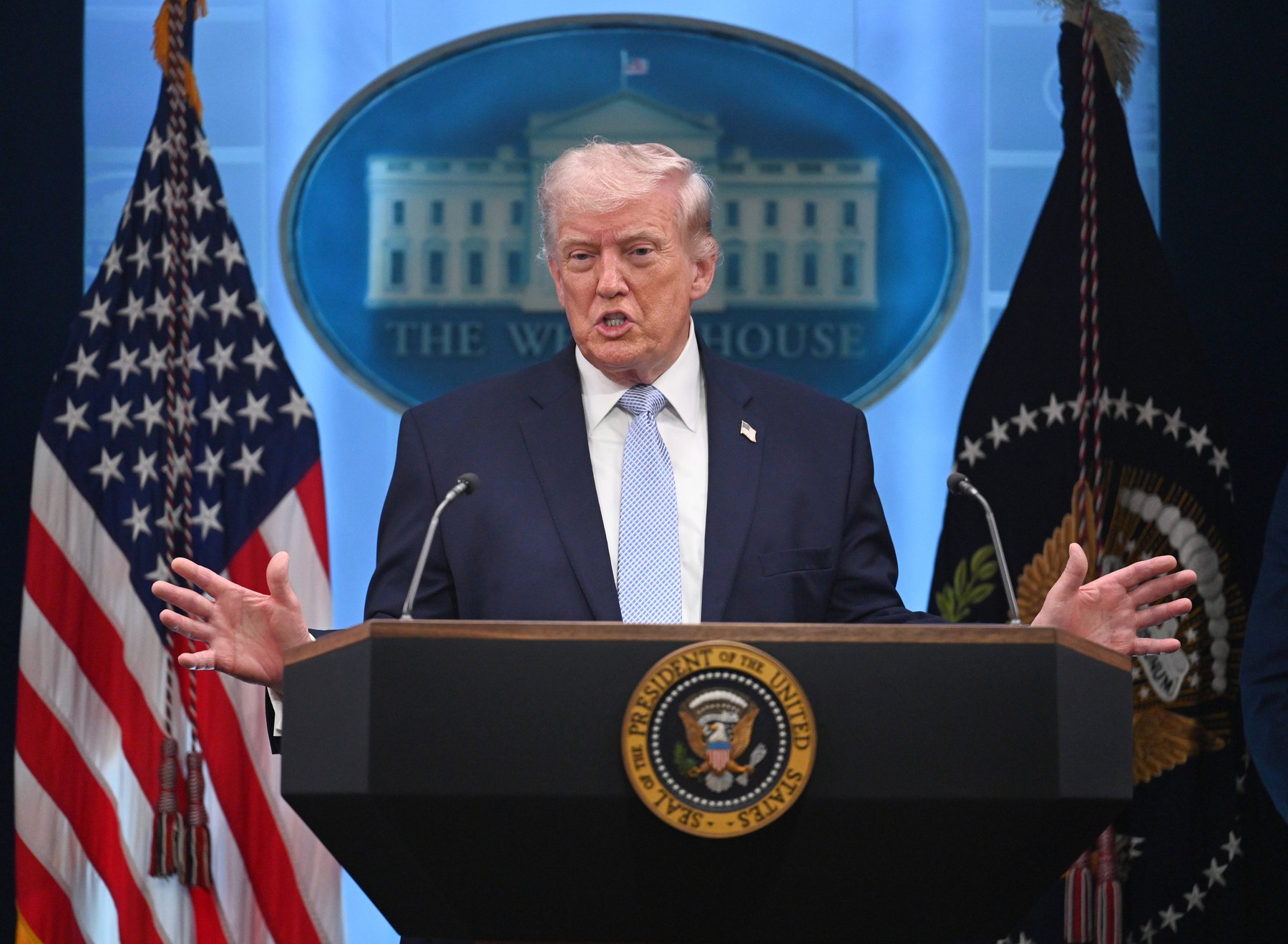
US President Donald Trump announced on Tuesday that he will extend the truce with Iran until Tehran presents a proposal for a definitive settlement of the conflict and until the conclusion of peace talks, write Reuters, Sky News and CNN.
The leader from the White House also announced that this extension was also decided at the request of Pakistan.
“Given the fact that the government of Iran is deeply divided, which is not at all surprising, and at the request of Marshal Asim Munir and Prime Minister Shehbaz Sharif of Pakistan, we have been asked to delay the attack on Iran until their leaders and representatives can come up with a unified proposal,” Trump wrote, in a message published on his social network, Truth Social.
The US president said he ordered the US military to “continue the blockade and in all other respects remain ready and capable”.
Trump added that the truce, which was due to expire in the next few hours, “will be extended until their proposal is presented and the talks are concluded, one way or another.”
Trump's full message:
“In view of the fact that the government of Iran is deeply divided – which is not surprising – and at the request of Marshal Asim Munir and Prime Minister Shehbaz Sharif of Pakistan, we have been asked to delay the attack on Iran until the leaders and representatives of this country can present a joint proposal. Therefore, I have ordered our military to continue the blockade and in all other respects to remain ready and capable, and I therefore, extend the ceasefire until their proposal is presented and the talks are concluded, one way or another. President DONALD J. TRUMP,” the US president wrote in his message.
Earlier on Tuesday evening, The New York Times reported that US Vice President JD Vance's diplomatic trip to Pakistan's capital, Islamabad, where he was to press Iranian negotiators for a nuclear deal, was suspended after Tehran failed to respond to US negotiating positions. The NYT cited a US official with first-hand knowledge of the situation.
Vance was due to leave Tuesday morning (US time) for the Pakistani capital, where talks were expected to resume on Wednesday – the same day the fragile truce between the United States and Iran was due to expire. Without a response from Iran, the official said, the NYT quoted the official as saying, the diplomatic process is effectively on hold, although the departure has not been officially cancelled.
Diplomatic travel could resume at any time with the approval of President Donald Trump. US officials are also waiting for a clear sign that Iranian negotiators have been fully empowered to reach a deal.
Total indecisiveness
A two-week truce between the United States and Iran was set to expire at midnight GMT, Iranian state television said on Tuesday, pending an announcement by the US president, amid total uncertainty over whether a new round of talks will take place in Pakistan in Islamabad to end the war for good.
“The ceasefire will end at 3:30 am Tehran time (00:00 GMT) on Wednesday,” according to Iranian television.
Entered into effect on April 8, the truce was theoretically expected to end overnight in Iran.
On Monday, Donald Trump sowed doubt, saying the ceasefire would end a day later, on Wednesday evening Washington time. He then added, in a statement to Bloomberg, that it was “very unlikely” to extend it, according to the AFP and Agerpres agencies.
Pakistan, the mediator in the talks, had previously set a deadline almost exactly the same as Iran's, ten minutes later.
“The ceasefire expires at 04:50 PST on April 22,” Pakistan's Information Minister Attaullah Tarar said in a post on the X social network, referring to 23:50 GMT.
He added that he was still waiting for a response from Iran on whether to send a delegation to Islamabad for a new round of negotiations with the United States, stressing that it was of “vital” importance that Tehran participate.
Shortly afterward, Iranian Foreign Ministry spokesman Esmail Baghaei reiterated that “no final decision has yet been made” on Tehran's participation in the talks.
“This is not due to our indecision, but the fact that we are faced with conflicting messages and behaviors, as well as unacceptable actions from the United States,” Baghaei added, referring in particular to the US blockade of Iranian ports.