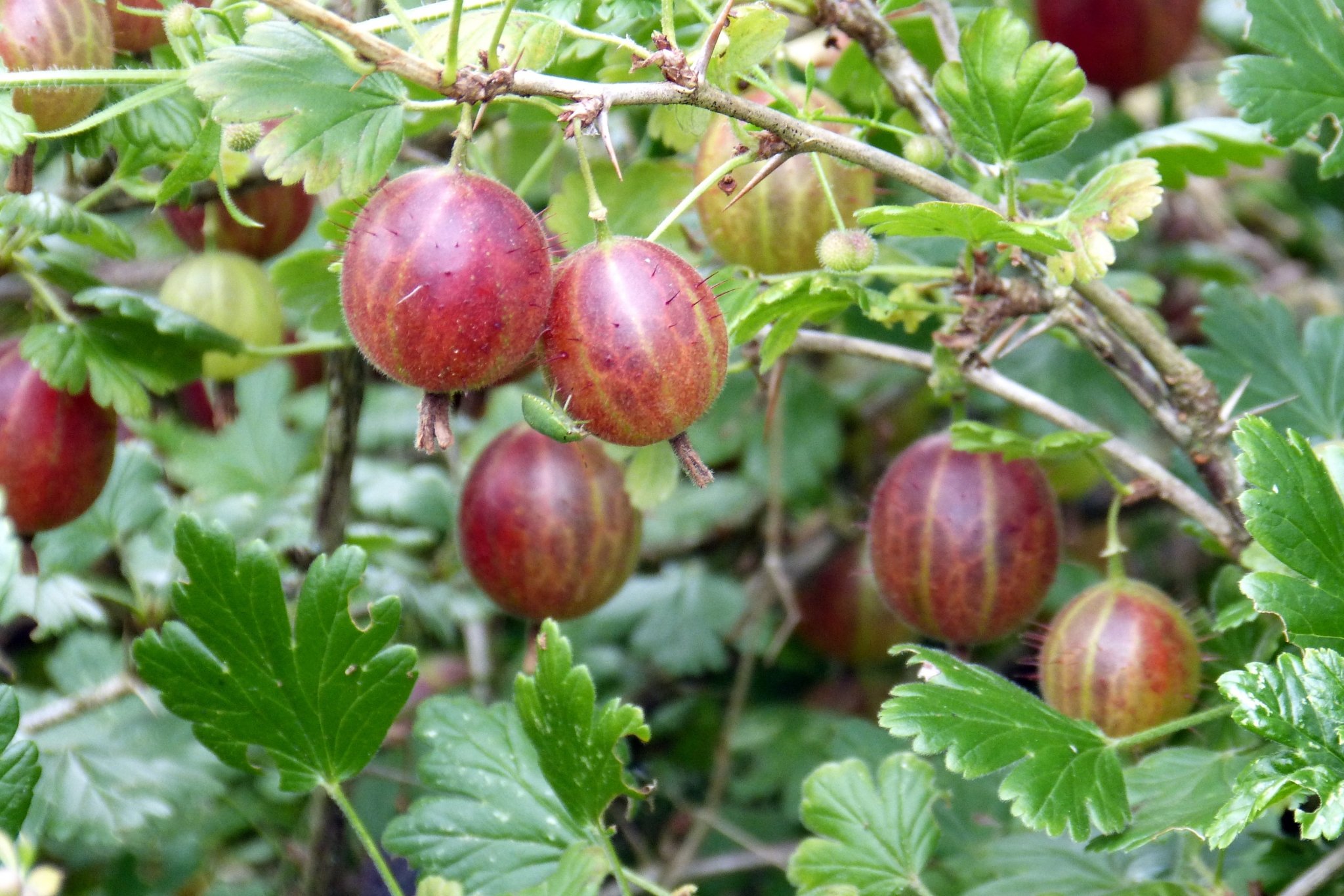
As soon as the first green leaves bloom on the gooseberry, the bush wakes up and needs care. If you carry out three simple procedures in time, the gooseberry will thank you with an abundance of large and sweet berries.
Loosening, weeding and supports
The next day after watering or rain, lightly loosen the soil to a depth of 5 cm so as not to touch the surface roots. It is more convenient to work with a hoe with a long handle because of the thorns. At the same time, remove all weeds, as they take away moisture and nutrition.
Pay special attention to the supports. While the branches are flexible, place several stakes around the bush and tie them with twine in a spiral. Otherwise, the berries will press the shoots to the ground, where they will begin to rot and get dirty.
Inspection and protection against powdery mildew
Check young shoots and the undersides of leaves. If you notice pests, treat the bush with an insecticide in the evening in calm weather.
The main enemy of gooseberries is powdery mildew. If there was a white coating last year, the disease will return. Don't wait for June. Already now, on young leaves, use copper-containing preparations (Bordeaux mixture, “HOM”) or systemic fungicides (“Topaz”, “Skor”).
Feeding before flowering
There is very little time left before flowering. If you did not fertilize in the spring, urgently apply a complex spring fertilizer (nitroammofoska, “Fertika Spring-Summer”). An adult bush will take about 50 g. Embed the granules into the soil with a rake and pour 10 liters of water onto the bush.
“These three simple but mandatory procedures are the guarantee that the bushes will be strong, healthy and will reward you with a truly rich and tasty harvest,” noted the author of the blog “My Successful Dacha” (18+).