The idea of a direct strike on Iran's critical infrastructure — power plants, oil fields or desalination plants — is presented in certain political circles in Washington as a maximum pressure option. But such an approach risks triggering consequences that are difficult to control, Atlantic Council analysts warn.
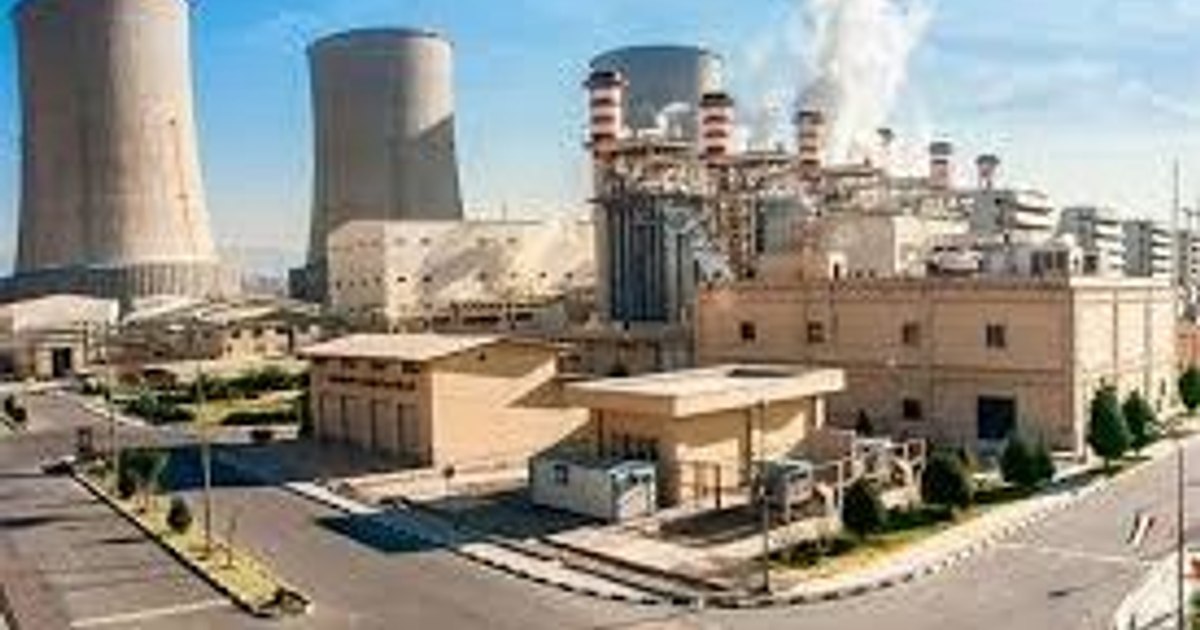
Power plant in Iran/PHOTO:X
Recent statements by US President Donald Trump, who suggested the complete destruction of Iran's energy infrastructure in the absence of a deal, have brought this strategy back to the fore. However, the experience of the last decades shows that Tehran's reaction would most likely be symmetrical – and potentially devastating for the entire region.
A logic of “symmetry” in Iran's responses
According to experts who have closely studied Iran's strategic behavior, the regime in Tehran often responds with actions that reflect the type of attack it has suffered. This “symmetry” is not always identical at the strategic level, but is frequently manifested at the operational and tactical levels.
There have been numerous examples over the years: cyber attacks launched in response to sanctions, strikes on energy infrastructure in response to economic pressures, or military strikes after the removal of key leaders.
In this context, a US attack on Iranian infrastructure could lead Tehran to strike, in turn, the energy and water infrastructure of the Persian Gulf states. Targets such as oil and gas facilities or drinking water supply networks could become vulnerable, with global economic effects.
Regional and global risks
Such a scenario would not be limited to an exchange of blows. The Gulf countries are critical to global energy supplies, and any major disruption could knock out millions of barrels of oil a day.
Even if these states have invested in defense systems and contingency plans, the scale of simultaneous attacks could exceed the ability to respond quickly. In such a context, a global energy crisis and even a recession would not be out of the question.
In parallel, the destruction of Iran's internal infrastructure – especially water and electricity systems – could cause massive population displacements, amplifying regional instability.
A different strategic calculation
Another key element is the difference in perspective between Washington and Tehran. Iranian leaders do not necessarily follow the logic of Western military doctrines. Instead, historical experiences – especially the war with Iraq in the 1980s – shaped a strategy based on resilience, self-sufficiency and the use of asymmetric means.
Iran has invested heavily in missiles and drones, believing that they can compensate for the lack of an air force comparable to that of the West. Also, control of the Persian Gulf and sea routes remains a central element of its strategy.
The Strait of Hormuz, through which much of the global oil trade passes, is one of Tehran's main tools of pressure. If it escalates, it could become a critical point for the global economy.
Survival of the regime, the absolute priority
Despite their differences, there is one commonality between Iranian and Western strategic thinking: the absolute priority given to regime survival.
This objective explains both the investments in the internal security apparatus and the willingness to bear significant economic losses without changing political or military direction.
From this perspective, attacks on infrastructure would not necessarily cause a change in behavior, but could strengthen the regime's resolve.
A strategy with reverse effects
Under these conditions, a military campaign limited in time – of a few weeks – could have the opposite effects to the desired ones. If Iran manages to withstand the pressure and at the same time inflict comparable damage in the region, the result could be perceived as a victory in Tehran.
For the United States, this would mean not only economic and security costs, but also a reputational risk.
The experts' conclusion is that any effective strategy must take into account the specific way in which Iran calculates its reactions – including this tendency to respond “in the mirror”. Ignoring this aspect could turn a show of force into a conflict with unpredictable consequences.