Floreasca Hospital ran out of money. Rescheduled patients and limited admissions. The reaction of the National House of Health

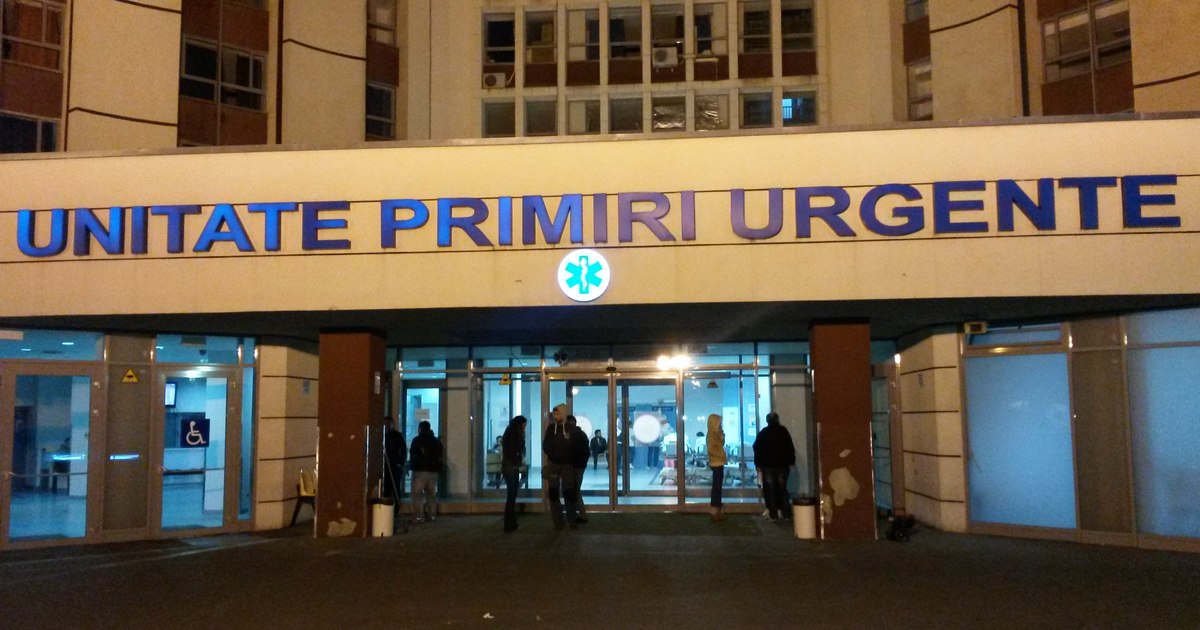
Floreasca Hospital is facing a difficult financial situation, after the number of patients significantly exceeded the contract with the Insurance House. Management announced measures to prioritize admissions and reschedule patients, depending on the severity of the illness.
Floeasca Hospital could limit admissions. PHOTO: archive
The Floreasca Emergency Clinic Hospital, one of the largest emergency units in Romania, is in a difficult financial situation, after in the first three months of the year the number of patients significantly exceeded the level estimated in the contract with the National Health Insurance House.
Normally, the hospital treats around 2,500 patients per month, but during this period it reached around 3,000 cases per month, which created additional pressure on financial resources. As a high-level emergency unit, which receives patients from all over the country and manages complex polytrauma cases, the flow of admissions is difficult to control, so the difference “translated” into an overrun of more than 10 million lei of the budget allocated by the Health Center.
In this context, the hospital's management conveyed to the heads of departments that a reorganization of the way admissions are managed is necessary.
Specifically, this means prioritizing urgent cases, postponing or rescheduling chronic patients who do not require immediate intervention, and directing some cases to day hospitalization where possible.
The manager of the unit explained that, in previous years, situations of budget overruns were usually covered by additional documents to the contract with the National Health Insurance House, by allocating additional amounts.
This year, however, this mechanism was not applied in the same form, which left the hospital exposed to the risk of running out of money for medicines and sanitary materials.
If these measures were not implemented, the management warns, the unit could end up in the situation of not being able to cover the current costs of treatments.
CNAS position
The representatives of the National Health Insurance House have been informed about the situation and say that solutions are being sought to supplement the funds.
Through an official statement, the National Health Insurance House said that the situation is temporary, being influenced by the delayed adoption of the budget for 2026 and the introduction of monthly spending limits through the budget law.
Why does the pressure on hospitals not decrease? “Many services and consultations are not billed to us”
At the same time, the institution states that the budget for 2026 is sufficient to cover all medical fields, including the hospital sector, which receives the largest allocation, of approximately 34 billion lei.
Also, CNAS criticizes some practices reported in the system, such as the establishment of minimum or maximum hospitalization norms for doctors, stating that these situations are monitored and checked by the control structures, in collaboration with other state institutions.
“In the context of recent communications regarding the need to limit hospitalizations in some health facilities, the National Health Insurance House makes the following clarifications:
The current situation has a temporary character, being mainly determined by the late adoption of the budget for 2026, as well as the introduction, through the budget law, of monthly spending limits.
CNAS has consistently maintained and continues to maintain that the application of rigid monthly ceilings in the health sector is inadequate, as:
• the need for medical services cannot be planned administratively;
• patients do not fall ill according to a budgetary calendar;
• the provision of medical care cannot be postponed without risks to the health of the population.
At the same time, we emphasize that the budget allocated to CNAS for the year 2026 is relatively adequate, ensuring sufficient financial resources for all areas of healthcare, including – and especially – for the hospital sector.
At the same time, CNAS draws attention to the fact that, although hospitals benefit from the largest budget allocation (approximately 34 billion lei), a reform of the financing model is necessary, in the sense that:
• application of the “money follows the patient” principle;
• orientation of funding towards medical services actually performed;
• elimination of inefficiency or inactivity financing situations.
The role of CNAS is to settle medical services, not to directly support fixed cost structures, such as salaries, in the absence of appropriate medical activity.
Also, CNAS signals the need to increase the efficiency of the use of public funds and to reduce waste, especially in the field of public procurement. Preliminary analyzes indicate significant differences between comparable hospitals (in profile and complexity) in terms of:
• activity indicators;
• financial performance;
• costs related to medical services.
Moreover, the CNAS disavows certain practices recently reported in the public space, such as the imposition by some managers of public hospitals of certain “minimum or maximum standards” of admissions for doctors.
These practices are brought to the attention of the control body of the CNAS, and the CNAS collaborates in this regard with other state institutions”, according to the cited document.