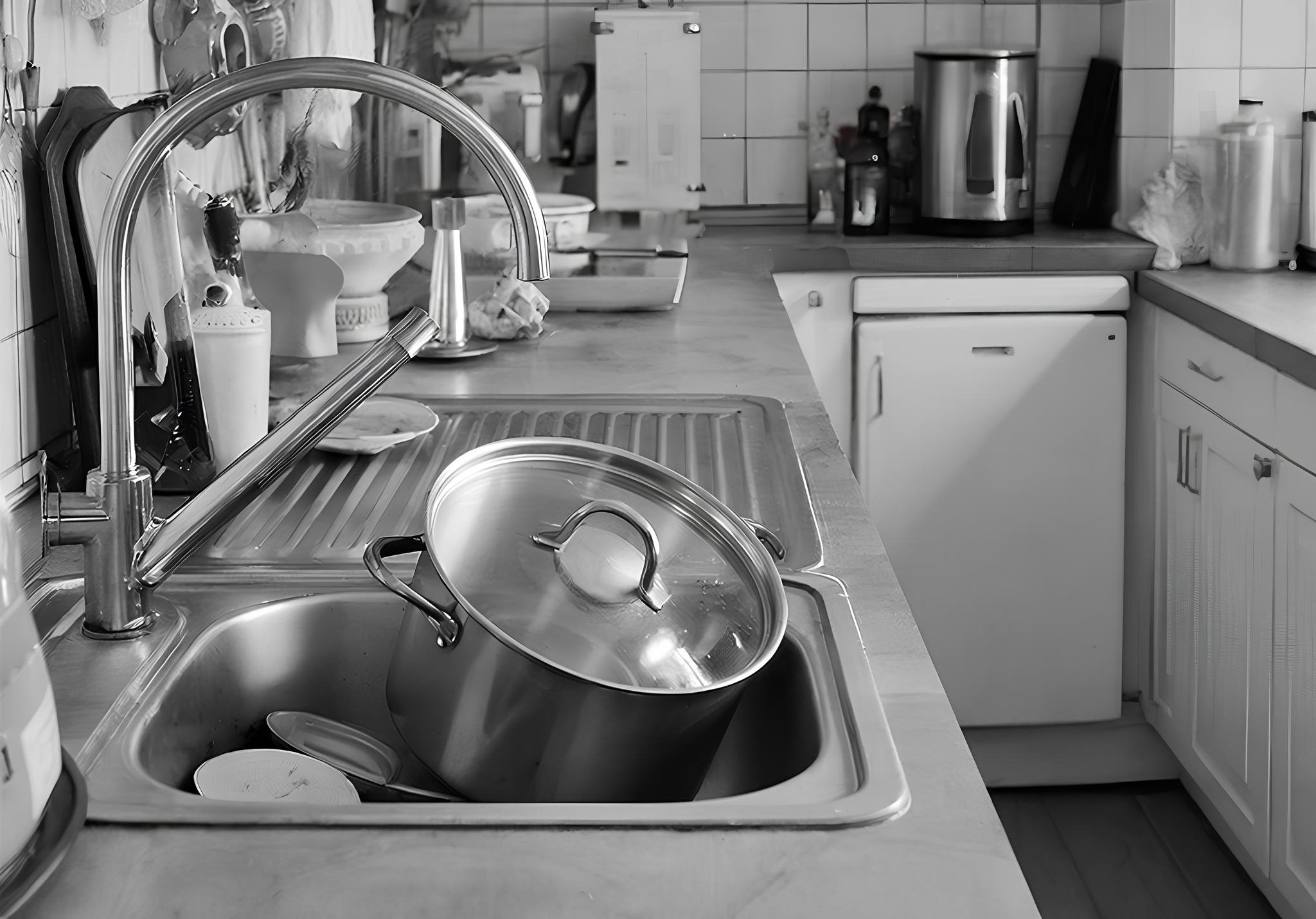
It happens that after cooking porridge or stewing a dish, a thick coating remains on the bottom, which even a hard sponge cannot remove. Many people soak dishes for hours or rub until tired. But there is a technique that solves the problem in one approach. Just two components that are always at hand are enough.
What to do:
Pour a glass of water into the burnt pan, add a tablespoon of soda and a teaspoon of salt. Place on low heat for 60 seconds, then remove and drain the liquid. Wipe the bottom with a soft sponge and the plaque will come off. The surface after treatment is smooth, without scratches or chemical marks.
Baking soda softens burnt particles, and salt works as a delicate abrasive that removes plaque without damaging the coating. Brief heating speeds up the reaction, so there's no need to wait or scrub for long. The method is safe for enamel, stainless steel and non-stick coatings.
Try it the next time you clean your kitchen. Many people note that the pots return to their factory smoothness, and the washing time is reduced significantly.
Question and answer:
Can the method be used for Teflon coatings?
Yes, but only on low heat and no longer than 60 seconds. After heating, allow the pan to cool for 2-3 minutes before wiping to avoid damaging the non-stick coating.
What to do if the plaque is very old and dense?
Increase the heating time to 2-3 minutes and add another half spoon of soda. For difficult cases, repeat the procedure twice with an interval of 10 minutes.
How can I prevent future scorching?
Before cooking starchy dishes, grease the bottom with a drop of vegetable oil. This creates a protective barrier and simplifies subsequent cleaning.