The US military, after the first day of the blockade in Hormuz: Six ships, forced to return. The monitoring data is a bit more nuanced

No ship has managed to pass the naval blockade imposed by the US on the ports and coastal areas of Iran, and six merchant ships have obeyed orders to turn back, the US military announced on Tuesday, providing the first details on this action that began a day ago, on the orders of President Donald Trump, after the failure of peace negotiations between Washington and Tehran, writes Reuters.
The US military had previously announced that the blockade would only apply to ships heading to or from Iran and that it would target all Iranian ports in the Persian Gulf and the Gulf of Oman.
“During the first 24 hours, no ships managed to pass the US blockade, and six merchant ships complied with instructions from US forces to turn around to re-enter an Iranian port in the Gulf of Oman,” the US military's Central Command said in a press release on Tuesday.
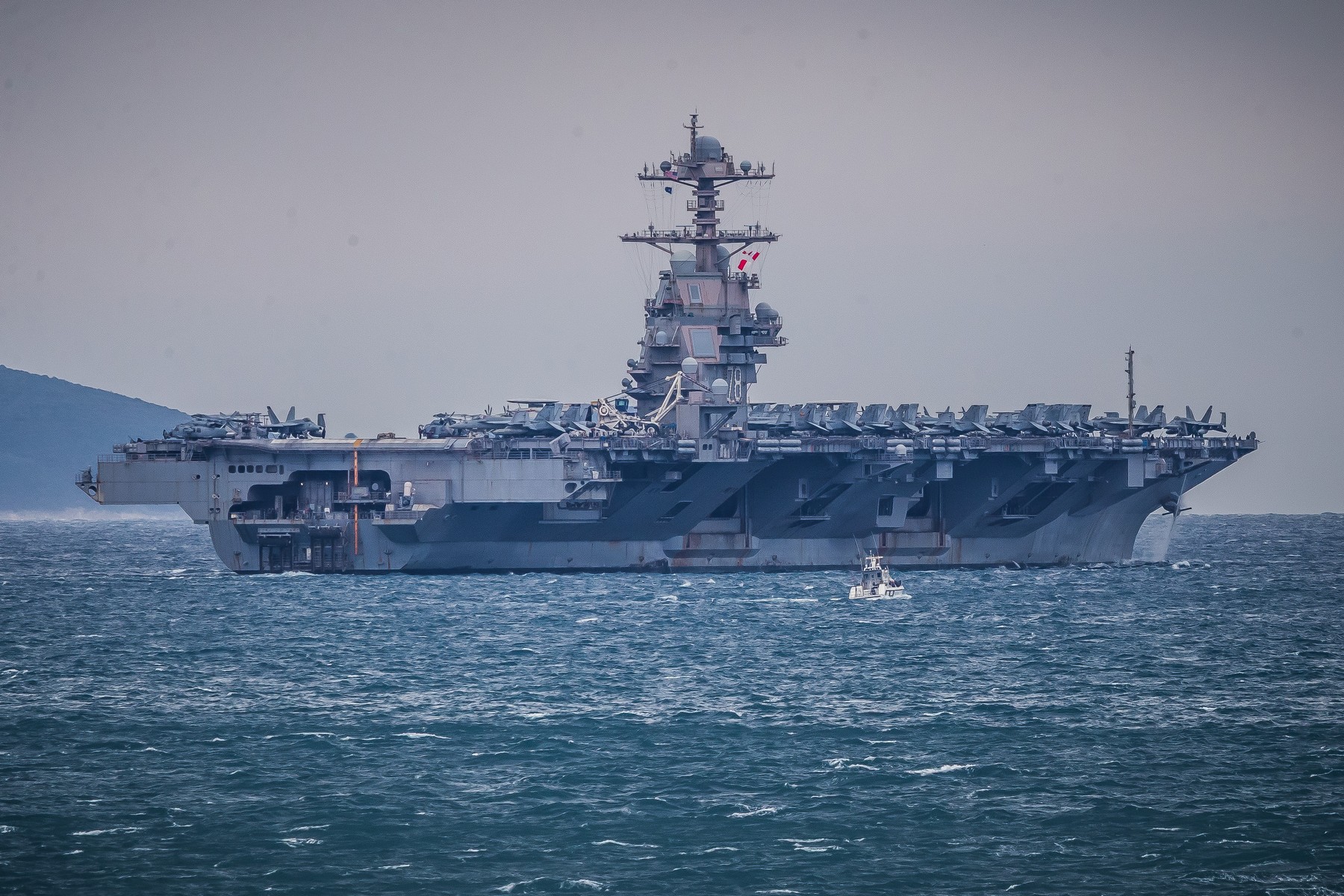
More than 10,000 US military personnel (pilots, marines and sailors), over a dozen warships and dozens of fighter jets are enforcing the blockade, the US military said.
“The blockade is applied impartially against ships of all nations entering or leaving Iranian ports and coastal areas,” the statement said.
In a memo sent to mariners on Monday about the blockade, the US military said: “Any vessel entering or leaving the blockaded area without authorization is subject to interception, diversion and capture.”
Monday's memo said the blockade would cover Iran's entire coast, but humanitarian aid shipments, including food, medical supplies and other essential goods, would be allowed, subject to inspection.
Trump announced the imposition of the naval blockade following the failure of negotiations in Islamabad (the capital of Pakistan) late last week aimed at ending the six-week war between the US-Israel and Iran. Oil prices jumped back above $100 a barrel before falling slightly on Tuesday amid hopes for continued peace talks.
Experts consulted by Reuters say the blockade is a major, indefinite military action that could trigger further retaliation from Tehran and put enormous pressure on the already fragile truce.
Britain's Commercial Maritime Operations Agency said on Monday that it had been informed of the maritime restrictions but had been told that “neutral ships” currently in Iranian ports had been given a grace period to leave.
The blockade increases uncertainty over how ships will transit the Strait of Hormuz, a crucial waterway used to transport a fifth of the world's oil and liquefied natural gas reserves.
Iran's threats to shipping have caused global oil prices to soar by about 50% since the US and Israel went to war on February 28.
Efforts to block the Strait of Hormuz will not be entrusted to the US Coast Guard, at least for now, a US official told Reuters. According to the official, this is due, in part, to the fact that the six Coast Guard ships that were in the Middle East were sent to Asia in the early days of the war.
Thousands of US military strikes have severely weakened the Iranian military. But analysts say Tehran has emerged from the conflict as a vexing problem for Washington, with more intransigent leadership and a hidden stockpile of highly enriched uranium.
Two ships from Iranian ports crossed the Strait of Hormuz despite the blockade
However, at least two commercial ships departing from Iranian ports crossed the Strait of Hormuz on Monday after the US military blockade took effect at 14:00 GMT (17:00 Romanian time), maritime data company Kpler said on Tuesday, according to AFP.
The Liberian-flagged cargo ship Christianna crossed the strait after unloading corn at the Iranian port of Bandar Imam Khomeini, passing the Iranian island of Larak around 16:00 GMT on Monday, according to monitoring data.
A second ship, the Comoros-flagged oil tanker Elpis, was near Larak Island at around 11:00 GMT and crossed the strait at around 16:00 GMT.
The tanker Elpis was carrying 31,000 tons of methanol after leaving the Iranian port of Bushehr on March 31, Kpler data also shows.
A third vessel, the Chinese vessel Rich Starry, subject to US sanctions over its ties to Iran, also transited the strait overnight on Monday, following the Iranian-approved route south of Larak Island.
Several media sources, including the maritime data company Lloyd's List, interpret the passage of the Chinese vessel Rich Starry as a test of the naval blockade instituted by the US military.
The Elpis is also under US sanctions for its ties to Iran, but the Christianna is not on the US sanctions list.
A fourth vessel, the Madagascar-flagged tanker Murlikishan, also crossed the strait on Tuesday morning westward to enter the Persian Gulf en route to Larak Island. The oil tanker was empty and headed for the Iraqi port of Khor Al-Zubair, according to its transponder signal, Kpler said.
The Murlikishan is on the US sanctions list for trade related to Iran, and several of its previous trips to the Persian Gulf have been to Iran, where it loaded Iranian bitumen and asphalt for transport to Asia.
Maritime traffic through the Strait of Hormuz has already been reduced by around 90% since the start of the Middle East conflict.