The seven best teams of primary school students, who had been working on their own projects related to renewable energy sources, qualified for the final stage. Their task was not only to build working models, but also to understand and present how solutions using solar, wind, water, biomass and geothermal energy work.
The finale began with a summary of the program and an introduction to the idea of the project, the aim of which is to build energy awareness among young people. Then, the participants presented their projects – both technically and conceptually, explaining what problems their designs solve and how they fit into the idea of sustainable energy.
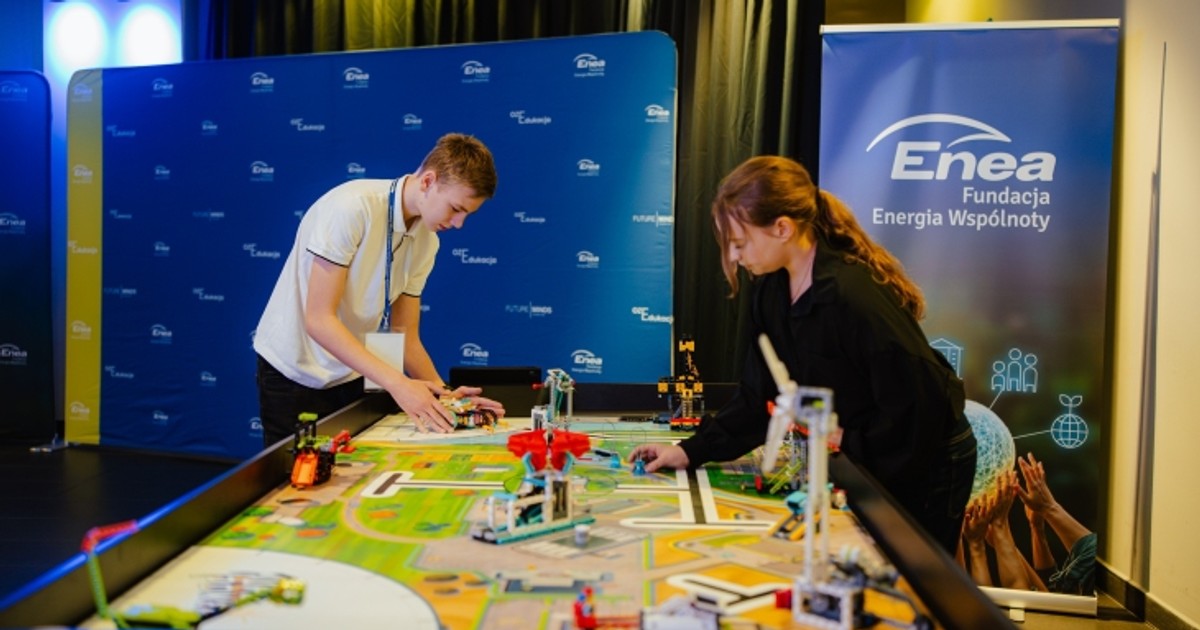
The most exciting part was the demonstration part, during which the teams presented robots created using LEGO® Education sets. The models simulated the operation of renewable energy installations – from wind farms, through photovoltaic panels, to more complex energy systems. Importantly, these were not only visual designs, but functioning prototypes showing the principles of operation of renewable energy sources in practice.
The OZEdukacja program, implemented with the support of the Enea – Community Energy Foundation, is based on a modern approach to education. Instead of traditional lessons, students work using the project method, developing STEAM competences, learning to cooperate and solve real problems related to energy and the environment.
– For adults, renewable energy sources are still perceived as technologies of the future, but for students they are already the present – emphasizes Izabela Rakuć-Kochaniak, president of the Enea – Community Energy Foundation. As he adds, the huge interest in the program shows that the young generation wants to understand where energy comes from and how it can be used responsibly .
And that's exactly what was visible during the final. The participants presented their projects with great freedom, explained how the models worked and answered the jury's questions. Their speeches included not only technical details, but also reflections on energy saving and human impact on the environment.
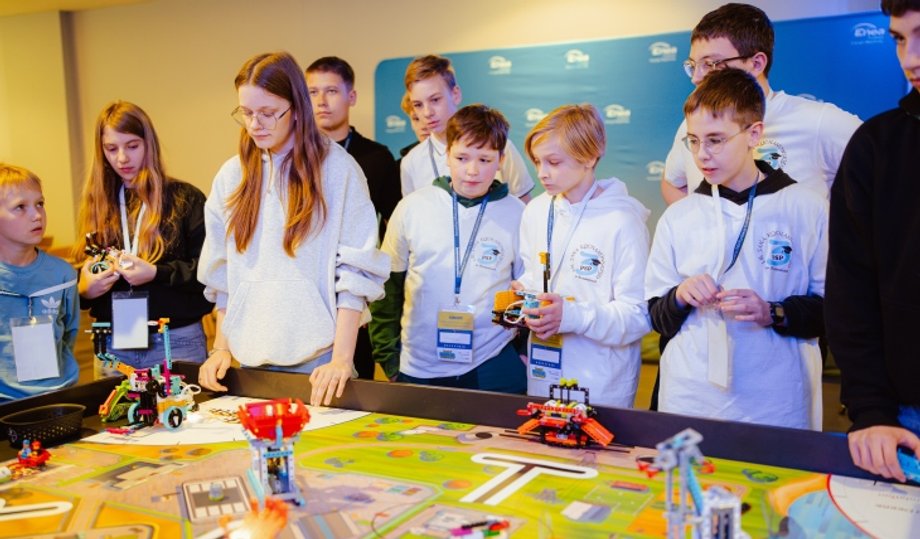
The level of the final turned out to be extremely even. Each team presented a high level of preparation, both technically and substantively. That's why the organizers decided to distinguish all participants – each team received the winning cup and diplomas, emphasizing that the most important thing is the knowledge and experience gained.
The final at Enea Stadium was the culmination of the OZEdukacja educational program on a nationwide scale. The project provided educational materials to over 1,000 schools, and hundreds of students worked on their own energy solutions. OZEducation shows that education can have a real impact on the future – not only by transmitting knowledge, but by developing competences and attitudes that will be key in the world of energy transformation. Because, as the participants of the final in Poznań showed – the energy of the future starts today, in school projects and children's curiosity about the world.