Ukraine is not stopping. It strikes at the heart of Russia's oil exports. A serious blow to the Kremlin [ANALIZA]

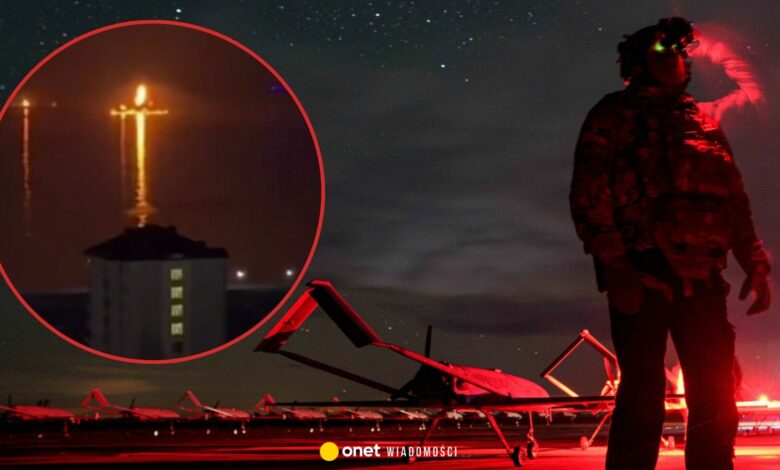
On the night from Sunday to Monday, Ukrainian long-range drones attacked Russia's largest oil transhipment terminal on the Black Sea in the port of Novorossiysk, causing fires to light up the horizon and completely halting oil export operations.
At the same time, other Ukrainian drone swarms struck potential air defense positions in the western part of the Krasnodar Krai and on the Moscow-occupied Crimean Peninsula, as well as other targets in Russia.
The devastating raid on Novorossiysk followed near-nightly drone attacks on Russian oil export terminals in the Baltic Sea. Since the beginning of April they have led to decommissioning approximately 40 percent. total export capacity of the Russian Federation.
In peacetime, the port facilities in Novorossiysk handled approximately 25-35 percent. entire crude oil exports of the Russian Federation, i.e. approximately 3–3.2 million tons of oil in total per month. According to industry reports, during the war this facility was responsible for approximately 20 percent. crude oil exports from Russia.
Ukraine's night attack that reportedly involved over 50 unmanned aerial vehicles was the most ambitious and devastating attack carried out by Ukraine to date on oil transport facilities in Novorossiysk. Previous raids on the port that caused confirmed damage occurred on November 14 and 29, February 7 and March 1, according to Kyiv Post.
The first reports of a possible major Ukrainian drone attack on Novorossiysk emerged around 7 p.m. local time on Sunday, when Novorossiysk Mayor Andrei Kravchenko announced a likely imminent Ukrainian attack and warned residents to remain calm and not to film incoming Ukrainian drones or Russian air defenses engaging them.
Russian social media users, ignoring the mayor's instructions, reported seeing and hearing propeller-driven drones over the city and intense anti-aircraft fire that began around 11 p.m. local time.
Over the next 90 minutes, social media was flooded with text messages, photos and videos documenting a huge battle in the airspace over the port and its surroundings.
Some of the photos showed unidentified aircraft with a silhouette similar to the An-196 Lutyj drone, the basic model of the Ukrainian Unmanned Systems Forces (SBS), equipped with a pusher propeller and characterized by a double fuselage.
An-196 Lutyj long-range drones at an undisclosed location in Ukraine, October 14, 2025.Evgeniy Maloletka/Associated Press/East News / East News
Films and photos that found their way to the media showed the fight over Novorossiysk resembling a fireworks display in the night sky illuminated by traces of anti-aircraft artillery shells. Some audio recordings captured the ear-piercing sound of a burst of gunfire from a rapid-fire Gatling gun, typically used by Russian forces to protect high-value targets from air attack.
According to unconfirmed reports published on Russia's state-controlled social networking app MAX, Russian defense forces fired approximately 35 interceptor missiles from the Pantsir (NATO: SA-22 Greyhound), BUK-M3 (NATO: SA-27 Gollum) and S-300 (NATO: SA-20 Gargoyle) platforms at incoming Ukrainian unmanned aerial vehicles.
During and immediately after the attack, users reported hearing four to 10 powerful explosions coming from the direction of the port, and also posted photos of the horizon lit up by fires towards the coast.
The Russian Ministry of Defense said in a morning statement that 50 Ukrainian drones were shot down in the airspace around Krasnodar Krai and Novorossiysk. City authorities said the drones struck six apartment buildings and two private houses, injuring a total of eight civilians, including two children.
Some Ukrainian news platforms suggested that the strikes may have been the result of Russia successfully disrupting Ukrainian drone operations. Although the Kremlin has been accusing Ukraine of attacking civilians for years, it has not yet provided evidence to support these accusations.
Meanwhile, Ukrainian officials and drone operators have denied such accusations since the beginning of the Russian invasion in February 2022, and Kyiv Post reporters have since found no credible evidence to support these claims.
“We see the targets, but we don't have anything to hit them with!”
At dawn, four large fires were visible in the port area, with black smoke rising hundreds of meters into the air. Before noon, the independent Russian news agency Astra reported that the Ukrainian attack had destroyed many key nodes in the Sheshcharis complex and completely stopped its operations.
The CyberBroshono OSINT research group, like other independent military news platforms, confirmed that the port has been completely disabled and the damage is severe.
Estimates varied somewhat, but most reports were that the two main tanker berths and adjacent loading pipelines were hit multiple times and were on fire, the port's main pipeline was severed, and control nodes were directly hit and destroyed.
On Monday at noon, the NASA FIRMS global fire monitoring network reported two major fires in Novorossiysk, one of which covered virtually the entire area of the Shekharis transshipment terminal.
Although the brunt of the attacks fell on Novorossiysk, Ukrainian SBS operators, according to air defense communications, conducted nighttime harassment or strike missions against Russian air defense facilities throughout the Russian-occupied Crimea region, including the cities of Kerch, Eupatoria, Feodosia, Dzhankoy, and at the Saki military airfield.
Fighter takeoffs and ground explosions were reported near the port city of Sevastopol and its main military airport, Kacha, and, according to some Russian military bloggers, the air defense of Crimea used dozens of interceptor missilestrying to neutralize the incoming Ukrainian drones, as a result of which some of the ammunition was completely exhausted.
Popular Russian military blogger Vladimir Romanov in a probably prophetic post addressed to his over 150,000 followers. followers on April 4, i.e. about 36 hours before the Ukrainian attacks on Novorossiysk, accused the Russian military command of not providing enough ammunition to air defense units and warned that Ukrainian drone forces will take advantage of this situation.
In an open letter addressed to the Crimean Air Defense Command and the Russian Ministry of Defense, Romanov demanded: “GIVE US TOR/PANTSIR MISSILES! We see the targets and are technically able to hit them, but we have no means to do it!!!”
Pressure on Kyiv
As global oil prices nearly doubled after U.S. President Trump and Israeli Prime Minister Binyamin Netanyahu launched a war with Iran and closed the Strait of Hormuz, a key oil trade, Russia's potential profits from all oil exports could have increased to $1.4-1.8 billion. (from PLN 5,188 million to PLN 6,670 million) per day.
However, the total damage caused by Ukrainian attacks on export terminals in the Baltic and Black Seas can reduce these incomes by up to 70%.as long as the damage remains unrepaired.
Kyrylo Budanov, head of the Office of the President of Ukraine and previously head of Ukraine's military intelligence agency HUR, in an April 4 interview with Bloomberg said that his country's “Western allies” had asked Kiev to halt or limit the campaign of drone attacks on Russian refineries and export infrastructure so that Russian oil could reach the market and help prevent further increases in oil prices on global markets.
In March 2024, according to POLITICO and Reuters reports at the time, the White House under Joe Biden, then concerned that Ukrainian attacks had forced Moscow to turn off 10-15 percent Russian production capacity and could potentially cause a sharp increase in fuel prices in an election year, put pressure on the Ukrainian government to stop the attacks under the threat of cutting off financial aid and supplies of key weapons, including American long-range strike systems.
Kiev largely complied with this request until late summer 2025, when it began escalating bombing of Russian energy infrastructure using domestically produced drones.
Since then, according to Kyiv Post, this strategic air attack campaign has hit over 500 strategic targets in Russia.