The end of the era of cage breeding. Shops and the EU say “enough” and egg prices are going up

2026-04-04 18:00
publication
2026-04-04 18:00
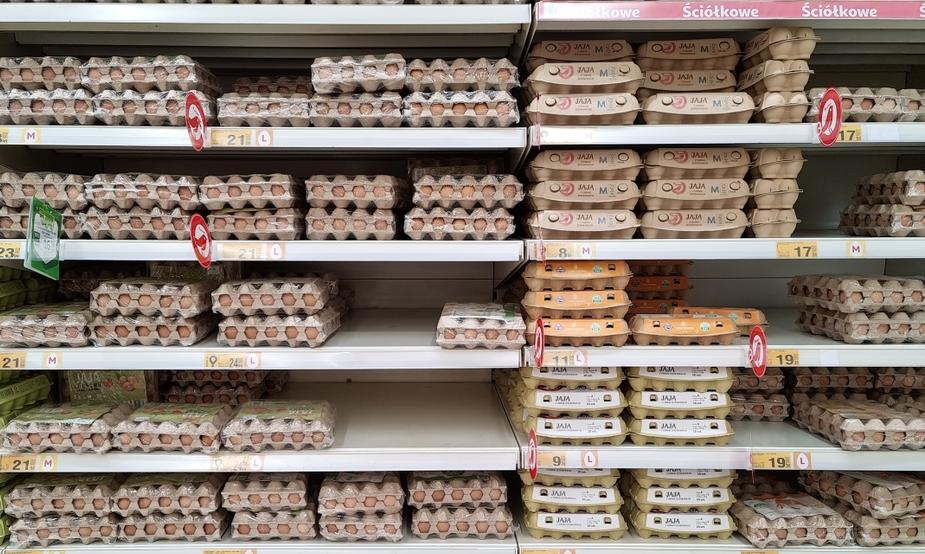
Okay. 68 percent egg production in our country – until recently, the most popular cage eggs, the so-called “threes”. Meanwhile, many retail chains have stopped selling them, offering consumers more expensive eggs from the so-called alternative breeding, i.e. not cage breeding.
The decisions of retail chains not to sell cage eggs reflect the trend and efforts of pro-animal and ecological organizations that advocate the complete abandonment of keeping hens in cages. The planned changes are aimed at significantly improving animal welfare. Meanwhile, in many countries, the most common way of obtaining eggs is still cage farming.
No more cheap caged eggs. The EU is preparing a ban
The European Commission announced the introduction ban on cage breeding of chickens from 2027but for now there is an ongoing discussion, as producers point to the high costs of switching production and demand a long transition period, claiming that a quick abandonment of cage breeding may lead to an increase in prices, among others. eggs.
According to the National Chamber of Poultry and Feed Producers, in Poland the production structure is dominated by cage eggs (68%). the second largest group are barn eggs, which account for 23.8%. production. The supply is supplemented by those from free-range hens (7.1% of production) and organic ones, accounting for 1.4%. production.
Egg revolution in stores. How to read labels?
It is worth recalling how to distinguish eggs from different production systems and what the markings on egg shells indicate. The code on the shell must include the breeding system (0-3), the country code (e.g. PL) and the veterinary identification number. Packaging must have a quality class (A), weight class (XL-S), expiry date and packing house code.
The number 0 – means that the egg comes from an organic farm, from a free-range hen. Organic farming provides the birds with the most space and they are fed only with organic feed. Number 1 – means that the eggs were laid by free-range hens, which must have access to a run mostly covered with vegetation during the day. Number 2 – means eggs laid by hens living in a closed room equipped with nests, perches and litter. The number 3 means that the egg was laid by a hen that spends its entire life in a cage, in groups of 20-60 birds.
Eggs that do not come from cages are called alternatively farmed eggs.
The next marking on the packaging is the egg class. Class A eggs are offered in stores – they are fresh eggs that cannot be washed or cleaned in any other way before sale, and their shell cannot be damaged.
Revolution on egg shelves
The second classification is the division according to weight. There are 4 weight classes: XL – eggs weighing equal to or greater than 73g; L – from 63g to 73g; M – from 53g to 63g; S – lighter than 53g.
Egg prices mainly depend on the breeding method and the size of the egg. The most expensive are eggs from organic farming, their prices on the markets reach up to PLN 2.5 per piece, the cheapest – “threes”. Larger eggs are more expensive, and the most frequently purchased are medium-sized eggs – “M”.
Egg consumption in our country is growing, according to IERiGŻ calculations, in 2024 it amounted to 201 pieces per inhabitant compared to 179 pieces a year earlier. At the same time, we consume fewer eggs in Poland than in the EU and in the world.
According to the Integrated Agricultural Market Information System of the Ministry of Agriculture, the average prices of 100 pieces of eggs sold in packing plants (wholesalers) as of March 23 this year. were: caged (3) – PLN 80.13 (L), PLN 69.84 per unit (M); bedding – 91.14 (L), 78.53 (M); free range – PLN 92.63 (L), PLN 84.53 (M); from organic farming – PLN 95.56 (M). During the year, the price of barn eggs (M) increased the most – by over 17%. and organic eggs – by 15%. The price of class M cage eggs almost did not change (+0.7%). (PAP)
awy/ drag/