This is how NATO guards the eastern flank. They have seconds to react. “The Russians are constantly watching us.”

The military base in Kaunas, Lithuania, surrounded by barbed wire, is almost completely cut off from the outside world. Radio masts rise into the sky, cameras constantly monitor the area. The entire area gives the impression of a facility with the highest level of security.
And in the middle there is a yellow town board that can only be seen in Germany: Holzdorf. Welcome to Brandenburg.
The German flag and Bundeswehr soldiers at the base in Lithuania – a symbol of NATO's presence on the eastern flank and readiness to respond to Russian actions in the regionDie Welt
The area behind it belongs to the Bundeswehr. Okay. 80 containers are placed tightly next to each other, with a green camouflaging tent set up in the middle.
This is the Deployable Control and Reporting Center (DCRC) – a mobile air force command post, which is stationed in Holzdorf in Brandenburg on a daily basis and is regularly transferred abroad.
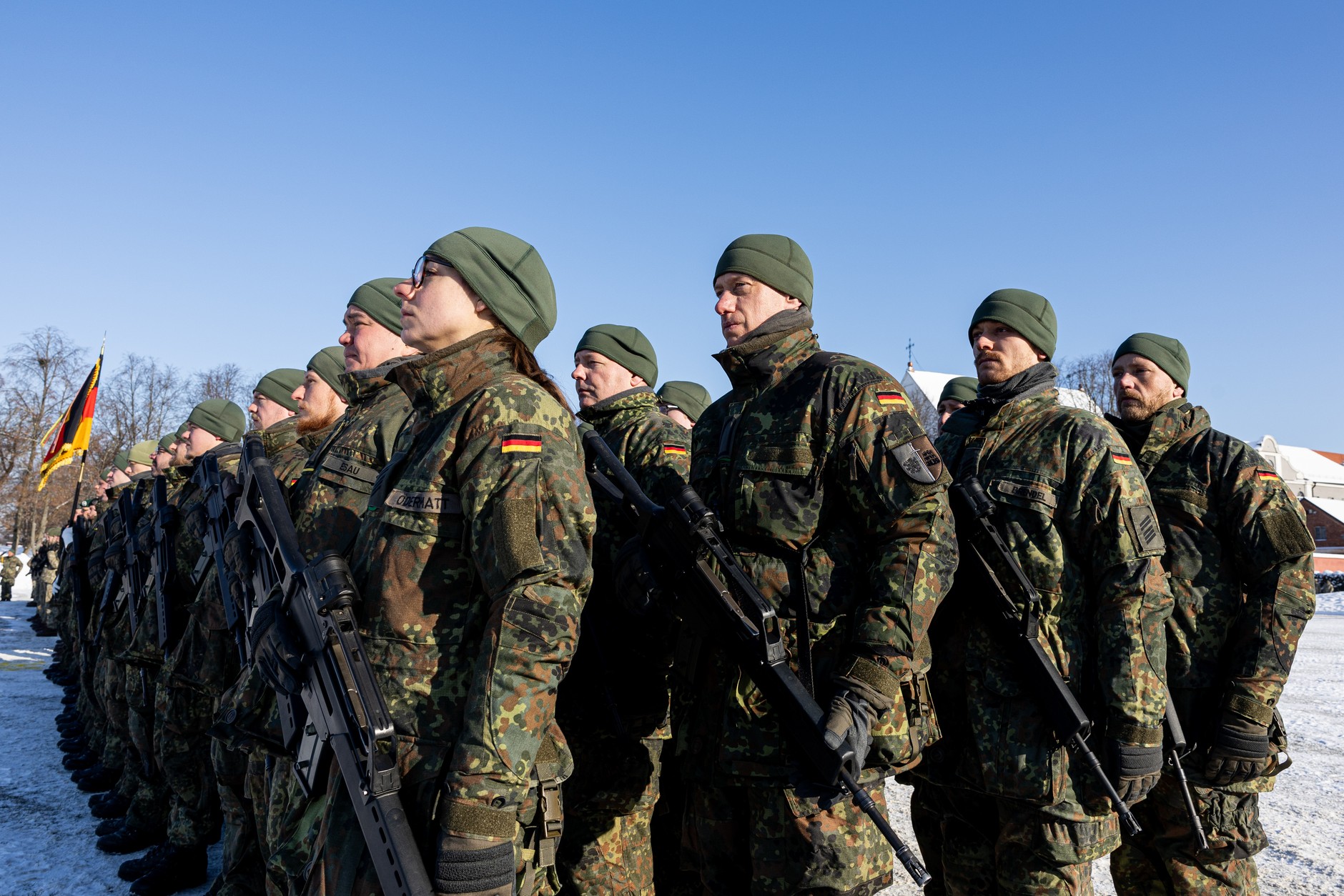
German soldiers in Kaunas, Lithuania (illustrative photo)Paulius Peleckis / Stringer / Getty Images
Because right here, on its eastern flank, Russia is literally right next door.
Bottleneck on the Baltic Sea
International airspace over the Baltic Sea is very narrow – between Finland and Estonia it is only a few kilometers wide in places. Russian military planes regularly fly there between St. Petersburg and the Russian exclave, the Koenigsberg Oblast.
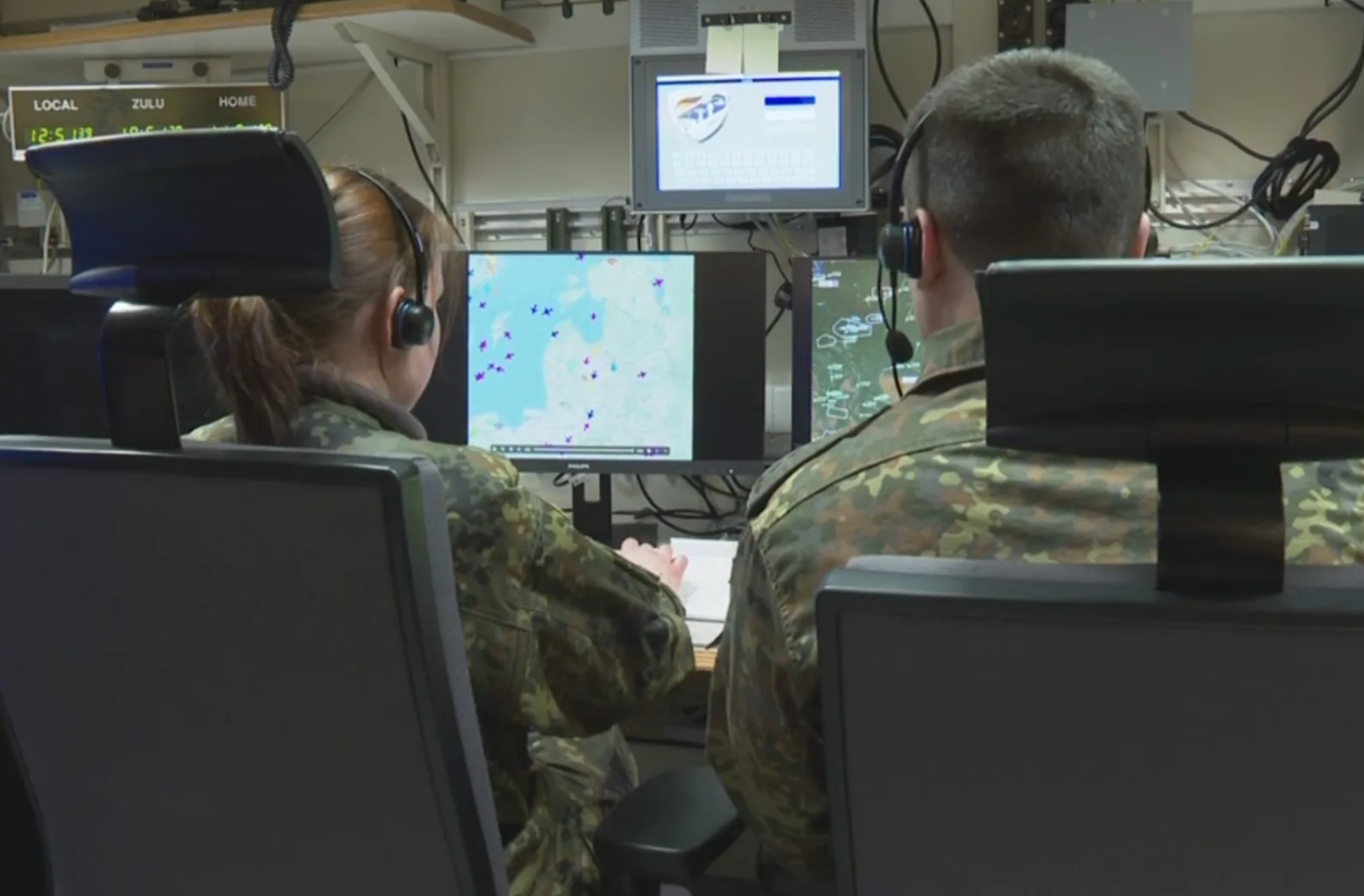
German army soldiers monitor the airspace in KaunasDie Welt
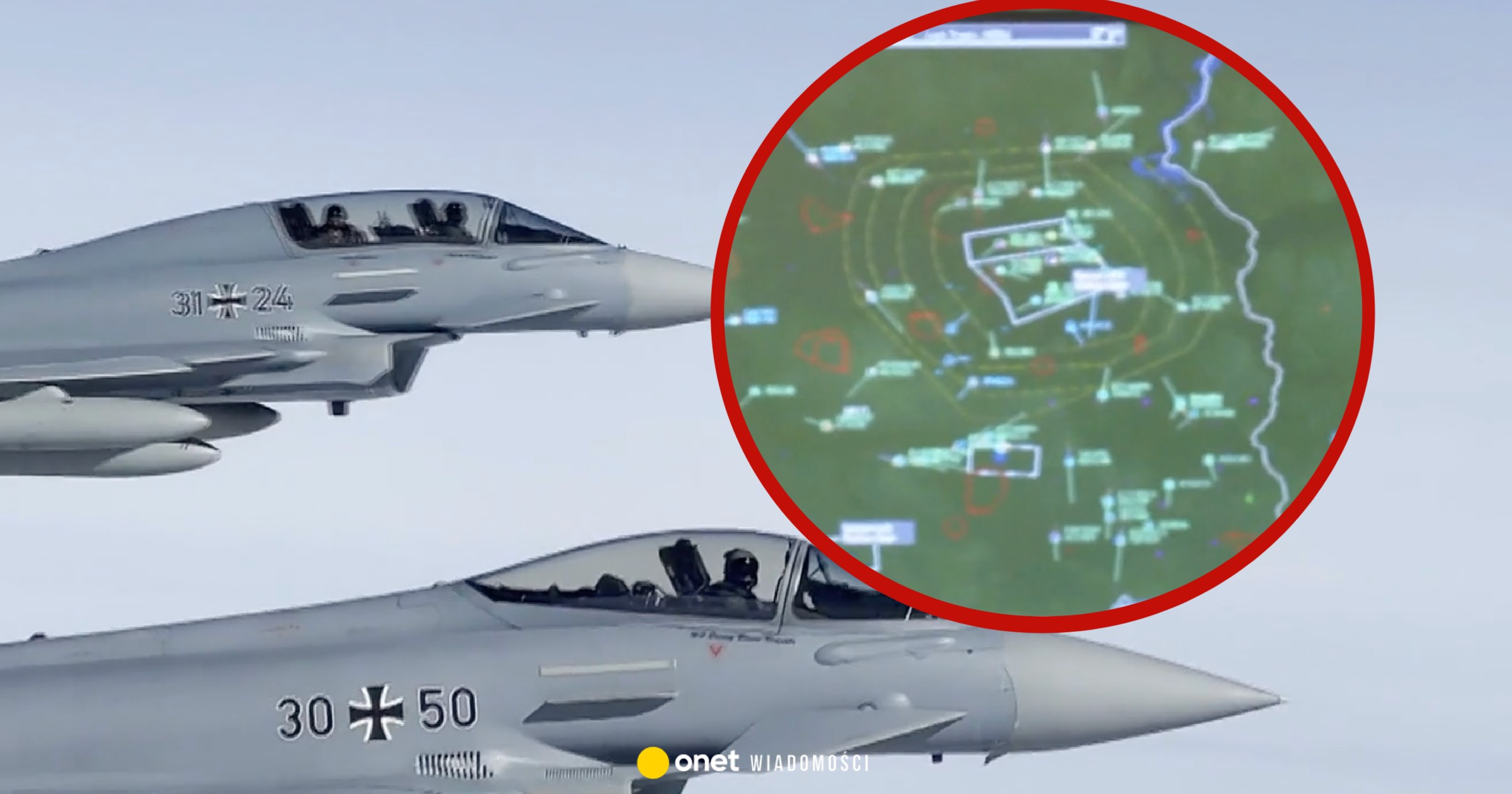
There is a concentrated silence in the containers. Soldiers wear headsets through which they communicate with each other. Their eyes are glued to monitors where colorful symbols move across a green map. Lieutenant Andy [uwaga redakcji: imię zmienione ze względów bezpieczeństwa] constantly observes the so-called picture of the air situation.
Data is provided 24 hours a day by hundreds of radars located throughout Europe. Thanks to this, even machines without an active transponder can be detected.
“Sky Police”
For an officer responsible for air surveillance, this is everyday life.
There's no pressure here. But when a Russian fighter appears on the screen, every second begins to matter. NATO must then decide whether to send a pair of standby fighters
– says.
When the decision to intervene is made, everything happens quickly. Malte fighter guidance officer [imię zmienione przez redakcję] launches the so-called an alarm pair that must be in the air from the bases in Amari, Estonia, or Šiauliai, Lithuania, within 15 minutes.
Such alert pairs are a kind of “sky police” and usually consist of two combat aircraft. Since the Baltic states do not have their own air forces, NATO allies take over this task on a rotational basis.
In an emergency situation, Malte, under enormous pressure, radios the pilots the course and flight altitude.
Two years ago we were in Estonia and intercepted Russian fighter jets. They had suspended weapons
– he recalls. Last year, NATO Air Command recorded over 500 such emergency launches.
Although there have been no further airspace violations since then, the threat is still high.
We feel how tense the situation is here, how focused people are. The Russians are constantly watching us, even if at first glance everything seems calm
– says Colonel André Megow, mission commander. Its main purpose is deterrence.
“We must adapt to new threats”
For fear of espionage, many soldiers get rid of their smartphones after leaving service. Some people buy used devices especially for this purpose. Radio-capable equipment is completely banned – the risk of sensitive data being intercepted is simply too great.
However, DCRC is not just vulnerable to digital threats. Its structure is also considered a weak point. This container town has existed since 2006 and is moved regularly. Its size and concentration in one place make it a potential target of attack – and make it easy for the opponent to predict its functioning.
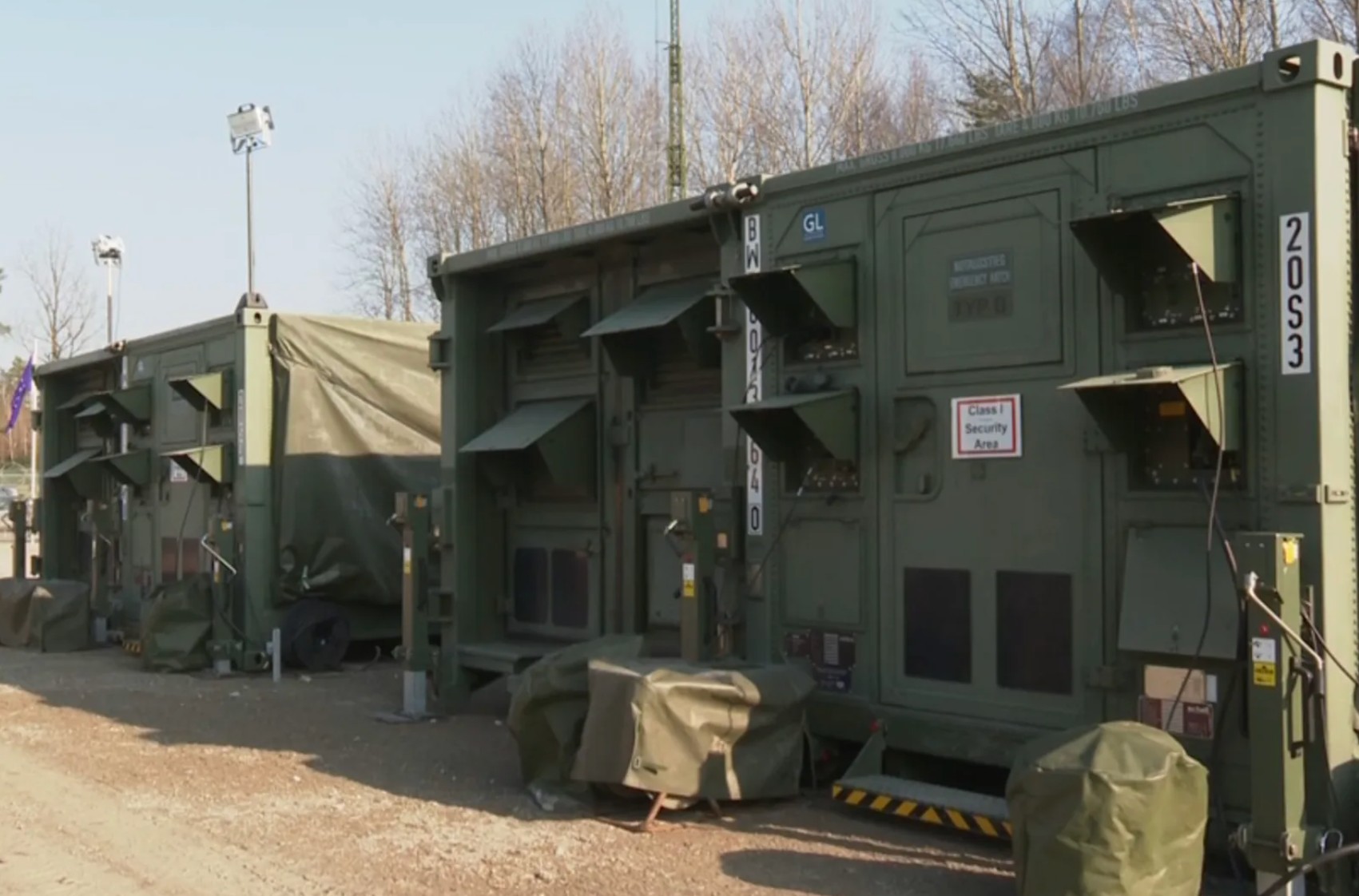
Control and reporting centerDie Welt
That's why the need for a modular system is being talked about more and more in the Bundeswehr. If the units were more dispersed, it would be more difficult to eliminate them in one hit.
We must adapt to new threats
– Megow emphasizes.
In addition to the supervision itself, German and Lithuanian soldiers jointly practice scenarios in the event of a real conflict. The Lithuanian facility is just a few steps away. They practice maneuvers using combat aircraft in various situational variants.
Thanks to this, they better understand the specificity of the airspace and strengthen cooperation between them.