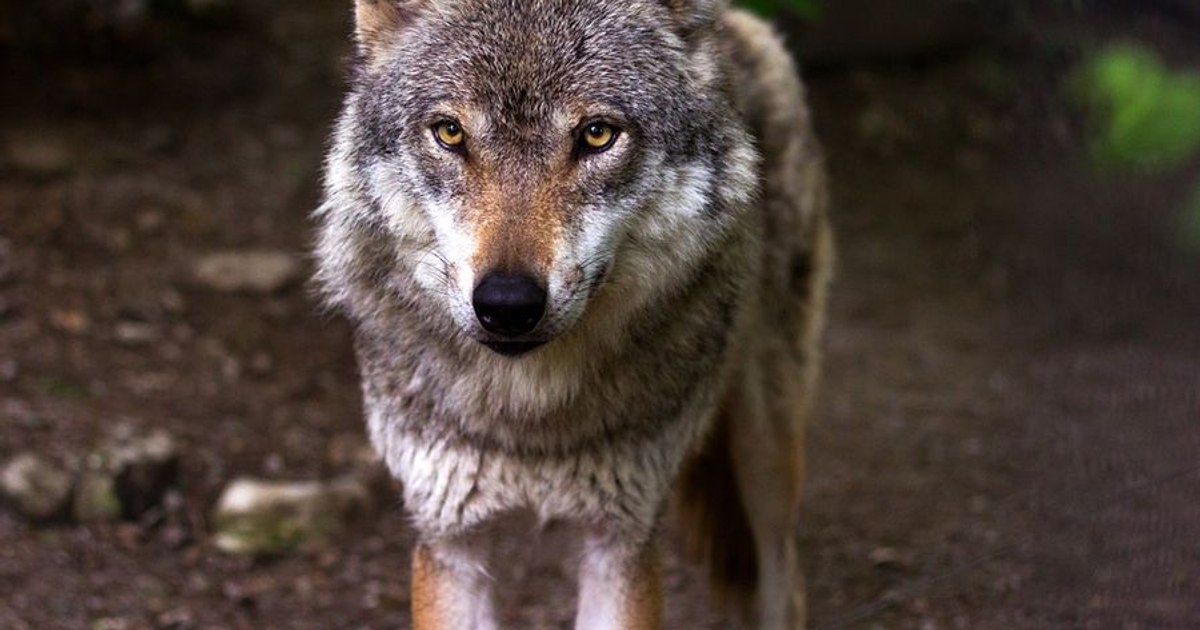
An unusual incident occurred in Hamburg, where a woman was bitten by a wolf in a shopping district. It is the first case of this kind recorded in Germany since the return of the species in 1998.
A woman was bitten by a wolf in a shopping area in Germany PHOTO: Archive
The 65-year-old woman was attacked on Monday evening near the Altona train station, located in the west of the city. According to the fire service, she was transported to the hospital after meeting the animal. The victim suffered facial injuries, but police did not provide details on the exact location of the bite or the circumstances that led to the attack, according to Euronews.
That same evening, the authorities located the wolf in the area of the Binnenalster lake in the center of Hamburg, after several calls signaling its presence. Local media reported that the animal was pulled out of the water with a noose and transported to a pen on the outskirts of the city. Officials believe it is the same specimen seen over the weekend in Blankenese, a suburb of Hamburg.
The experts' explanation: a young, disoriented animal
Specialists say that the wolf would be a young specimen, in search of its own territory, which accidentally arrived in the urban environment. Hamburg's regional government pointed out that wolves typically avoid contact with people and dogs, and the city is an environment “very stressful” for such animals.
Germany's Federal Agency for Nature Conservation said it was the first attack by a wild wolf on a person since the species reappeared in the country after an absence of about 150 years.
At the same time, attacks on domestic animals have become an increasingly common problem in Europe, raising concerns among farmers. Last year, the European Parliament voted to change the status of wolves from “strictly protected” to “protected“.
Wolf population, increasing in Europe
Currently, wolves are present in almost all states of the European Union, and their numbers have increased significantly, from about 11,000 in 2012 to more than 20,000 in 2023. Countries such as Italy, Bulgaria, Romania and Spain each have populations of more than 2,000 specimens.
Recently, the German parliament passed a law making it easier to shoot wolves that attack or injure domestic animals in an attempt to limit the damage to farmers.