Over the decades, the Revolutionary Guards created not only a vast security apparatus, but also an ecosystem of economic benefits that protected the collapsing regime and benefited millions of loyalists, the WSJ reports.
Iran's leadership relied not only on ideology to maintain its grip on power, but also on a vast web of economic incentives that made millions of citizens dependent on the survival of the Islamic Republic.
At the heart of this system is an extensive patronage network built over decades by the Revolutionary Guards, who now control more than half of the country's economy. It rewards loyalty with financial benefits, career opportunities and privileged access, while strengthening the state's ability to suppress dissent, according to academics and analysts who study Iran.
Iran's vast security apparatus is not held together by ideology alone, but by a system of economic incentives that make the collapse of the regime a direct threat to the livelihoods of its followers.
This economic architecture has taken on renewed importance as Iran faces sustained external pressure, including weeks of Israeli and US airstrikes targeting its leadership and infrastructure. Despite mounting challenges, the regime has maintained internal cohesion. Recent polls suggest that only about 20 percent of Iranians support the government, but this minority forms a tightly knit coalition of clerics, paramilitary forces and civilians with common economic interests.
That cohesion is no accident. “Millions of people receive benefits in exchange for their loyalty to the regime,” explained Ali Vaez, head of the Crisis Group's Iran project. “They don't want to lose them.”
The benefits are varied: cash vouchers, preferential access to universities, subsidized loans and favorable foreign exchange rates. Together, they form a safety net for loyalists – and a barrier against betrayal.
The two forces protecting the Iranian regime
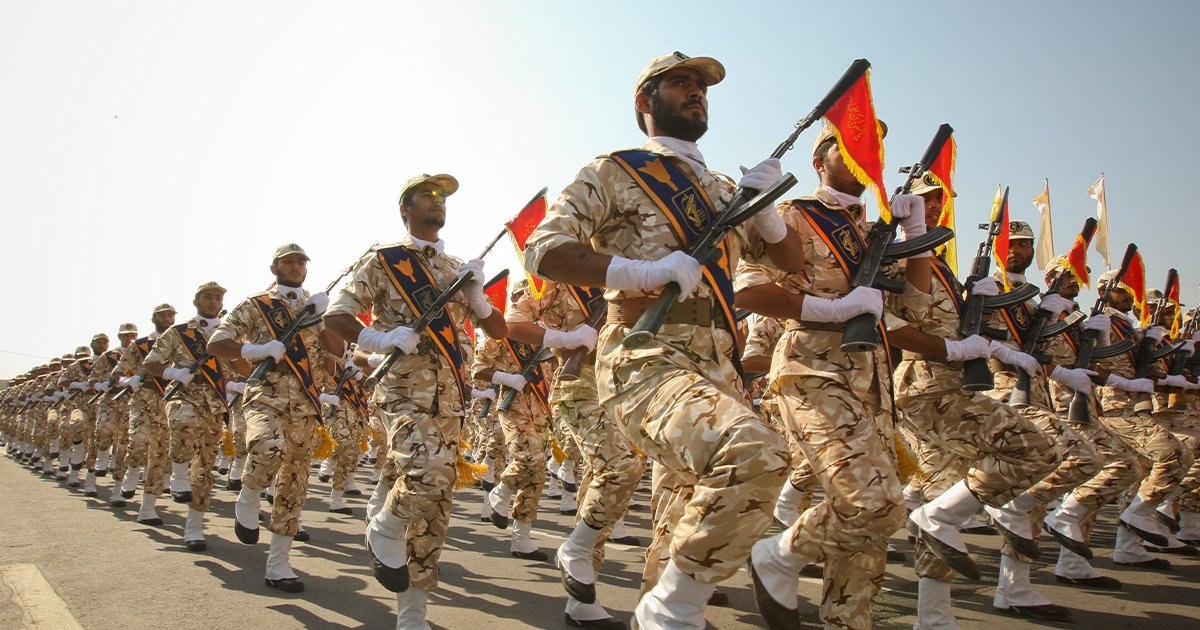
At the heart of the system is the Islamic Revolutionary Guard Corps (IRGC), an elite force tasked with defending the regime. With at least 125,000 members, the Guardians function not only as a military organization but also as a powerful economic actor. It operates as a semi-state corporation, dominating sectors from oil and gas to construction and telecommunications, while simultaneously trading in consumer goods.
The guards work alongside the Basij, a hardline volunteer paramilitary force of around 700,000 members. Deeply rooted in society, it occupies positions in universities, government offices and state-linked companies. Members receive regular training and are often mobilized to counter protests.
Unlike the army, “Basij is part of society,” explains Azam Jangravi, an Iranian activist against the veil. She recalled instances where protesters confronted neighbors who joined the force, highlighting how deeply it is integrated into everyday life.
The stakes are evident in individual stories. Saeid Golkar, an expert on Iran's security services, has revealed that he has acquaintances within the Guardians and Basij who have prospered from membership in the system. For example, one member of the Guardians obtained loans to buy two apartments in northern Tehran and lived off the rent after assignments abroad to assemble missiles for Iran's allies. When the protests broke out, he joined the Basij units to “beat the protesters with sticks” in his own neighborhood.
The collapse of the Iranian regime could trigger a nightmare scenario for Israel
Economic influence extends far beyond individuals. Companies controlled by the Guardians frequently win major public contracts for infrastructure projects – dams, highways, subway networks, hospitals and even luxury hotels. After the multinationals pulled out because of sanctions, affiliates linked to the Guardians were awarded no-bid contracts in key energy projects, including the huge South Pars gas field, according to executives from Revolutionary Guard companies and Iranian oil officials.
Khatam al-Anbiya, the Guardians' largest conglomerate, holds an estimated $50 billion in contracts — about 14 percent of Iran's GDP, according to a 2023 report by the Washington Institute for Near East Policy.
An octopus that controls 50% of the economy
Added to these is a network of powerful religious foundations (bonyads) aligned with conservative clerics. Together with firms linked to the Guardians, they control more than half the economy, according to a 2025 report by the Clingendael Institute.
“This 'military-bonyad complex' is the fundamental binder of Iran's political economy and underpins the state's economic power,” the report said. “This complex remains steadfast” and “allows little internal political change.”
These entities benefit from significant advantages. They are exempt from taxes and have privileged access to foreign exchange and government contracts. Basij-affiliated traders also receive favorable terms for imports, allowing them to profit even under the constraints of international sanctions.
Loyalty is cultivated early. Regime-aligned students are often given priority at top universities, preparing them for influential government roles or well-paid positions in companies controlled by the Guardians, people who have studied and worked with the loyalists say. Wages can be up to five times higher than in other companies, according to a former oil engineer who worked in the system. Still, membership matters: Basij members tend to advance faster and receive benefits such as housing and company cars.
The expectation of loyalty extends to the public sector. About three million state employees are often encouraged — sometimes under professional pressure — to attend pro-government rallies, according to former employees.
Even small incentives count. In Isfahan, a contractor working with the Guardians revealed to a resident that he receives vouchers equivalent to about $9 each. Such payments are frequently distributed to Basij members for voluntary work such as guarding checkpoints.
“For the poorest Iranians, they are very valuable,” Golkar said.
These layers of economic dependency form a difficult system to break down. For those embedded in it, the cost of political change is immediate and personal, related to income, status and security. Thus, the same network that enriches loyalists strengthens the regime against forces that might otherwise threaten its survival.