After four years of war that have torn society apart and left tens of thousands dead, Ukraine is facing an increasingly difficult problem: the lack of people willing to fight. And the army is trying, not without difficulties, to reinvent itself on the fly, writes AFP.
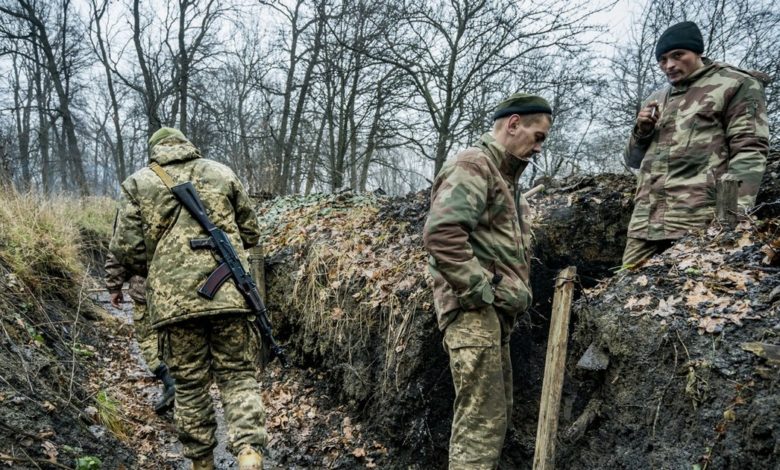
Ukrainian soldiers on the front PHOTO: Profimedia
In a forest near one of the largest military training centers, the reality is far from the official rhetoric. Mock explosions, shouts, short orders—and recruits, some very young, some past their prime, brought here not out of conviction but out of obligation.
“You need motivation,” says an instructor known only as Alex. But exactly this motivation seems to be missing more and more.
From volunteers to conscripts
In 2022, when Russia launched its full-scale invasion, the recruitment centers were full of volunteers. Today, the situation has changed radically: most of those who join the army are recruited without having chosen it.
War fatigue, the uncertain length of military service, and the perception of an army still mired in bureaucratic reflexes inherited from the Soviet era eroded the willingness to enlist.
“People have more fear and negative expectations”says a 28-year-old instructor known as Buk. It's a simple observation, but one that says everything about the mood.
Trying to build a “new army”
The leadership in Kyiv recognizes the problem. The new defense minister, Mihailo Fedorov, promises reforms: changes in mobilization, more attractive contracts and better salaries, especially for infantry troops.
In parallel, units considered among the most effective are trying to change the way the army works from within. The message is straightforward: “let's build a new army.”
The duration of the training was extended and the methods became tougher, but also more adapted to the reality of the front. In an exercise, recruits go through the so-called “psychological course”: constantly broadcast battle noises, obstacles, constant pressure.
All to prepare them for what awaits them.
A contested mobilization
The mobilization campaign, however, remains controversial. There are allegations of corruption, abuse and unfairness.
President Volodymyr Zelenskiy says between 30,000 and 35,000 people are mobilized per month. But another reality complicates the picture: desertions.
According to official data, more than 230,000 criminal cases have been opened for leaving the unit — either during training or after being sent to the front.
“That's how I was taken”
Behind the numbers are individual stories. A 26-year-old young man with the code “Sailor” simply tells how he got into the army: “I was going to the store. That's how they got me.”
He does not hide his apprehension. The first few days were the hardest—the moment when he had to accept reality.
And yet, surprisingly, he says the experience wasn't as tough as he feared. He found the training even “calmer” than he had imagined.
Slow but necessary change
Instructors insist things are changing. Training is constantly being adapted, and the focus is increasingly on recruit understanding, not just discipline.
“It's the key to survival”says Buk. Without analysis, without correcting mistakes, without continuous learning, the consequence would be only one: destruction.
And yet, beyond official statements, reality remains imperfect. Standards differ from one center to another, and some units experience mass dropouts.
“There's still a lot to do”admits, under the protection of anonymity, one of the instructors.
A simple phrase, but which, in the context of this war, acquires the weight of a truth that is hard to ignore, notes AFP.