
The return of Polish industry. Already half of metal companies want to produce for the army

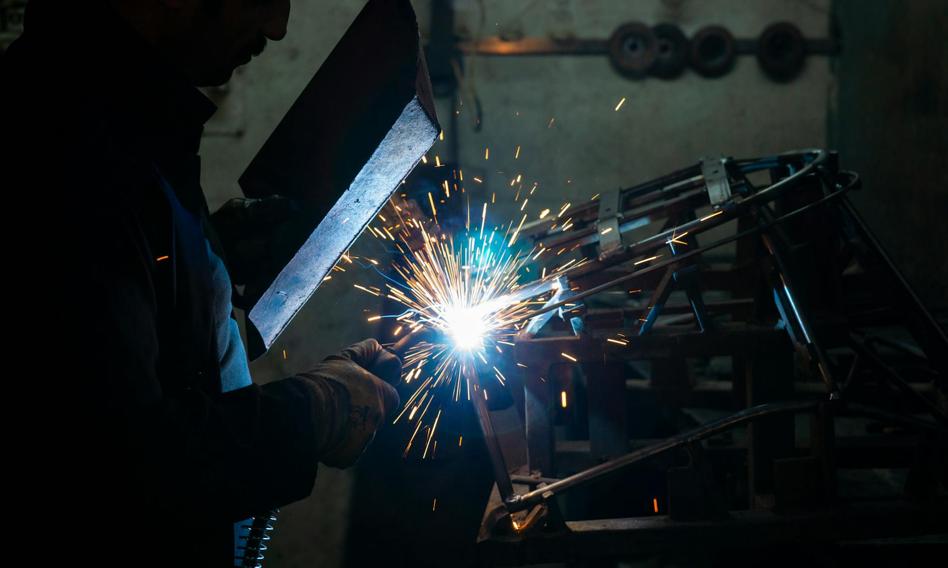
Currently, over 50 percent companies from the metal industry implement projects for civilian and military purposes or declare interest in them – according to a report by Bibby Financial Services. It was noted that the industry, however, needs market protection and lower energy prices to remain competitive.
The energy crisis has taken its toll on the metal sector, affecting the profitability of companies. In recent years, the main problem limiting the operational capabilities of manufacturers was the increase in energy costs, which had an impact on margins – according to the report entitled “Steel at the front. Metal industry in Poland – 2026” prepared by Bibby Financial Services.
The authors of the study pointed out that this limited the development opportunities of metal processing companies. “Demand has decreased, and it has become more and more difficult to recruit qualified employees,” they pointed out, adding that as a result, 1/5 of companies in the industry are facing a decline in sales.
“Price pressure from cheaper competition from Asian countries and staff shortages limit the ability of companies to implement innovative solutions,” experts emphasized. In June 2025, 47 percent companies from the metal sector indicated energy costs as the greatest threat. This is an increase of 7 points. percent compared to the survey from September 2024, in turn 38 percent companies experience an increase in the costs of raw materials and materials.
According to experts, producers were “skeptical” about last year's data from the Central Statistical Office. “Last year's data were indeed optimistic: the production of metal products increased in May by as much as 11.8% year-on-year, and the production of metals (metallurgy) by 10.5% – both indicators exceeded the average for the entire industry,” added the authors of the report. In their opinion, however, these first symptoms of recovery were right not to convince market representatives.
“The latest data from the Central Statistical Office show that metal production decreased in January 2026 by as much as 14.4%. A larger decline – by 17%. – only the category “products from other non-metallic mineral raw materials” was recorded. In turn, the production of metal products decreased by 6.6%. An increase was recorded, among others, in the production of machines and devices (by 12.6%) and in the repair, maintenance and installation of machines and devices (by 14.3%),' the report states, noting that in January 2026, more new orders came to producers of metal products (an increase of about 10%).
“I would not expect a breakthrough in 2026. However, it is very likely that the demand for stainless steels will grow more and more clearly. This is the result of the revival in the industry and increasing investments, including in the energy and arms sectors,” noted Andrzej Michalski-Stępkowski, president of the Stainless Steel Association.
The report refers to the estimates of the consulting company Deloitte, according to which Poland will spend a total of PLN 1.868 billion on national security in 2025-2035. For comparison, in the period 2014-2024 Poland allocated PLN 825 billion for this purpose.
“Especially after Russia's aggression against Ukraine on February 24, 2022, we are observing a clear change in the approach of companies from the metal industry to cooperation with the defense industry, both on the Polish and international markets. Even before that date, the interest of enterprises in the area of dual-use solutions (civil and military applications) was only 3-5 percent, but currently over 50 percent of companies are implementing such projects or declare their readiness to enter into cooperation in this area,” he said. prepared by Sebastian Rynkiewicz, president of the Center for the Promotion of Innovation and Development, coordinator of the Evoluma Industrial Cluster.
“Increased orders from the defense sector constitute a real opportunity for many metal companies – especially those with competences in the field of precision machining, production of specialized components or materials with improved technical parameters. This may mean more stable order portfolios and an investment impulse,” said Bartosz Mielecki, managing director of the Polish Automotive Group.
He pointed out that at the same time, the defense sector requires high quality, certification and financial standards. For some companies, entering this area will mean the need for organizational and capital adjustments. “The metal industry today faces the challenge of maintaining a balance: we need effective market protection, but it is equally important to maintain the competitiveness of European producers of finished products. Without this, it will be difficult to talk about a lasting recovery in the industry,” Mielecki concluded.
The report also refers to a study conducted in January 2026 by Keralla Research on a sample of 100 companies, which shows that already 40 percent metal processing companies carry out orders for the Polish defense sector, and the same number plan to enter or consider cooperation in this area. “Today, 8 out of 10 enterprises are directly or potentially related to the arms industry. Both small plants and large enterprises declare openness to cooperation with the arms industry,” it was noted.
The authors of the study noted that The barrier most frequently indicated by companies is the lack of appropriate contacts enabling market entry, as indicated by 27 percent. surveyed companies. Every fourth processor mentions regulatory or certification barriers, too long payment terms and the related financial risk.
The study “The situation in the metal industry – 2026” covered 100 companies from all over Poland – small, medium and large producers processing metals (excluding micro-enterprises). It was carried out in January 2026 by the Keralla Research institute using the Mix-Mode method (CATI + CAWI), on a representative group of people responsible for running the company (owner, manager) or responsible for purchases or development.
Bibby Financial Services is a factoring company, part of the Bibby Line Group – an independent British group of companies. (PAP)
ab/ drag/


