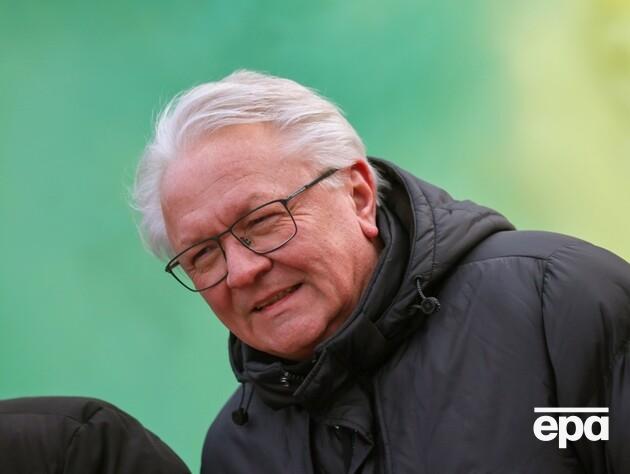
When the journalist mentioned Ukrainian drones, Papperger compared them to playing with Lego.
“What is Ukraine’s innovation? They don’t have any technological breakthrough. They innovate with their little drones and say: “Wow!” And that’s great. But this is not the technology of Lockheed Martin, General Dynamics or Rheinmetall,” he said.
The head of the concern asked the journalist who is the largest manufacturer of drones in Ukraine. He named the factories he visited in Kyiv two weeks before the interview: Fire Point and Skyfall, which produce hundreds of thousands of drones per month. “These are Ukrainian housewives. They have 3D printers in their kitchens and they produce parts for drones. This is not innovation,” Papperger responded.
The author notes that Ukrainian drones are indeed assembled mainly from imported parts. Most of these components come from China. But their cheapness, especially compared to sophisticated weapons systems from major manufacturers, is precisely what makes them so destructive. For just a few hundred dollars, Ukrainian drones can cause serious damage to military equipment worth millions of dollars, Shuster notes.
Despite this, Western countries continue to increase purchases of traditional weapons. Following the outbreak of war in 2022 and rising defense budgets, the demand for tanks, artillery and ammunition has increased dramatically. Rheinmetall, in particular, has significantly expanded production and received multi-billion dollar orders from NATO countries.
Experts explain this situation by the inertia of the military industry and the peculiarities of financing: it is easier to conclude large contracts for expensive systems than for the mass production of cheap drones. In addition, the introduction of new technologies in NATO countries is complicated by bureaucracy and certification requirements.
Meanwhile, Ukraine is rapidly increasing the production of drones and has already become one of the world leaders in this field. Drones now cause the bulk of casualties on the front lines, and their range and accuracy often surpass traditional artillery, the article says.
Nevertheless, defense concerns continue to rely on conventional types of weapons, which calls into question the readiness of Western armies for future wars, where cheap and mass-produced technologies can play a decisive role.
Context
Since the beginning of the full-scale invasion of the aggressor country Russia, Ukraine has been increasing the production of its own weapons. According to the former Deputy Prime Minister for Innovation, Development of Education, Science and Technology – Minister of Digital Transformation Mikhail Fedorov, more than 90% of drones used on the battlefield produced in Ukraine.
On March 4, 2025, the then Prime Minister of Ukraine Denis Shmygal stated that Ukraine produces about a third of the weapons needed on the battlefield and the most military drones in the world.
The GORDON publication talked about the most famous interceptor drones produced in Ukraine.