War and inflation are supposed to be gold's “friends”. Why the price of the precious metal fell

This should be the time when gold proves its role as a shield for investors against inflation and geopolitical risks. Instead, gold collapsed: last Thursday, March 19, it was down 14% from the level before the outbreak of the Israeli-American war against Iran.
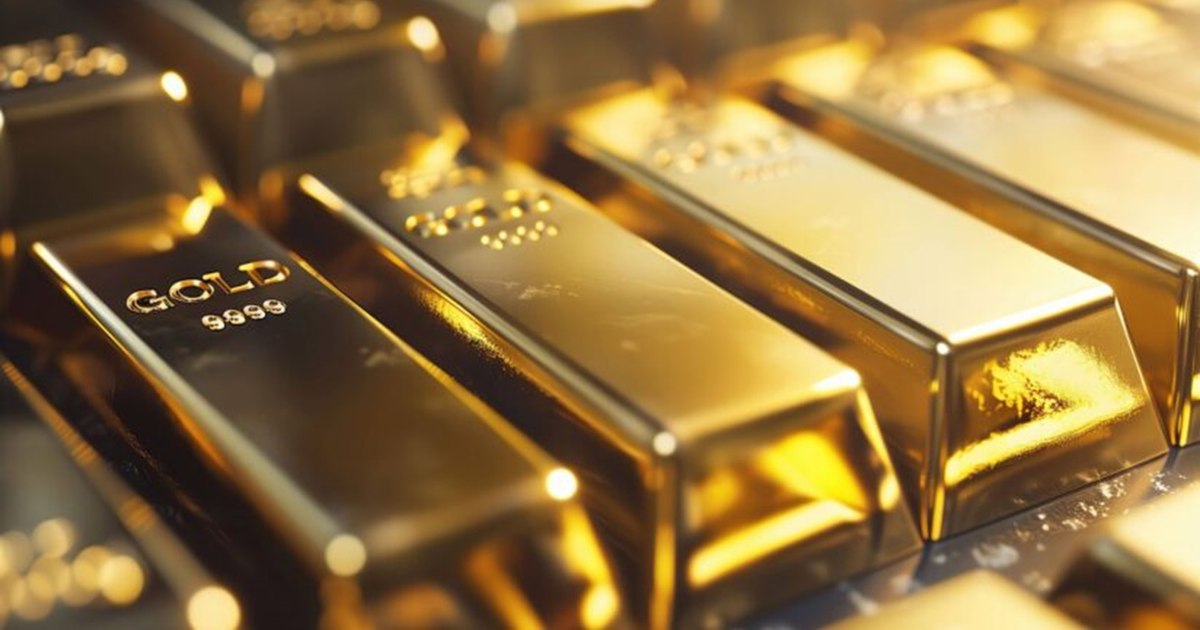
The price of gold fell. PHOTO: Profimedia
Gold “collapsed” on Thursday, down 14% from the level before the start of the Israeli-American war against Iran, reports The Wall Street Journal. Investors are disillusioned with the oldest source of safety.
There are technical explanations for gold's failure to live up to its promise, but they don't really stand up to close scrutiny. The problem is one that haunts investors every time they pile into trendy trades: other investors.
In short, gold had become extremely popular in the last year, so that once the war started, it became the first thing to be sold, either as a precaution or to reduce debt.
American journalists try to explain. Gold is valued in dollars, and the dollar has appreciated greatly since the beginning of the bombings due to the US's position as a net energy exporter. This should directly affect gold and other globally traded dollar assets. However, gold also fell sharply in sterling (11%), euro (10%) and yen (11%).
The dollar fell, which should have helped gold
Thursday provided a new test. The dollar fell, which should have helped gold. But the precious metal had its worst day since the start of the war, falling nearly 6%. At best, the dollar explains only a small part of this decline.
Gold is also usually sensitive to inflation-adjusted real interest rates. If we consider it a safe asset that protects against inflation, then the opportunity cost of holding gold is the real return offered by Treasury Inflation-Protected Securities (TIPS). Thus, the price of gold should fall when yields rise, as it becomes relatively less attractive.
And the yields have increased. Investors anticipate higher inflation in the near term and expect the Federal Reserve to hold or even raise interest rates this year. That's a big change from expectations a month ago, when two or even three rate cuts were forecast, sending the 10-year TIPS yield higher.
This partially justifies a lower gold price, but does not fully explain the current declines. In the past, the price of gold has consistently moved in the opposite direction to TIPS yields, but this relationship has broken as gold has risen in price. For a year, gold rose with yields. During the war, however, the link appears to have returned, moving in the opposite direction on 11 of the last 15 days. However, as with the dollar, this only explains a small part of the decline.
Radu Burnete's explanations about the fuel crisis: “If you want a substantial reduction in prices, you must reduce VAT or excise duties”
Gold has become a 'crowded' investment
The best explanation is that gold has become a “crowded” investment. As with stocks, what rose the most in the months before the war fell the most when investors withdrew.
Part of this phenomenon is due to traders who used loans to amplify their positions. When they reduced their risk, they sold the stocks they held and bought back the ones they sold short, leading to unusual swings in stocks popular with hedge funds.
It is impossible to know how much investors borrowed to buy gold. But it's clear that it has attracted a lot of speculative money over the past year. This was reflected in massive purchases of the leading gold ETF, SPDR Gold Shares. By last fall, the situation had become so extreme that the price of gold and stocks popular among small investors were moving in tandem.
As speculators reduce their exposure, gold naturally suffers.
The increase in central bank purchases also led other investors to take advantage of the trend
Gold's strong rally began as central banks began diversifying their reserves, shifting to gold instead of dollars, following Russia's foreign asset freeze following its invasion of Ukraine. The increase in central bank purchases also led other investors to take advantage of the trend.
But the war in Iran raises questions about how far this process can go. The role of foreign exchange reserves is to protect a country's ability to import in times of shock. Iran's response to the attack generated what the International Energy Agency calls “the largest supply disruption in the history of the global oil market.”
This is when oil importers should be consuming reserves, not hoarding them—and if they don't increase their reserves, it will be harder for them to buy gold. The oil-rich countries of the Persian Gulf region, which are facing financial problems because they cannot export through the Strait of Hormuz, could also switch from buyers to sellers.
A similar phenomenon applies to individuals, especially in India and China, where gold investments are more common than in the West. As oil prices affect economies, they may decide to sell some of their gold holdings.
However, these problems are temporary. As with all assets, once the “crowd” leaves, the price can return to fundamentals. In the case of gold, these mean inflation, interest rates and geopolitics. But there's no telling how many of the buyers from recent years will have to sell for that to happen. If these sellers include central banks, then gold may still have a long way to go before it regains its luster, the American journalists conclude.