Can the EU bypass Orban and Fico's veto? The law gives the answer [OPINIA]

But Slovakia and Hungary are actually blocking the loan that has already been agreed. And the EU does not have to agree to this.
Important addition: the mobilization of funds from the EU budget to guarantee this loan will have no impact on the financial obligations of the Czech Republic, Hungary and Slovakia. Let us note the unambiguity of this provision – the agreement does not contain any reservations or comments. Nothing should have hindered its implementation.
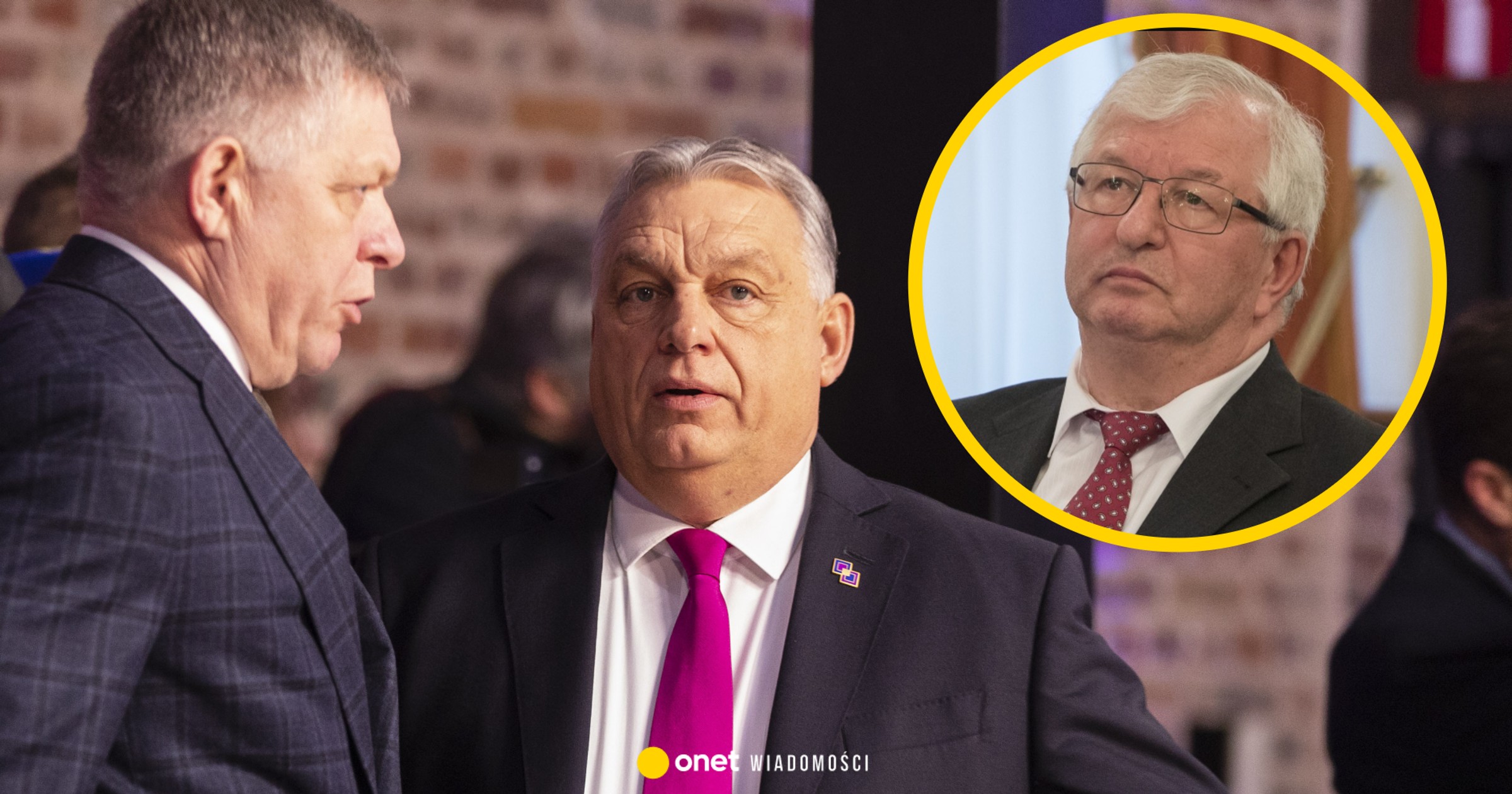
Viktor Orban and Robert Fico, Belgium, February 12, 2026.Thierry Monasse / Contributor / Getty Images
By concluding this agreement, the European Council pursued the objective enshrined in Article 3 of the EU Treaty: promoting peace, values and well-being of the peoples of the Union.
Yes, lending to Ukraine is intended to promote peace.
Yes – it can also contribute to increasing security in international relations.
In this context, it is less important that there are different visions of ending the Russian-Ukrainian war. European Union – representing 96.7 percent its population (Hungary is 2.1% and Slovakia 1.2%) and 25 member states – through this loan, it supports the effective defense of Ukraine against Russian aggression, seeing it as a greater chance for lasting peace in the future.
Who's breaking the rules here?
EU constitutional law (especially the Treaty on the European Union and the Treaty on the Functioning of the EU) does not explicitly provide for a mechanism for overcoming the opposition of the Prime Minister of Hungary and the Prime Minister of Slovakia supporting him. Fico did not support the summit's conclusions, which also include the issue of a loan for Ukraine.
Nevertheless, the question may be asked whether the principle of sincere cooperation – enshrined in the treaties – should not be enforced. The Union and the Member States are obliged to mutual respect and assistance in the implementation of the tasks arising from the treaties. Moreover, states should not take actions that could jeopardize the achievement of the Union's objectives.
In the case of this loan, this issue is particularly important because member states agreed to grant it at the summit in December 2025. The agreement also applies to Hungary and Slovakia – provided that they do not participate in its guarantee.
Opposition that changes nothing
In my opinion – taking into account the principles of treaty interpretation – the later one The Hungarian Prime Minister's objection has no legal force. To reverse the effects of the December agreement, the agreement of 26 member states would be needed to reverse its previous position.
There is no such decision. The same applies to Slovakia's position towards the March summit. Such an interpretation should also take into account that the change in Hungary's position – supported by Slovakia – violates the principle of loyal cooperation.
Hungary has broken this principle by ignoring the will of 25 member states and jeopardizing the EU's goal of contributing to peace in Ukraine, including by granting this loan.
Therefore, the European Council's decision to grant a loan to Ukraine – which is merely an implementation of the December agreement – remains valid and effective even without Hungary's consent, despite Slovakia's wavering opposition. Both countries act as if the agreement could be made conditional on new conditions – although it did not provide for such a possibility.
A rare and unprecedented step by Hungary
Of course, this interpretation may be questioned. It is somewhat unique and has no previous examples. It should be noted, however, that the withdrawal of consent by the Hungarian Prime Minister – without legal basis – is equally unprecedented.
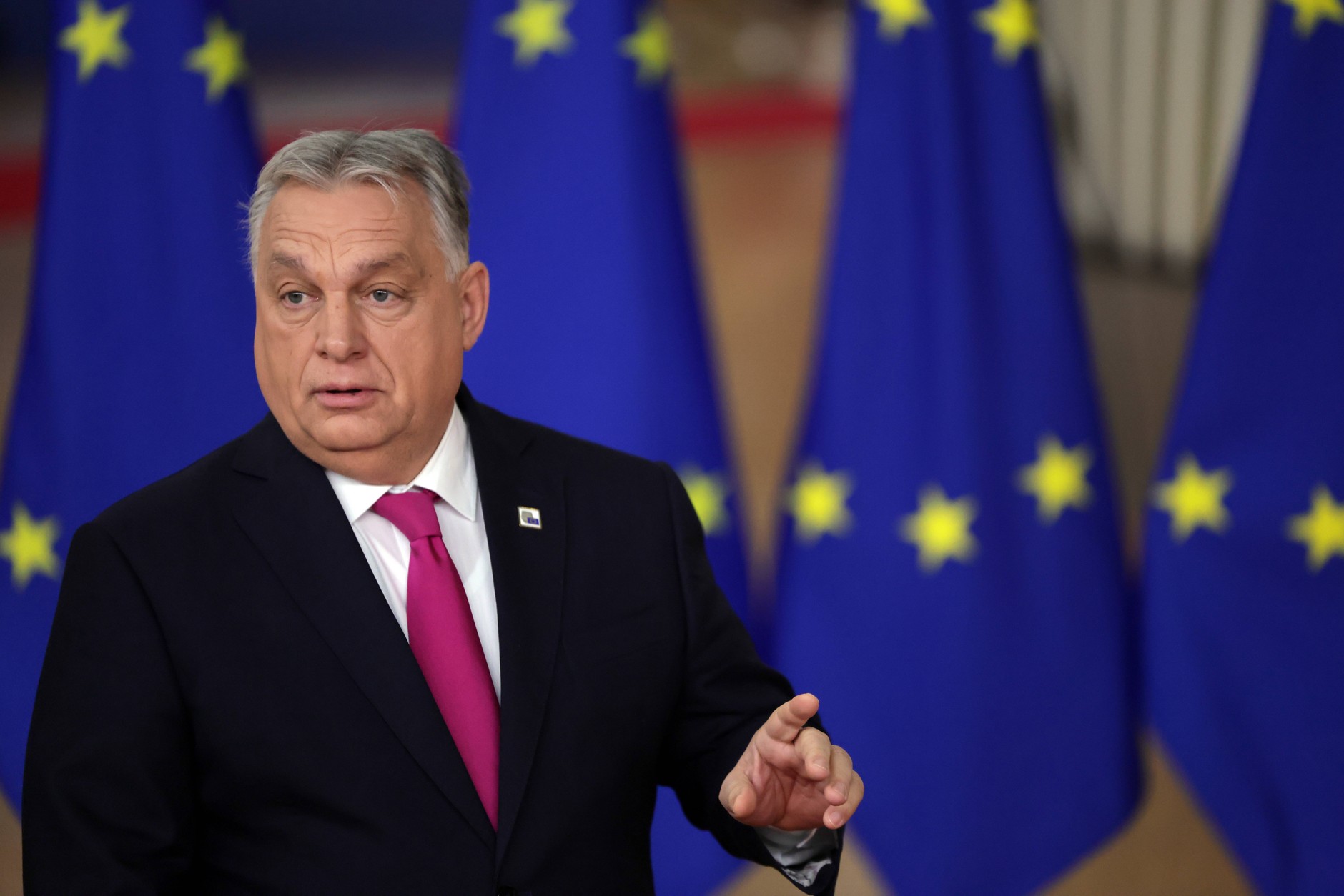
Viktor Orban, Prime Minister of Hungary, during the EU Council summit. Brussels, 18 December 2025Epa/OLIVIER MATTHYS / PAP
Non-standard actions should be responded to in a non-standard way.
The validity and enforceability of the March summit decision can be traced to the original agreement of all countries in December 2025 – which has not been amended, cannot be unilaterally invalidated and does not provide for additional conditions, such as the resumption of Russian oil supplies via the Druzhba pipeline.
Fico's political theater
The announcements of taking over the baton from Viktor Orban seem to be a political demonstration of power by Robert Fico. It is difficult to clearly define its purpose – perhaps it is to support Orbán before the elections or to mobilize his own electorate.
However, it is worth considering the consequences of such a step. According to the Slovak constitutional law on cooperation between the government and parliament in EU matters, the government is subordinate to the parliament.
The Parliament can approve state positions on EU legal acts, but also on other EU issues – at the request of the government or at least one fifth of the Members of Parliament. Such matters undoubtedly include the position on granting a loan to Ukraine.
“It's a disturbing vision – but quite real”
If the Prime Minister announces that if the Hungarian government collapses, he will take over his position and block aid to Ukraine, perhaps the moment has come for the parliament to clearly state that Slovakia should not continue the veto.
Adopting such a position would mean that a country representing 1.2 percent of the EU population is opposed by the other 26 countries, representing 98.8%. It would also be support for a change in the prime minister's position – even though he had previously agreed to grant the loan.
An additional veto – just because another country used it – would be a denial of the principle of loyal cooperation towards the entire Union.
It cannot be ruled out that the parliament will support such actions – which would be a serious constitutional mistake. Such a decision could trigger a spiral of reactions from the EU and other member states.
If Robert Fico tried to act without the consent of the government and parliament – as yet – the situation would be even more dangerous.
The EU treaties do not provide for the possibility of excluding a country from the EU. However, in the event of a serious breach of Union values - such as the rule of law or democracy – it is possible to suspend some rights, including the right to vote.
Such measures could be preceded by additional sanctions resulting from violations of the principle of sincere cooperation or EU law.
As a result, Slovakia could remain in the EU as a de facto excluded country – without any real influence on decisions, without the full benefits of membership. Lonely, like a pole in an empty field.
It's a disturbing vision – but quite real.