Racist comments on a post about discrimination. Gelu Sunday: “The model your children have starts with you”

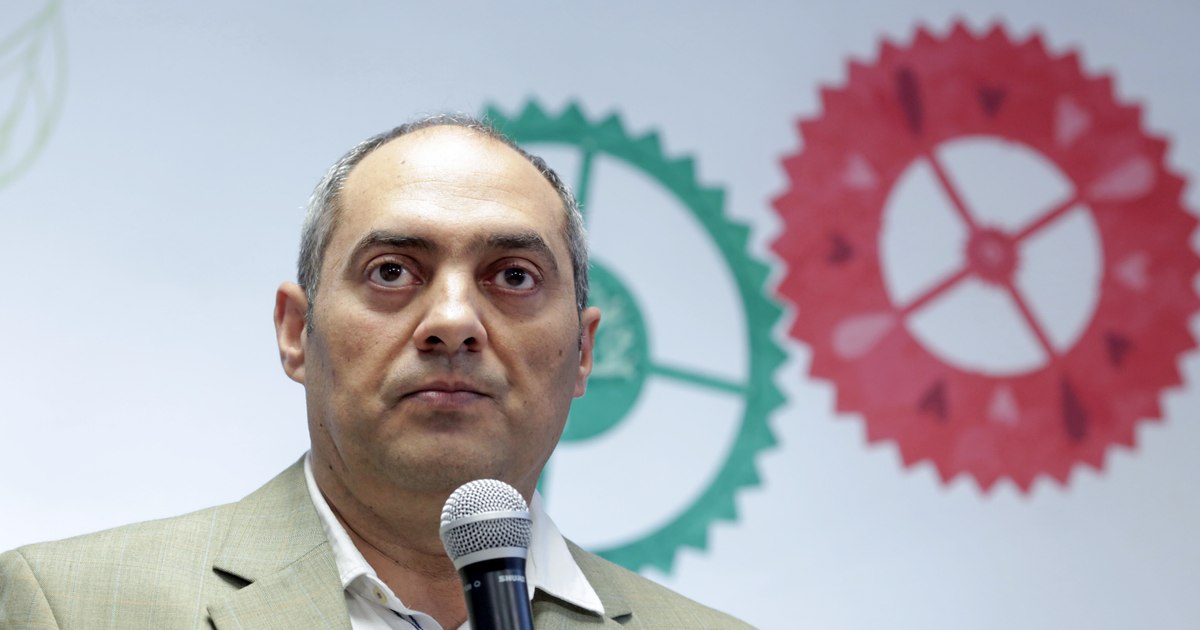
A post by the Romanian Police on the International Day for the Elimination of Racial Discrimination became the “target” of dozens of racist comments. Sociologist Gelu Dominică argues that racism exists, but is often denied, and explains why the problem is not only a societal one, but a deeply personal one.
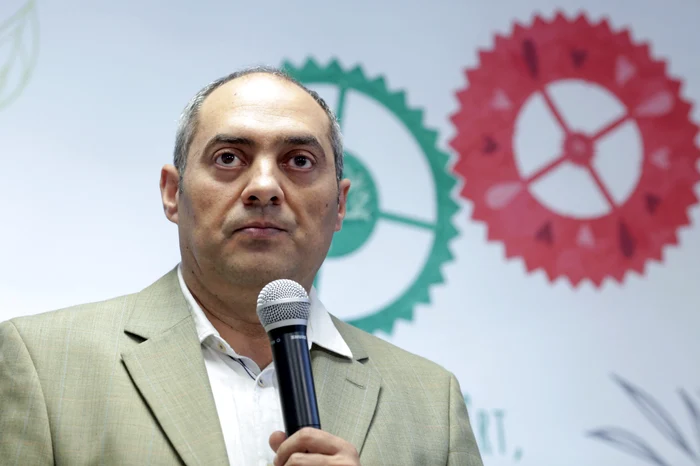
Sociologist Gelu Duminică explains the roots of racism in Romania. PHOTO: Inquam Photos
A post on the Facebook page of the Romanian Police on the occasion of March 21 – the International Day for the Elimination of Racial Discrimination – which includes a clip with the sociologist Gelu Duminică in which he recounts an episode in which, as a student, he was discriminated against by his colleagues and how he managed to overcome the stigmatization – has gone viral. The sociologist's message was that, in fact, people who discriminate are a minority, and the motto of the campaign was: “It is in our power to discourage hate”.
The post had almost 400 comments, but many of these are evidence of racism. Here are some examples:
“Check the prisons a bit, and see evidence if you need more, who is in the majority there”; “The world crisis is coming and “values” are returning to the country”; “Hiring day at a job when? That's Sunday so holiday forever”; “Go to work without the 'frezos'! Vote to cut welfare for the stinkers and allowances for parents who have never worked”; “What a sad story, I feel like crying. In the 1st grade, I had to fight with his classmates, who were waiting for us at the exit of the school to pick our pockets“; “That's why they walk after them with knives when they go to the social!“; “We have nothing to do with them, only their behavior!”
25% of Roma in Romania declare that they have been discriminated against
The most recent survey by the European Union Agency for Fundamental Rights (FRA) on Roma and nomads – covering 10 EU countries, including Romania – published in autumn 2025 shows that 25% of Roma in Romania say they have been discriminated against in the year before the survey, compared to 21% in 2016;
68% are at risk of poverty, compared to 70% in 2016 (at EU level: 70%). By comparison, 19% of the general population of Romania is at risk of poverty. 43% of Roma children in Romania attend a school where all or most of the students are Roma, compared to 28% in 2016 (at EU level: 46%).
The research was conducted among more than 10,000 Roma and nomadic respondents from 10 EU member states (Bulgaria, Czech Republic, France, Greece, Hungary, Ireland, Italy, Portugal, Romania and Spain) and from three candidate countries (Albania, North Macedonia and Serbia). The face-to-face interviews took place between June and December 2024.
According to the survey, at the European level, 31% of Roma and nomads face discrimination due to their ethnic origin – a level similar to that of 2016 (26%). Also, 70% live in poverty.
Romania is not necessarily more racist than other countries
Romania is not necessarily more racist than other countries, but it has one major problem: the refusal to recognize its own prejudices.
“I don't think we're fundamentally worse off than others, but I think we're among the least likely to recognize this fact”says sociologist Gelu Duminića.
For him, discrimination is not an exception, but a reality present in multiple forms: “Anti-Semitism, part of Romania. Homophobia, part of Romania. Sexism, part of Romania”. However, it draws attention that they do not define the whole society: “Do they define all of Romania? No”.
At the same time, the visibility of the phenomenon increased. Not because it appeared recently, but because it is only now starting to be discussed. “Things are more visible because we have only just started talking about them“, explains Sunday.
“I'm not asking for special treatment, but the same rights”
One of the most persistent myths is that minorities demand privilege. In reality, says the sociologist, the request is much simpler: “I'm not necessarily asking for different treatment, I'm asking for the same rights as others”.
The problem arises when stereotypes become the norm. “The fault is individual”he points out, explaining the absurdity of generalizations.
There are many sociological theories that talk about framing, labeling. “What is strange is that everything that is thought to happen only to the Roma, also happens to the category that discriminates. That is, if we look, for example, and see the great criminals of Romania, those who have remained famous are rather the descendants of Trajan and Decebalus.”
“Now we are talking about an over-representation in what the British call petty crime which is certainly very visible. Sociology explains that we should look at something else, which is that poor people in general are much more willing to go to the crime area. Some may say 'see the turrets'. Sure, there are some who have turrets: 2%“, explains the sociologist. He shows that we also see in the area of budgets people who have villas in the most exclusive areas, working all their lives for the state.
The American president shared a video with the Obamas presented as monkeys. After 24 hours to delete
“You are in no way responsible for the crimes that Dincă committed”
The sociologist emphasizes the danger of generalization. “You are not to blame for what the criminal from Caracal did, Dincă. You are not responsible for the crimes that Dincă committed, for what Vântu did, for what Negoiță is doing, because you have no responsibility. How fair is it for me to put you in the same pot with them just because you are of that ethnicity? It's the same story. If I deserve bad things, give me bad things, but don't give me bad things just because In fact, this is racism. The moment you think you are superior, I emphasize, you did not choose to have a different color. This is racism and unbelief, because Jesus comes and tells us that we are all the same for Him.”
Moreover, publicly expressed hatred says more about the person expressing it than about its target. “What does this say about me or the other person?“, asks Dominică rhetorically, referring to the violent messages he has received over time. “What kind of soul can the person have who sent me a photo of my child with an exploded head?”
Why does racism seem to be on the rise?
The rise of the radical discourses of movements such as MAGA and their variants in Romania did not create racism, but made it more visible. “Racist manifestations have not necessarily increased, but we only see that they are more evident”he explains.
In his opinion, these tensions always existed, but were not expressed as openly: “some ideas existed, but people no longer had the courage to express them”.
Today, social barriers have relaxed and hate speech has become more vocal. “This is why we see so many racist comments”says the sociologist, who confesses that he has been receiving such messages for over two decades.
“Our relationship model with the man we chose is a deeply toxic one”
Collective frustration is often behind discrimination. “We have a frustrated society where we haven't talked to each other”says Sunday.
He compares the situation to a relationship where problems are ignored until they explode: “we don't talk about them and it takes a drop for each one to explode”.
This lack of dialogue fuels polarization and conflict, not just along ethnic lines, but throughout society.
Change starts with two concepts, says Sunday: “responsibility and ownership.”
“Change starts from your own family. Respect the person next to you. When you argue, when you have different opinions, talk and discuss the problems, don't start cursing her. That's how we were raised. But that's how we want our children to grow up? Eh, then do something good man! The model your children have starts from you, from the way you respect the other. Because, after all, the fight against discrimination or the antonym of this phrase would be one: respect! It does not mean, how should I say, to agree with him. That's all.” the sociologist claims.
Gică Hagi's club, punished for racism. The Rapidists were the victims of the Dobrogens
Change begins in our micro-universe
All the mess in Romanian society is actually generated by our family model: “I want you to realize that the only person we choose in our lives to be our family is our partner. Our relationship model with the person we chose, whom we say we love the most, who represents the family, is a deeply toxic one in Romanian society in the archetypal way. We have 125,000 cases of domestic violence reported in 2025. Yes, one every 7 seconds.”
And then we wonder why there is violence in society: “If you beat the only member of your family that you chose, if you beat your children, blood of your blood, how would you like to do with a stranger…”
Sunday's conclusion is that change begins in our microuniverse “Your microuniverse united with my microuniverse with the neighbor's, with the neighbor's creates an average universe, so to speak, which later in time he goes to maybe change the paradigm a bit. We want to live well using the methods of the past. It doesn't work, brother!”.
“What world are we leaving our children?”
Ultimately, the issue of discrimination becomes a deeply personal one. “What I do, I do thinking about my child”says Sunday.
He warns that money or success cannot compensate for a hostile society: “the soul will be torn, if it lives in a world full of hatred“.
The solution, he says, is to create communities based on solidarity and respect: “I have to create the conditions for her to be judged for what she does, not for what she didn't choose to be.”
In a society where discrimination is often denied, the sociologist's message is simple and direct: change does not begin at the state level, but at the individual level. And the essential question remains the same: what kind of world do we choose to build for those who come after us?