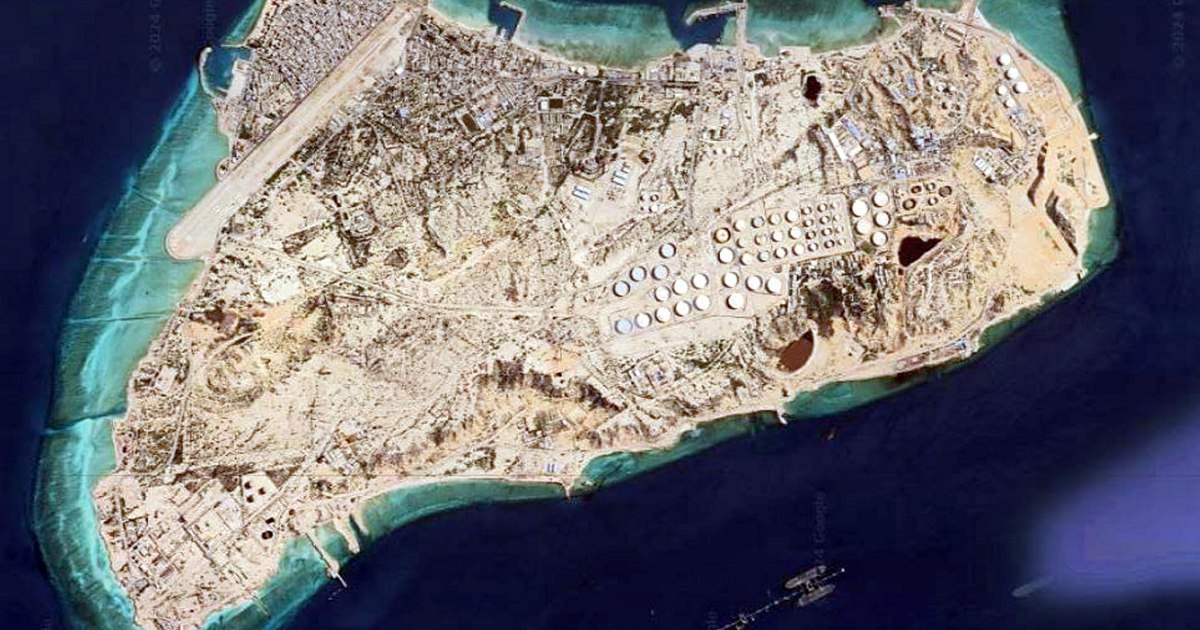
A small Iranian island through which most of the country's oil exports pass has become the focus of regional tensions after President Donald Trump suggested it could be the next target in an expanding conflict with Tehran, Politico reports.
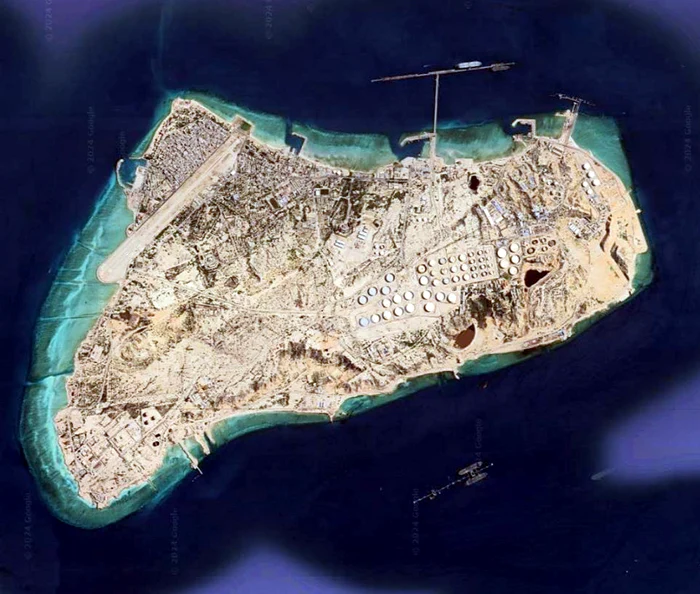
Kharg Island photo profimedia
Kharg Island, a roughly eight kilometer strip of land in the Persian Gulf, is central to Iran's economy. Almost all of the country's crude oil exports pass through its terminals, making it a major strategic target, and a potential flashpoint with global consequences.
Trump has openly discussed striking the island, warning it could be part of a larger campaign to stop Iran's attacks in the Strait of Hormuz.
“We can take their oil out of Kharg Island,” Trump told reporters on Tuesday. “The only thing we didn't destroy was the oil, because if we destroy, as I call them, the pipelines, very complex, it would take them forever to rebuild.”
Such a move, analysts warn, could trigger a wide-ranging conflict, threatening energy infrastructure across the Persian Gulf and pushing oil prices higher, possibly to a point that could trigger a global recession.
Politico lists four possible scenarios regarding this island.
Taking control of Kharg Island
One possible scenario involves US forces taking control of Kharg Island, rather than destroying it.
Trump's statements suggest a strategy to block Iran's oil revenues by physically controlling this export hub. Similar to the actions against Venezuela, this plan could begin with a naval blockade, designed to prevent oil tankers from reaching the island.
An expeditionary unit of Marines is due to arrive in the region within days, with the ability to launch a ground operation to take over the oil terminal – an action that would mark one of the riskiest US military operations since the beginning of the war.
Supporters of this strategy believe that, if successful, it could stabilize oil markets and that Trump should use any leverage to reopen the strait.
“If we can do that, then, frankly, the president can continue the war as long as he needs to because the price of oil will go down,” said Newt Gingrich, a former speaker of the House of Representatives and a close Trump ally. “People will be happy with the rate of inflation again. The rest of the world will relax.”
But critics warn that the occupation of the island could provoke a wider military response from Iran against the energy infrastructure of the Persian Gulf states.
Destruction of Kharg Island
Another option is a direct attack on the island's oil infrastructure.
Trump hinted at that option earlier in the week, indicating the decision could be made quickly.
“One word and the pipelines will also disappear,” he said, referring to the island's export facilities.
Iranian officials have repeatedly warned that hitting the country's main source of income would trigger harsher retaliation. Tehran has already demonstrated its willingness to attack regional energy infrastructure, although it has yet to launch a large-scale attack.
“The situation in the Strait of Hormuz will not return to its pre-war state,” Iranian Parliament Speaker Mohammad Bagher Ghalibaf wrote on X.
Experts say the destruction of Kharg could also complicate US objectives.
“The lesson learned from Iraq is that you don't destroy the infrastructure of a country you want as an ally the day after regime change,” said Michael Rubin, a former Pentagon adviser.
Rubin added that destroying Iran's oil capacity could strengthen hardline factions and destabilize any future transition.
“If you destroy Kharg, Iran simply won't be able to recover at a time when we would want it to, which would strengthen an eventual insurgency by the Islamic Revolutionary Guard Corps,” he said.
The US has asked Israel to stop attacking Iran's oil facilities. The reasons presented by the Trump administration
Iran does not only rely on Kharg Island for exports
Despite its importance, analysts warn that Kharg Island is not Iran's only option for exporting oil.
Over the years, Tehran has developed alternative routes to circumvent sanctions and possible blockades, and has already begun to use them. These include ports, which are harder to monitor, and pipelines that completely bypass the Strait of Hormuz.
A false impression was created in the media that if Kharg “were bombed or occupied, it would mean the end of oil revenues and probably the end of the regime,” said energy expert Anas Alhajji. “This is all completely absurd.”
According to Alhajji, Iran, to circumvent sanctions, has quietly expanded its export flexibility through trade arrangements with China and pipeline networks to alternative loading points.
For example, Iran has several ports in the Persian Gulf where smaller ships can load oil without being noticed. China has ports where it can be secretly unloaded, he said.
“I can literally function without Kharg Island without a problem,” he said.
Recent tanker activity suggests that these back-up systems are already in use.
Iran has an oil pipeline that reaches the Persian Gulf near the border with Iraq, where ships can load oil. Another pipeline stretches to the south, bypassing the Strait of Hormuz.
“What we are seeing now is that there are tankers loading from there, which means they are using this just in case Kharg Island is attacked,” the expert explained.
The risks for Trump
Any decision on Kharg Island involves significant political and economic risks for the US.
“The Orphan Pearl of the Persian Gulf”. The history of Kharg Island, the new hot spot in the Middle East war
Although the administration argues that high fuel prices are a temporary sacrifice, energy markets remain volatile. Even if the conflict were to end quickly, it could take months for supplies to stabilize.
A protracted conflict could coincide with the US midterm elections, increasing domestic political pressure.
Iranian officials have warned that further escalation could turn the conflict into a war of attrition.
“Just read what happened in Vietnam,” Iran's deputy foreign minister Saeed Khatibzadeh told Sky News.
Energy analysts say the stakes go far beyond the region. Decommissioning Kharg could remove up to 2 million barrels of oil per day from the global market.
“The Iranians have not yet targeted ports and loading facilities, although they could very easily do so, and if they choose that path, there is a risk of an even worse supply crisis,” explained analyst Rory Johnston, author of the Commodity Context newsletter.
In the most pessimistic scenario, widespread disruptions in the Persian Gulf – where about 20 million barrels of oil a day are exported – could cause shockwaves globally.
This is the scenario where oil prices could reach $200 a barrel, which could trigger a recession, Johnston concluded.