“We don't give money without oil”. Orban plays hardball in Brussels: blocks money for Ukraine and demands cheap energy from Russia

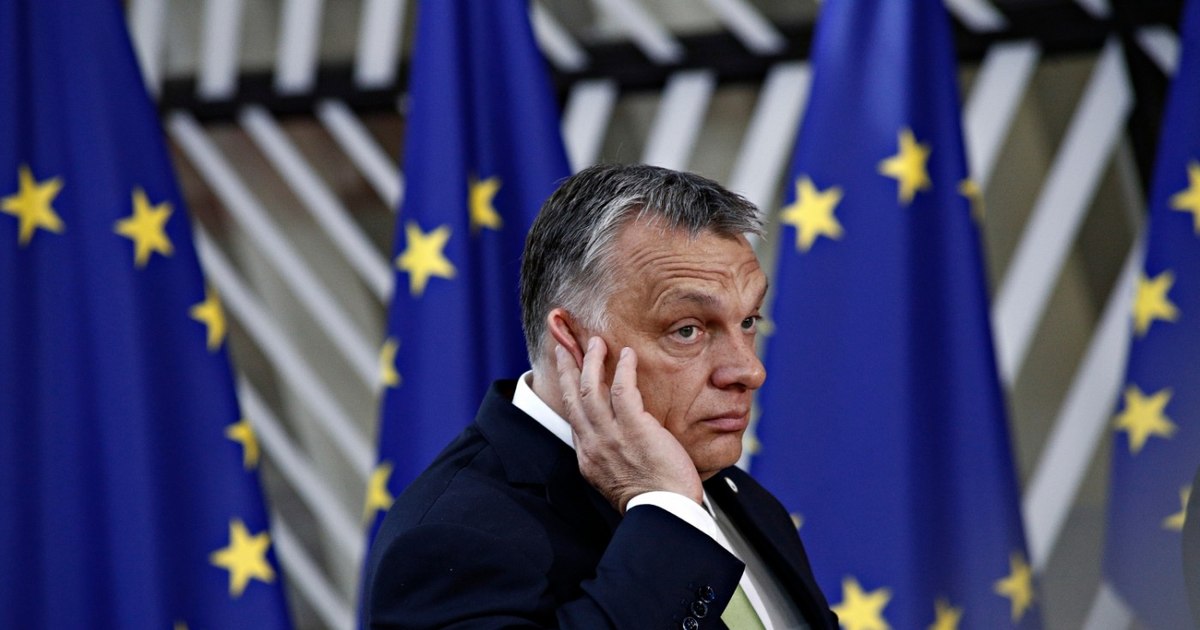
The tensions within the European Union are reaching a new critical point. European leaders are meeting today, March 19, in Brussels, in a summit where one of the central stakes is unlocking a 90 billion euro loan for Ukraine — currently blocked by Hungary.
Hungarian Prime Minister Viktor Orban is blackmailing the EU
Behind the scenes, the pressure on Hungarian Prime Minister Viktor Orban is described by diplomats as “unprecedented”. Without this financial support, Kyiv risks running out of resources as early as April.
But Budapest is using a sensitive topic as a negotiating tool: the “Drujba” oil pipeline, damaged by attacks during the war. Orban, known for his close ties to Moscow and repeated clashes with Ukrainian President Volodymyr Zelensky, refuses to budge.
Last month, the Hungarian leader blocked the loan deal, citing the dispute over the operation of the pipeline. At the same time, his decision irritated several member states, especially in the context in which Hungary, along with the Czech Republic and Slovakia, obtained exceptions from the contributions to this financial mechanism.
Orban's message remains sharp: “No oil supplies? No money. It's that simple,” he wrote on the X platform. Later, he accused Kiev of “using the oil blockade” to put pressure on Hungary.
“We will not give in. We will not give up cheap energy. In Brussels we will say >”the Hungarian Prime Minister conveyed, reinforcing the impression of a deepening rift within the Union.
The “Drujba” pipeline carried Russian oil to Hungary and Slovakia via Ukraine, but was damaged by bombings in January. While Kiev claims repairs take time, Budapest insists the infrastructure is already operational.
European diplomats are instead banking on a recent agreement reached by Zelenski to repair the pipeline with financial and technical support from the EU, trying to convince Orban to waive the veto.
“In December we took a political decision at the level of the European Council. The time has come to implement it“, said the president of Cyprus, Nikos Christodoulides, warning that failure to reach a joint decision would undermine the Union's credibility.
Meanwhile, relations between Kyiv and Budapest are rapidly deteriorating. Institutional deadlocks, harsh exchanges and threats to energy supplies outline a conflict that goes beyond the classical diplomatic framework. It all overlaps with the election campaign in Hungary, where rhetoric about the “Ukrainian threat” is becoming a political tool.
The Hungarian Prime Minister wants Russia to be part of Europe's energy and security system
In an even more controversial register, Viktor Orban recently declared that Russia should not be excluded from Europe's security and energy architecture, despite aggression against Ukraine.
“We should not push Russia out of the European security system, neither from the energy system nor from the trade system,” stated the Hungarian leader, suggesting the need for a reset of relations after the end of the war.
Moreover, he floated the idea of building a new European energy architecture that would once again include Russian resources, arguing that “the war must end, and then we must either return to the old normal or build a new one.”
In parallel, Hungary recently called for the suspension of additional tariffs and taxes on fertilizer imports from Russia and Belarus and asked the European Commission to lift sanctions on Russian energy amid rising prices.
But Budapest's position remains isolated. The head of European diplomacy, Kaja Kallas, said that there is currently no appetite among member states for the resumption of energy cooperation with Russia.