Article by GSP – Published on Tuesday, 17 March 2026, 16:27 / Updated on Tuesday, 17 March 2026 16:28
When was the last time you checked your tires? Are you the type of driver who waits to be pulled over and possibly fined, or the type who visits the service stations sanctimoniously, for fear of an imminent explosion?
Both situations are extreme and, in our view, can be avoided if you learn to check your car tires yourself. Attention, this does not mean that you no longer need to go to the service. But now you know when to do it: stop guessing!
Why is it important to check tire wear?
In general, car tires wear out due to driving style, temperature and weather conditions, the type of road you drive on, and last but not least, tire pressure. In short, it will be recommended to check them regularly to know when you need to change them.
What do you risk if you don't? First, you risk your safety and the safety of other road users. An over-worn tire will have poor grip, is prone to aquaplaning and, in cases where cracks, bulges or uneven wear are seen, may even blow out. Fix the kind of “surprise” that no one wants.
Second, using used car tires can affect performance and fuel consumption. In extreme cases, you even risk receiving a fine, if you drive with used tires below the legal limit, i.e. 1.6 mm, during the summer.

How can you check the degree of wear of car tires?
As we explained above, the simplest, but also the most expensive, is to go to the service. If you want to avoid a trip and save some money, here are the alternatives available to you:
Visually check wear indicators
On the tire tread, that is, those grooves on the surface of the tire, you will find these indicators. They are easy to recognize: they are small, slightly raised areas, like protrusions, located at the bottom of the grooves on the tread profile. Most manufacturers also include various visual signals by which you can deduce the time of replacement.
Use a special tool
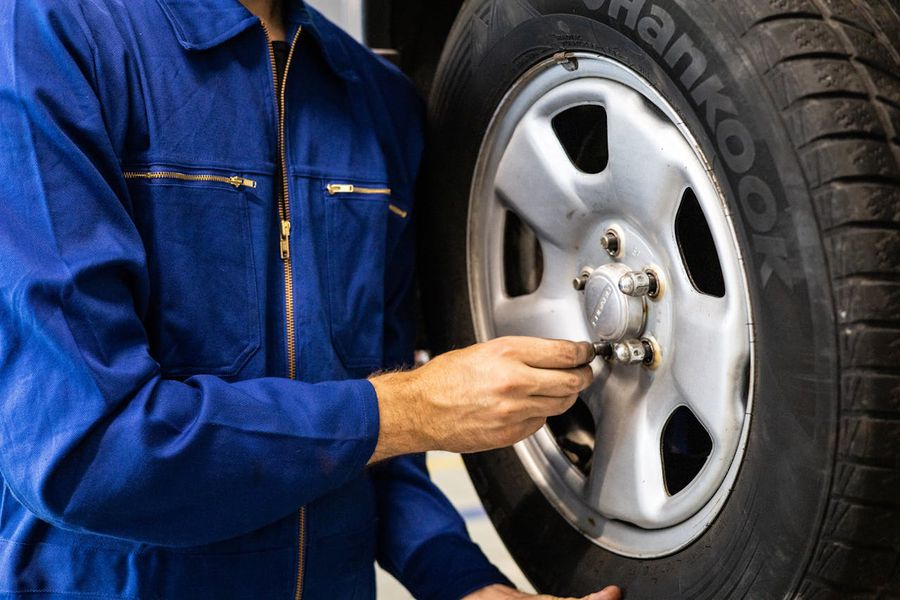
If the above method doesn't work, you can use various tools to manually check if you've reached the legal tread depth. A special profile standard or ruler falls into this category. Some people even recommend using a coin to determine the depth of the trenches. Regardless of the method used, be sure to check the depth at several rolling points.
There is also the possibility of noticing uneven wear, as follows:
– Tire wear on the rear interior. It can be caused by too much tire pressure.
– Tire wear on the inside of the front. As above, it can indicate increased tire pressure.
– Tire wear on the front or rear exterior. Wear on the edges can indicate too little pressure in the tires.
Pay attention to tire wear on the outside as well as the inside, especially if you notice uneven wear. In this case it is possible to face wheel alignment problems or other technical problems.
We recommend that you periodically check each of the tires (be they summer tires or winter/all-season tires) and remove and replace them if you notice that the wear limit has been reached. Also, if you need an expert opinion, a trip to the service could cost you less than a feather.