Rejections after Trump's request for help to reopen the Strait of Hormuz. The most important US ally “does not allow itself to be drawn into war”

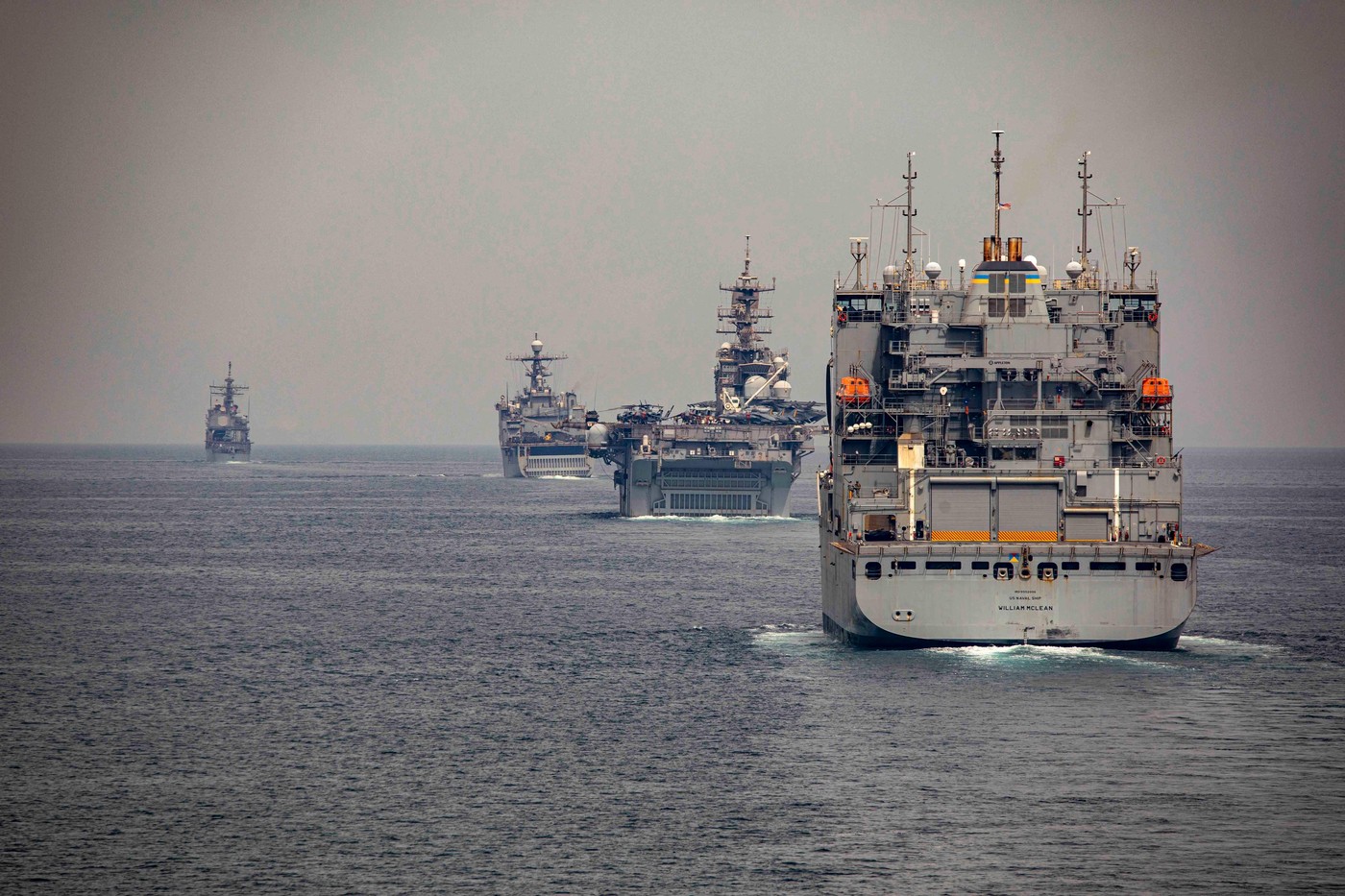
Britain is avoiding a firm commitment, while other US allies have already said a clear “no” after Washington's call, Reuters and the Daily Telegraph write.
Prime Minister Keir Starmer said on Monday that Britain would not be drawn into a full-scale war in Iran but would work with allies on a “viable collective plan” to reopen the Strait of Hormuz, although he admitted it would not be an easy task.
Starmer's reaction comes after Donald Trump called on NATO allies to step in to ensure free traffic through the strait, which is of major strategic importance to the energy market.
About one-fifth of the world's oil and liquefied natural gas shipments routinely pass through the strait.
Tehran's effective closure of the strait has pushed oil prices above $100 a barrel.
London avoids a clear commitment
Starmer told a news conference that reopening the strait was the only way to stabilize energy markets and that he was in talks with European, Gulf and US allies about a plan to ensure freedom of navigation. He specified that it would not be a NATO-led mission.
“Ultimately, we have to reopen the Strait of Hormuz to ensure the (oil) market is stable. It's not a simple task,” Starmer said.
“So we are working with all our allies, including our European partners, to develop a viable collective plan that can restore freedom of navigation in the region as quickly as possible and mitigate the economic impact,” he said.
Starmer said that while the UK is “taking the necessary steps to defend ourselves and our allies, we will not allow ourselves to be drawn into a wider war”.
The British government has not made a clear promise about the mobilization of warships in the region. Ed Miliband, the energy secretary, said the government was “considering intensively” what steps could be taken to reopen the strait, but refused to make a firm commitment.
Ministers, writes The Telegraph, are considering sending anti-mine drones, but are unwilling, at the moment, to send warships.
“This is not our war”
France, Germany and South Korea have also expressed reluctance to the US president's request, amid growing international concern that the war is dragging on indefinitely.
“What does (…) Donald Trump expect to do a few European frigates in the Strait of Hormuz?” said German Defense Minister Boris Pistorius.
“This is not our war, we did not start it,” the German official said.
Asked about Trump's warning that NATO faces a “very bleak” future if its members do not come to Washington's aid, Pistorius said he does not expect NATO to fall apart over these differences.
French President Emmanuel Macron said before Trump's request that several European and Asian countries intended to organize a joint mission to ensure security in the region, but only after the end of the conflict.
Both Japan and Australia said on Monday they had no plans to send military vessels to help escort the ships through the strait.
What China says
In an interview given to the newspaper “The Financial Times” and published yesterday, Trump also pressed China to intervene to unblock the strait.
He said he “would like to know” whether China would provide support and said that if he did not get an answer soon, he could postpone the summit with Xi Jinping at the end of the month.
On Monday, Beijing said the visit was still on the agenda.
“Diplomacy at the level of heads of state plays an irreplaceable strategic guiding role in China-US relations,” Chinese Foreign Ministry spokesman Lin Jian told reporters in Beijing. “China and the United States are maintaining communication regarding President Trump's visit to China,” the official said.
Regarding the Strait of Hormuz, Lin said China “again calls on all parties to immediately stop military actions, avoid further escalation of tensions.”
The importance of the Strait of Hormuz to the economy
The Iran-Oman Strait, which connects the Persian Gulf to the Gulf of Oman, is the only outlet to the sea for oil and gas-producing countries such as Kuwait, Iran, Iraq, Qatar and the United Arab Emirates.
On Monday, oil prices briefly hit their highest level since 2022. Officials fear that high oil prices could trigger another crisis, as happened after Russia's invasion of Ukraine in 2022.
A prolonged conflict could also cause a shock to the fertilizer market, jeopardizing global food security.
About 33 percent of the world's fertilizers, including sulfur and ammonia, pass through the strait, according to analysis firm Kpler.
A prolonged war could fuel fears of a global economic crisis similar to those that followed the Middle East oil shocks of the 1970s.
Reopening the strait, a difficult mission
Analysts have warned — and Trump has been warned by his generals — that securing ships passing through the strait would be a difficult task.
The sea lanes are only two nautical miles wide and ships must turn in front of Iranian islands and a mountainous coastline that provides cover for Iranian forces, according to shipping broker SSY Global, quoted by Reuters.
Iran's conventional navy has been largely destroyed, but the Revolutionary Guard still has many options, including fast attack craft, mini-submarines, mines and even jet skis loaded with explosives, Tom Sharpe, a retired commander of the British Royal Navy, told the news agency.
Tehran has the capacity to produce about 10,000 drones a month, according to the Center for Information Resilience, a non-profit research group.
Escorting three or four ships a day through the strait would be feasible in the short term using seven or eight destroyers providing air cover and would depend on reducing the risk posed by mini-submarines, but sustaining this long-term operation for months would require more resources, Sharpe said.
Even if Iran's ability to launch ballistic missiles, drones and floating mines were destroyed, ships would still be exposed to the threat of kamikaze operations, Adel Bakawan, director of the European Institute for Middle East and North African Studies, told Reuters.