After three years, a surprise in construction: we have 12,000 new homes. This time, the countryside plays an important role

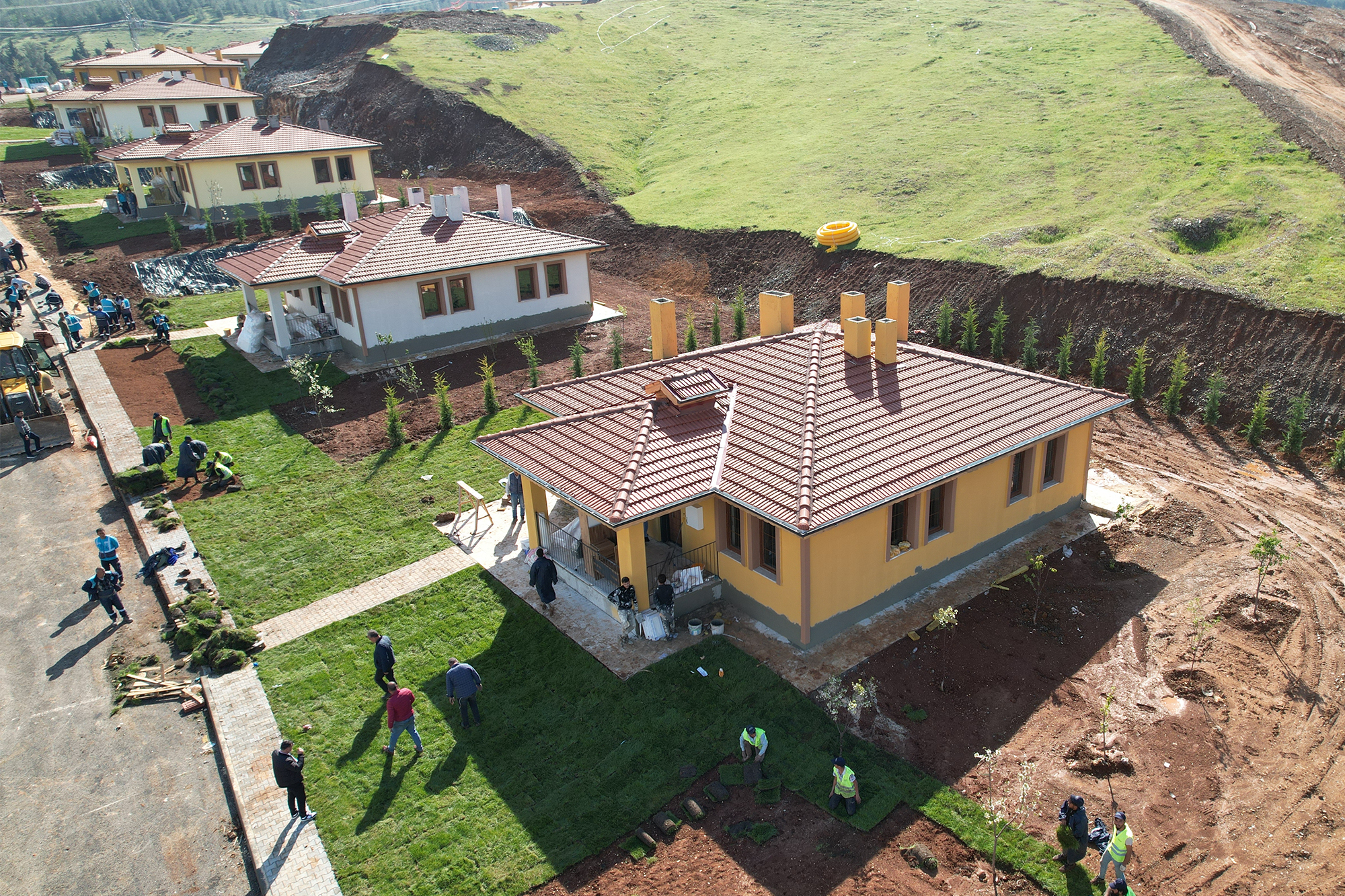
Friday, Statistics published the number of homes put into use in the first three months of the year. We have nearly 12,000 new homes and that's the first increase since 2022. However, the cities delivered less than a year ago, the increase is in the countryside.
- The surprises also come from the regional distribution.
- There are areas that significantly exceed Bucharest.
- How we live in new homes compared to countries in Europe.
The lack of affordable housing is a common problem throughout Europe, not just in Romania.
The number of completed homes in Romania increased in the first quarter of 2026 for the first time after three years of consecutive decreases, according to data from the National Institute of Statistics.
The 11,876 homes put into use represent an increase of 914 units compared to the same period last year.
It is a turning point after a series of declines that took the market from 15,907 homes in the first quarter of 2022 to 10,962 in 2025.
However, the recovery is partial and unevenly distributed, according to INS data.
And on a year-over-year basis, the picture remains cloudy: 2025 ended with 59,062 completed homes, the weakest annual result since 2017.
Rural takes the lead in growth
The structure of the advance: the entire increase comes from rural areas, where 5,635 homes were completed, 1,025 more than in the first quarter of 2025.
The urban environment, on the contrary, delivered 6,241 homes, down by 111 units.
The consequence is a visible change in structure: the share of rural areas in the total number of finished homes rose in a single year from 42.1% to 47.4%, approaching parity with cities. The urban environment remains the majority, with 52.6% of the total, but it is losing ground at an accelerated pace – a year ago it held almost 60%.
The state, a symbolic presence on the new housing market
The funding data confirms a long-standing trend: the almost complete withdrawal of public funds from housing construction.
Only 234 publicly funded homes were completed in the first quarter of 2026, compared to 455 in the same period last year – a halving that reduces the state's share to 2% of the total, from 4.2% a year ago.
Private funds covered the remaining 98%, with 11,642 homes completed, up 1,135 units. In other words, the private sector fully compensated for the withdrawal of the state and additionally generated the entire net growth of the market.
The West drags the market, the Capital stagnates
The regional distribution of growth is similarly concentrated. The West region completed 1,680 homes, 749 more than in Q1 2025 – an advance of more than 80%, which alone accounts for more than three-quarters of net national growth.
It is the region's second-best Q1 in the entire 2014–2026 statistical series, after the peak of 2,016 homes reached in 2021. The West's share of the national total rose in one year from 8.5% to 14.2%.
Increases were also recorded in the North-West (+271 homes), the North-East (+147) and South-Mountain (+31).
Bucharest-Ilfov, the country's largest residential market, has stagnated: 3,827 completed homes, only 17 more than a year ago.
The region remains the distant leader, with 32.2% of the total, but its share is eroding – a year ago it held 34.8%, and in the first quarter of 2022 it delivered 5,551 homes, 45% more than today.
At the opposite pole, South-West Oltenia completed 503 homes, down by 177 – the weakest first quarter of the region since 2018 – and the South-East lost 119 units. The Center region remained practically unchanged.
Does Romania have a housing deficit?
Quarterly figures tell how much is being built, but not whether enough is being built. Correlations must be made here.
The picture is paradoxical: also according to Statistics, Romania has about 8 million families, but also about 1.5 million unoccupied homes – 16.4% of the total number of conventional housing units.
To estimate the real deficit, experts do not look at the gross stock, but at a set of indicators, a study by ING shows:
For the latter, average housing prices or rents are compared to average household income and the overburden rate is measured: the percentage of the population that spends more than 40% of disposable income on housing, including utilities.
The departure of young people “empties” the regions
The stake is not only social: the shortage of housing limits the internal mobility of the workforce.
If young people cannot find a decent and affordable place to live, they will look elsewhere, limiting the region's growth potential, an ING study shows. That is why many governments have set construction targets – Germany 400,000 homes per year, the Netherlands 100,000 – which they frequently miss, for cyclical (rising interest rates, higher construction costs) and structural (lengthy permit procedures, lack of suitable land) reasons.
Where does Romania stand on these indicators, compared to the EU
At the age of leaving the parental home, the Croats, Slovaks, Greeks, Spaniards and Italians leave home the latest; at the opposite pole are the Nordics – young Swedes leave, on average, more than ten years earlier than those from southern Europe.
In the Netherlands, France and Germany, where the housing shortage is high, young people still find their own way earlier than other Europeans.
When it comes to living space, Romania is unequivocally bad: together with Poland and Croatia, it has the lowest number of rooms available per person in Europe, while Malta and Luxembourg lead the ranking.
At the rate of renewal of the housing stock, Poland added the highest percentage of new housing in the last decade, followed by Austria and Sweden.
At the bottom of the ranking are Italy and Spain, below 0.3%, due to long authorization procedures and financing problems.
Romania is also among the losers: the rate of new homes in the total stock is around 0.7%, for several years now.
Demographics work the other way around
However, there is one factor that relaxes, at least theoretically, the pressure on the Romanian market: the population. A growing population puts pressure on the real estate market – and this is not the case in Romania.
Only a few European countries have population growth projections: Ireland and Sweden lead the way, with expected increases of more than 10% over the next two decades.
In the other direction, Poland and Italy are facing low fertility, and in the case of Poland, possibly negative net migration as Ukrainian refugees gradually return home.
Romania will have one of the sharpest long-term population declines. Every 10 years, Romania loses 1,000,000 inhabitants, being among the countries with the strongest projected demographic decline.
A signal, not a confirmation
The first quarter numbers suggest that the decline that began in 2023 may have bottomed out, but a single quarterly reading – and one more with provisional data – does not confirm a change in trend.
And the background picture remains contradictory: Romania builds among the fewest new homes in Europe relative to stock and is the worst in terms of living space per person, but it has 1.5 million empty homes and a rapidly declining population.