VIDEO OECD warning: Romania's public finances have deteriorated strongly. Sustained efforts are needed to significantly reduce the deficit / What Bolojan says

In the latest economic report presented to the government on Monday, Organization for Economic Co-operation and Development (OECD) warns that, despite fiscal consolidation measures from 2025, Romania will have to make “sustained efforts in the coming years to significantly reduce the deficit and place the public debt on a firmly downward trajectory”.
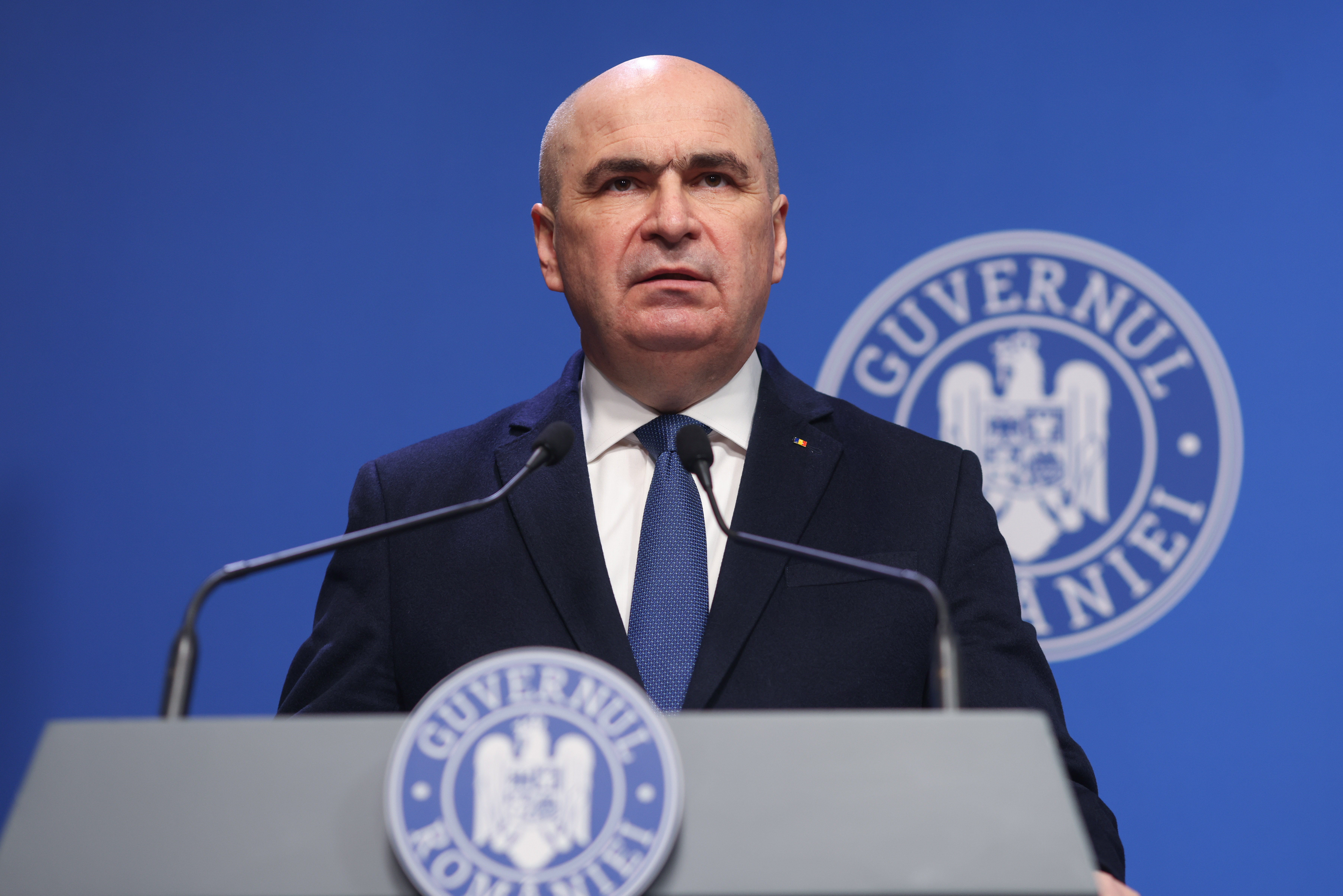
The OECD report on economic developments in Romania was presented on Monday at the Victoria Palace by OECD Secretary General Mathias Cormann, together with Prime Minister Ilie Bolojan.
OECD: High budget deficit and public debt, main vulnerabilities
The OECD report warns that Romania's public finances have deteriorated strongly:
“Romania's public finances have deteriorated sharply, posing risks to the long-term sustainability of public finances. Avoiding this will require increasing the efficiency of public spending, as well as expanding the tax base and improving fiscal compliance. It will also be necessary to strengthen medium-term fiscal planning to ensure fiscal discipline.”
The budget deficit reached 9.3% of GDP in 2024, and public debt has increased significantly in recent years, reaching 55% of GDP.
In order to correct fiscal imbalances, Romania adopted fiscal consolidation measures in 2025. However, the OECD warns that these measures must be continued to stabilize public finances and reduce the deficit:
“While these measures mark important progress, sustained efforts will be needed in the coming years to significantly reduce the deficit and place public debt on a firmly downward trajectory.
Romania needs to increase spending efficiency to strengthen public finances and support growth. The recent pension reform – in particular by raising the retirement age for women, limiting special pensions and introducing new indexation rules – is a positive step towards improving the sustainability of the pension system and encouraging labor force participation.”
Prime Minister Ilie Bolojan emphasized the measures taken by the Government against the previous recommendations of the OECD.
“Romania has taken important steps towards fiscal consolidation and budget deficit reduction. After a deficit of approximately 8.7% of GDP in 2024, the year 2025 ended with a deficit of 7.7%, below the level of 8.4% estimated by the European Commission. We are continuing the reforms started last year, and the budget project for 2026 is a realistic one, so that we reach the deficit target of 6.2% at the end of this year”, said Bolojan.
At the economic level, the OECD study shows that Romania has withstood the shocks of recent years and the effects of the war in Ukraine, the prime minister said.
“Economic growth slowed temporarily in 2025 due to fiscal adjustments and the economic situation in Europe. However, the outlook remains positive. Estimates show growth of around 0.7% in 2025 and around 1% in 2026, supported mainly by public investment and European funds. Fiscally, the objective is to gradually reduce the deficit, use public money more efficiently and have a better absorption of European funds”, he declared.
Bolojan: We need to gradually increase the retirement age
As far as the labor market is concerned, Romania must respond to demographic pressures and labor shortages through policies in education, health and through measures to bring more active people to the labor market.
“That is why we need to gradually raise the retirement age in areas where today retirement is very early, sometimes even at 48-50, in order to have more active people and a sustainable pension system in the long term.” stated Ilie Bolojan.
At the same time, the prime minister said, increasing the competitiveness of the economy remains a priority.
“For this we need competitive costs, an efficient administration, clear rules and a modern and digitized state,” said Bolojan.
Romania wants to join the OECD in 2026
The Prime Minister also emphasized that the OECD report also shows the areas in which Romania still has work to do.
“We must reduce the deficit, improve collection and use public money more efficiently. At the same time, monetary policy must remain prudent until inflation is fully stabilized, and structural reforms must continue. If we apply these reforms consistently, we can build a more stable, competitive and resilient economy,” said Bolojan.
He announced that after joining the European Union and NATO – Romania aims to reach a new goal in 2026: joining the OECD.
“We are at an advanced stage, we have 23 committees that have been completed, we still have two more committees and I hope that, together, in the coming months, we will manage to complete these stages as well. And I hope that Romania's accession to the OECD will become a reality this year, but not as an objective in itself, but as a means for our country to become more competitive and more prosperous”, Prime Minister Ilie Bolojan also declared.