The electrification works of the first railway in Romania begin. How the train movement will be reorganized

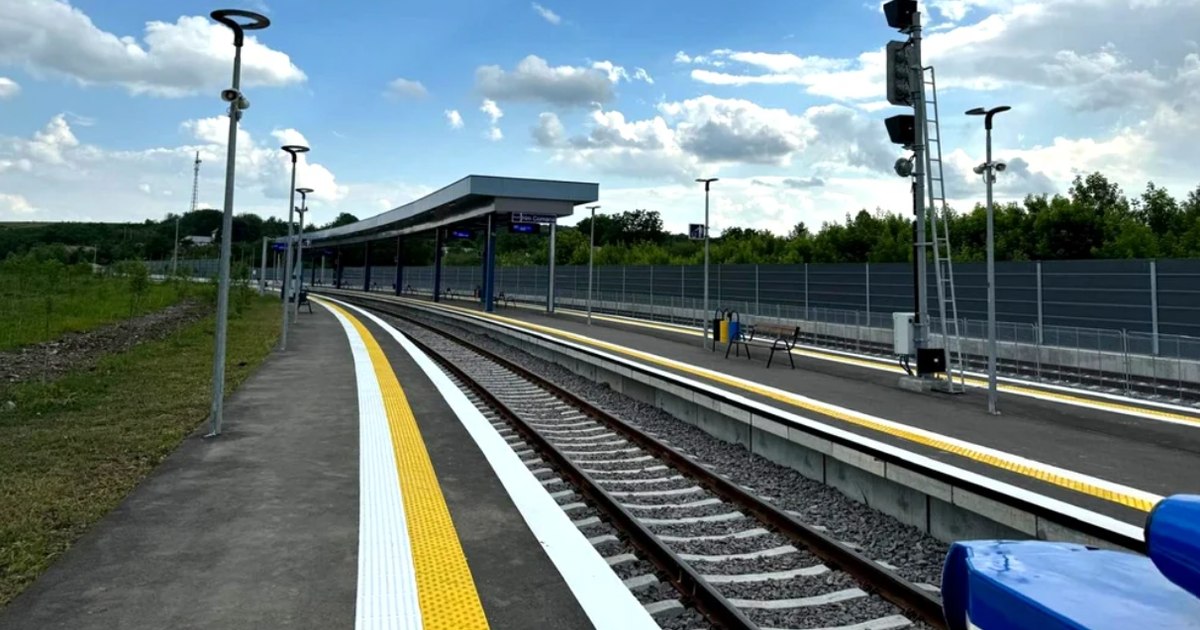
The oldest railway in the Romanian Principalities is entering a new stage of modernization. Inaugurated in 1869, the Bucharest-Giurgiu line will be electrified and rehabilitated with European funds. The works begin on Monday, March 16, and rail traffic on the Bucharest Progresul-Giurgiu route will be suspended, passengers will be transported by buses.
PHOTO: The truth
After 19 years of waiting, during which railway traffic was suspended, passenger trains returned in June 2024 on the historic route between Bucharest and Giurgiu, with the completion of the new bridge over Argeș, at Grădiștea, built in place of the collapsed one. Now, the authorities want to take the decisive step by modernizing and electrifying the entire section, between the North Station and the border with Bulgaria.
Last year, CFR Infrastructura concluded a contract with the RailWorks Association (Arcada – Alstom), which aims not only at electrification, but also at solving the remaining critical points, such as the Daia area. A new viaduct will be built here to remove the current tonnage restrictions, which force freight trains to continue to detour through Videle.
According to the data sent by the operator of the railway infrastructure at the request of “Adevărul”, the actual execution of the works should last 2 and a half years. Therefore, in an optimistic scenario, the work should be completed by the end of 2028.
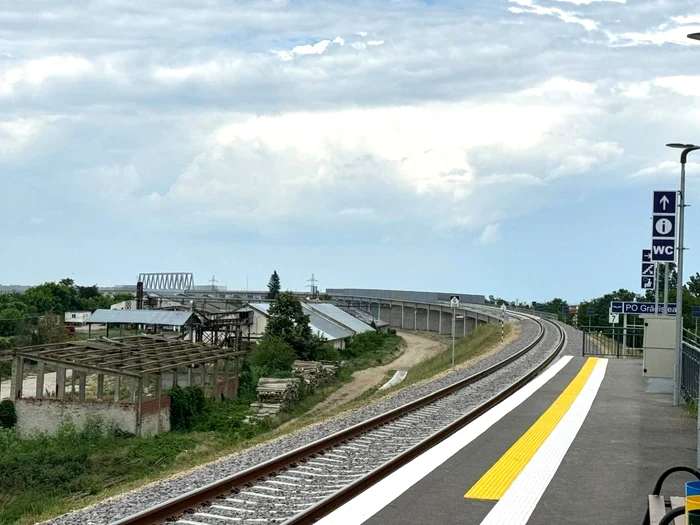
The new railway bridge from Grădiștea. PHOTO: The truth
Rail traffic on the Bucharest Progresul – Giurgiu route is suspended
Currently, seven regio trains run on the Bucharest – Giurgiu railway route on weekdays, six of which depart from the North Railway Station and one from the Basarab Railway Station. All stop at Progresul Station. From Gara de Nord to Giurgiu, the fastest train covers the distance in 2 hours and 16 minutes, but if the journey starts from Progresul, the duration drops to one hour and 23 minutes.
According to the data consulted by “Adevărul”, CFR Călători officials have decided to keep the trains from the North Station and the Basarab Station in circulation, while the trains from the Progresul Station are to be replaced by buses. Instead, the price was increased from 13.5 lei to 18 lei.
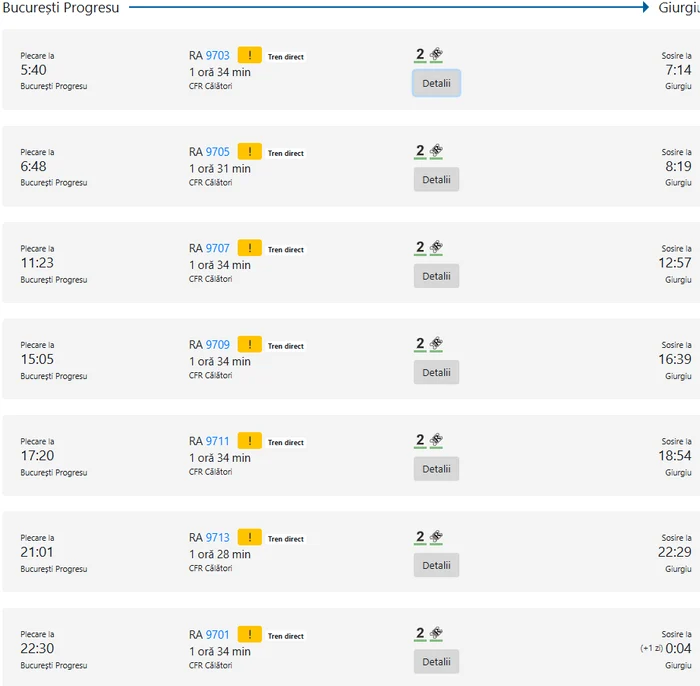
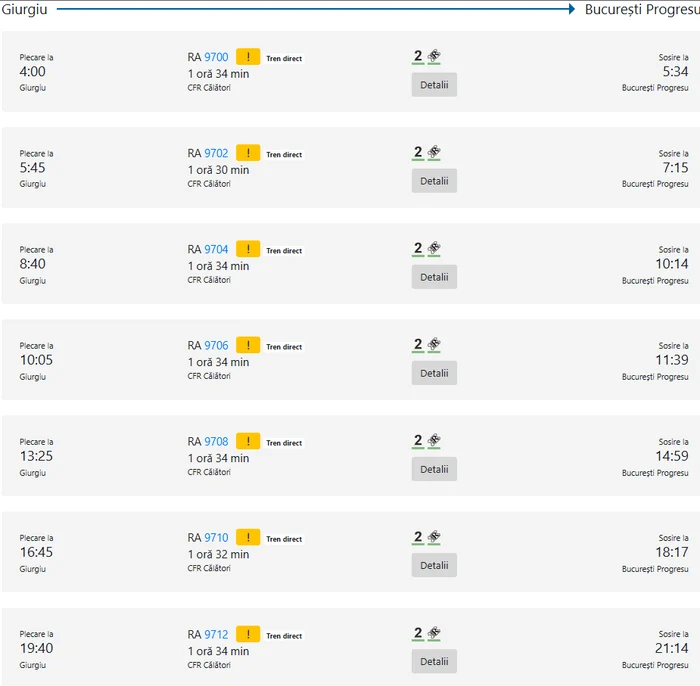
According to CFR Infrastructure, the works aim to maintain rail connectivity, while the infrastructure is rebuilt from the ground up for speeds of up to 120 km/h.
Beyond the rehabilitation of buildings and platforms, the project brings state-of-the-art technology, from the ETCS Level 2 signaling system, to traction substations at Jilava and Frătești, and ecological wildlife protection systems.
Brief history of the Bucharest – Giurgiu railway
The history of the first railway line in Romania, Bucharest Filaret – Giurgiu, began to be written in 1865, with the concession granted to the British company Barkley – Stabiforth. The construction of the line took almost two years, between 1867 and 1869, and the cost of one kilometer was 193 gold lei, to which were also added the expenses of the expropriations carried out by the state, according to a study by Mihaela Manolache, from the National Library.
With a length of 67.171 km, the cited source shows, the Bucharest Filaret – Giurgiu line had four metal bridges, designed by chief engineer William McCandlish, that crossed the rivers Sabarul Mare, Sabarul Mic, Argeș and Neajlov (Nesbor), with lengths between 19.95 m and 146.96 m.
On October 19/31, 1869, the Bucharest Filaret–Giurgiu line was officially inaugurated. In the first official journey, the locomotive of the train, named “Mihaiu Bravu”, was driven by JT Barkley himself. A second set of wagons left 15 minutes after the first, being towed by the “Dunărea” locomotive, driven by the first Romanian mechanic, Nicolae Tănase. The carriages had been built in Manchester, England, by the Ashbury factory.
“The degree of civilization of a people is measured by the number of kilometers of its railways”, declared the prime minister at the time, Dimitrie Ghica, on the Giurgiu Station platform.