The Gulf Water War. A precise blow to the heart of the economies of the Middle East countries

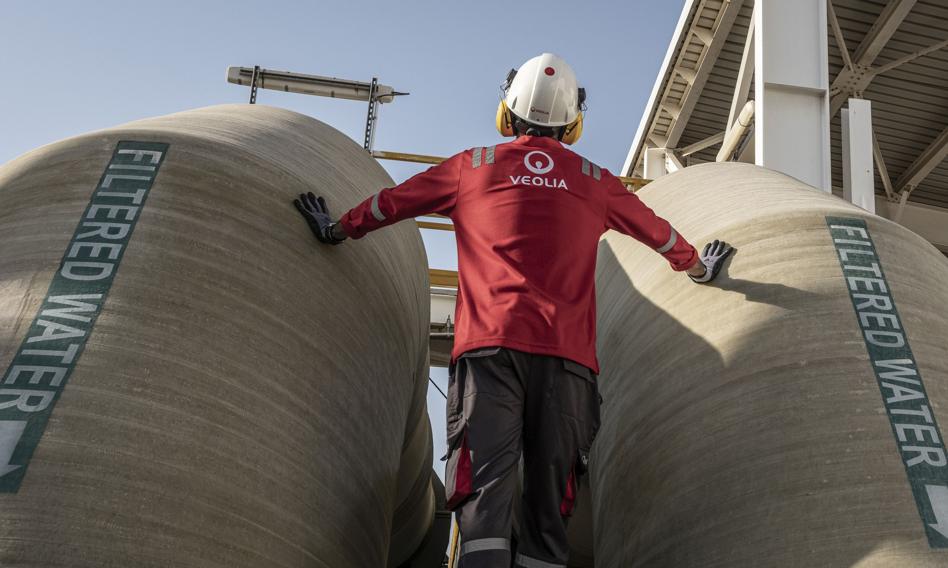
Attacks on water resources and desalination plants in the Persian Gulf region would constitute one of the greatest threats to the stability of this part of the world, the AP agency said on Tuesday. Small strikes on such facilities took place last weekend, and Iran blamed US forces.
Water in the desert
Above 400 water desalination plants located on the coasts of countries in the Persian Gulf regionfrom the United Arab Emirates to Kuwait, enables the functioning and development of one of the most water-stressed areas in the world. According to analyzes published in January in the journal Nature, of the 25 countries in the world struggling with extremely high water scarcity (i.e. consuming at least 80% of their renewable water resources), as many as 15 are located in the Middle East.
IN United Arab Emirates about 42 percent drinking water comes from desalination, w Kuwait – 90 percent, in Oman – 86 percent, and in Saudi Arabia – up to 70 percent Data from the World Resources Institute (WRI) indicate that 83 percent The Middle East's population faces severe water scarcity, with population growth, rapid economic development, unsustainable water management and socio-political challenges only worsening the situation.
As noted by the Qatari station Al-Jazeera, desalination has played a key role in enabling economic development in the region. Oil profits, especially those related to the price spike caused by the 1973 oil crisis, helped finance the construction of water desalination plants. However, it is not known how safe these facilities are today, emphasized the British online daily Independent. He recalled that a 2008 US State Department cable, later revealed by WikiLeaks, warned that in the event of serious damage to the main installation supplying water to Saudi Arabia's capital, Riyadh, the city would have to be evacuated within a week. However, CIA analysts assessed in 2010 that most desalination plants were “extremely vulnerable to sabotage or military action.”
Why are desalination plants more important than pipelines?
Therefore, water security has become a critical issue and a cornerstone of national security in this region, and water desalination plants are among the most important elements of critical infrastructure.
According to David Michel, a water security expert at the US think tank Center for Strategic and International Studies (CSIS), the attacks on desalination plants signaled adversaries' (Iran's) “willingness and strategy to put this critical civilian infrastructure at risk.” He estimated that as the conflict continues, these trends may strengthen, the Independent reported on Tuesday.
Ehsan Moslemi, an Iranian economist, wrote on a social media site that it would be better “for all parties” if they did not engage in the destruction of critical infrastructure. “Those who live in glass houses should refrain from throwing stones,” he warned.
However, an attack on the water infrastructure of Arab countries would allow Iran to strike a precise blow against its opponents. Blocking the Strait of Hormuz is aimed at the entire international community, including Tehran's ally, China. An attack on the desalination plant would constitute a targeted escalation that could lead to pressure on the authorities of the region's countries from the civilian population, Michel said. – If you don't have water and you are worried about where you will get it, this may be an argument encouraging the population to demand an end to hostilities – emphasized the expert.
There have been attacks on desalination plants in the Persian Gulf region in the past. The most serious ones occurred in 1991, when Iraq attacked most of such plants in Kuwait, paralyzing the production of drinking water there. The situation was then saved by importing water from Saudi Arabia and Turkey.
However, the side that would attack its neighbors' water would risk a lot. – Iran's deliberate attacks on seawater desalination infrastructure in neighboring Gulf States would be a step that the governments of the region could not easily forget – Robert Mogielnicki, an expert at the Arab Gulf States Institute, told the Financial Times.
Israel and the US launched airstrikes on Iran on February 28, killing, among others, the country's supreme leader, Ali Khamenei. Tehran responded by attacking Israel and several Persian Gulf countries, hitting both American bases and civilian facilities located there.
Pentagon chief Pete Hegseth announced that Tuesday will be the most intense day of attacks on Iran. The Secretary of Defense stated that the US will not end the war with this country until the regime in Tehran is completely defeated. (PAP)
os/rtt/