Google built a flood prediction tool using the Gemini language model, as well as millions of press articles. It is the first time the company has used large language models for such forecasts.
Floods are among the most dangerous weather phenomena in the world, causing an average of 5,000 deaths per year. These floods are also very difficult to predict, and those from Google come up with a solution, writes the publication Engadget.
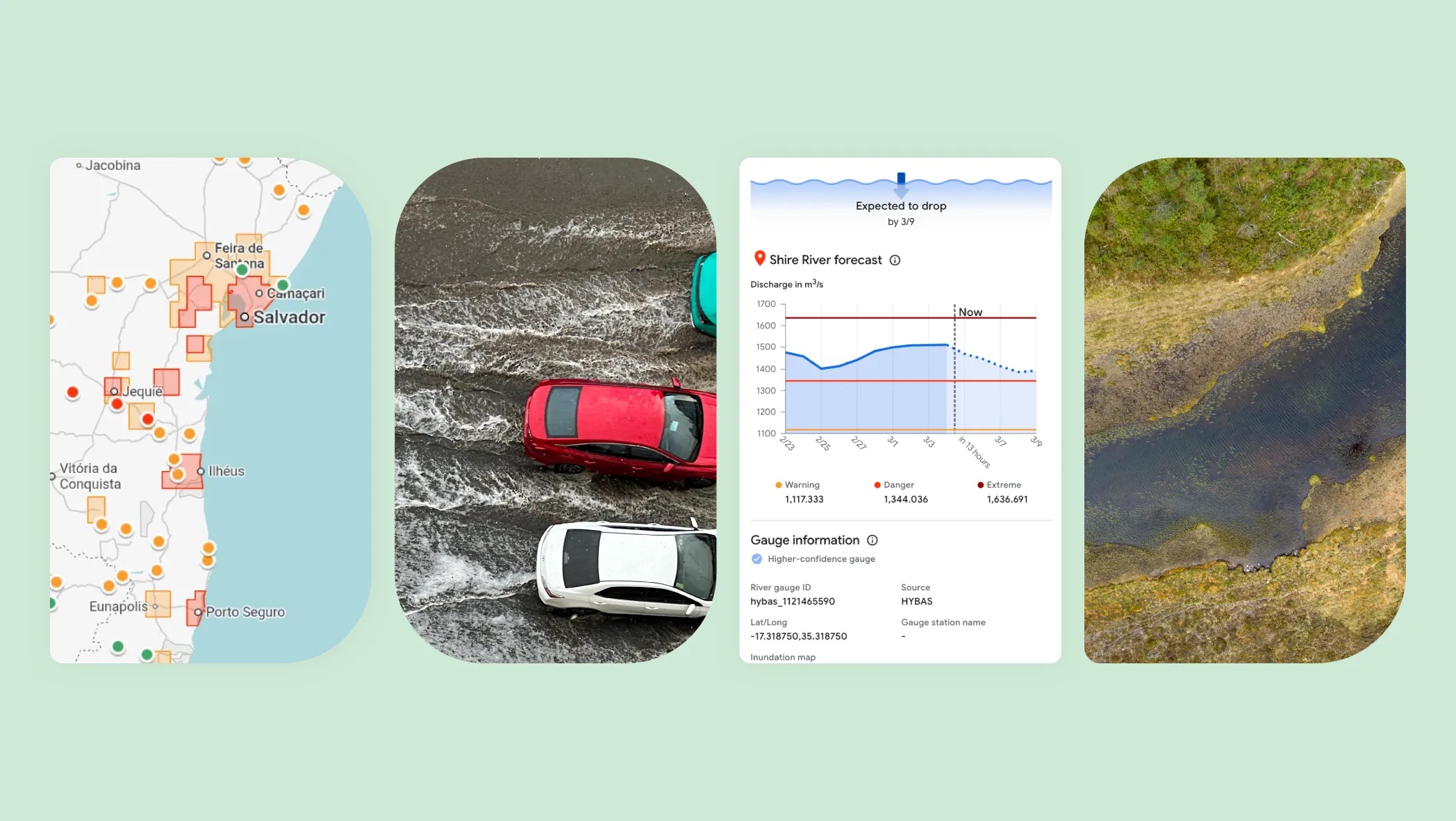
The company recently introduced Groundsource, a flood prediction tool that uses Gemini to extract data from archived media articles.
The company analyzed via Gemini 5 million news articles from around the world and identified those about catastrophic floods.
The data was then transformed into a time series of geo-tagged events and the researchers trained an AI model that takes current weather forecasts and uses Groundsource data to determine the likelihood of a flood occurring in a given area.
There is no concrete information yet on how accurate Google's forecasting model is, but only time will tell
The company can estimate severe flood risks for urban areas in 150 countries through its platform called Flood Hub. Some limitations are present, because the model can identify the flood risk only on areas of about 20 km2.
The platform was also designed to be useful in areas that generally lack extensive weather monitoring infrastructure.
What Google says about the Groundsource tool
“Groundsource is a new AI-based methodology that transforms public information about historical disasters into a high-quality database, and we're starting with floods that occur in urban areas.
Groundsource used Gemini to analyze decades of public accounts and identified more than 2.6 million historical flood events in more than 150 countries. He then used Google Maps to determine the precise geographic boundaries of each event, creating a dataset focused on flash floods. Based on this data set we trained a new model that makes concrete progress in forecasting floods in urban areas up to 24 hours before they happen.”