A flotilla of at least 25 supertankers is heading to Saudi Arabia's Red Sea port of Yanbu. The kingdom is racing against time to deliver oil to the market after the war with Iran halted shipments through the Strait of Hormuz, Bloomberg reports.
The fleet would give the kingdom the capacity to ship 50 million barrels of oil from the port, according to ship tracking data compiled by Bloomberg.
Assuming the loading is successful, it will be a key solution in the face of unprecedented disruptions in energy supplies from the Persian Gulf, Bloomberg estimates.
Tankers sail to the port of Yanbu in Saudi Arabia on the Red Sea.
|
Adam Ziemienowicz, Mateusz Krymski / PAP / photos
Oil prices
The price of American WTI crude oil falls on Tuesday late evening to $86 per barrel. Brent crude oil is also cheaper – the price drops to approx. $90 per barrel. On Monday morning, both WTI and Brent were trading at $119. — the highest since 2022. The declines started on Monday and continued on Tuesday. However, the raw material remains much more expensive than before the outbreak of the war in the Middle East, when it cost just over $65-70. hole. per barrel.
Petroleum. Saudi Arabia launches plan B
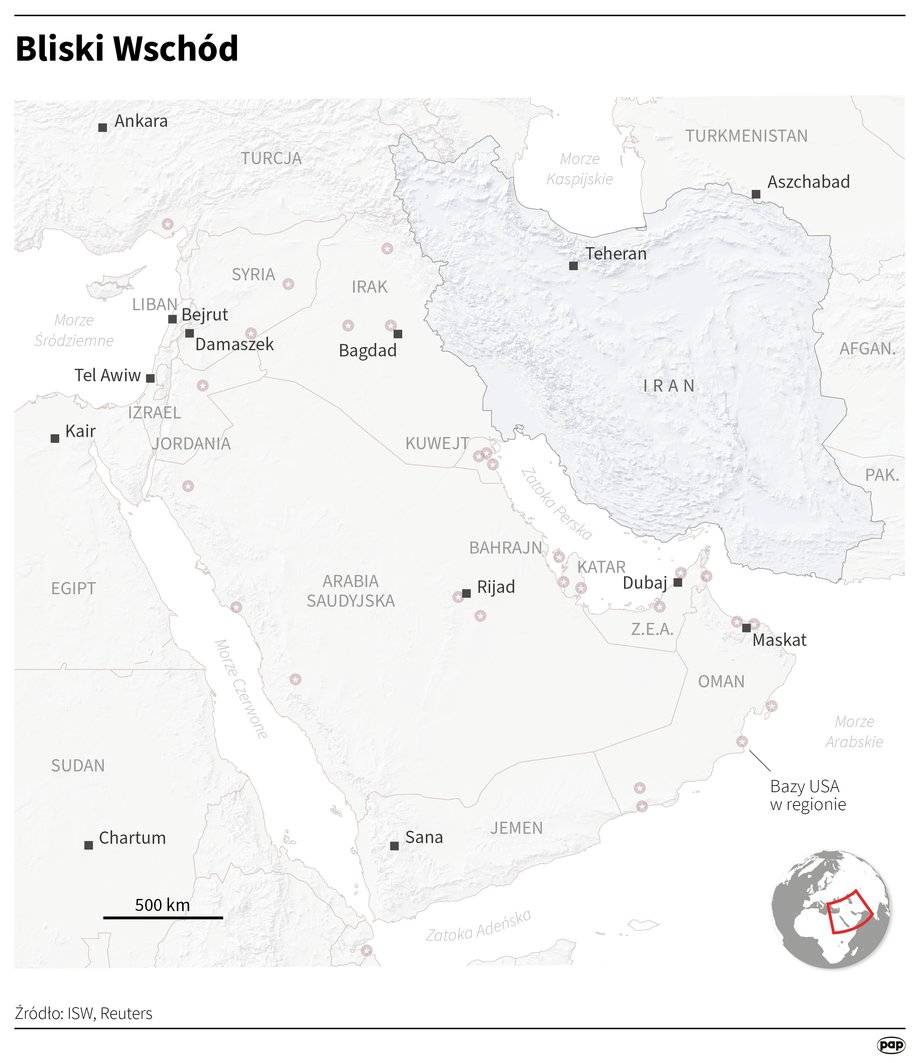
Riyadh is rushing to increase crude flows through an export route bypassing the Strait of Hormuz, through which it and other Gulf producers have been barred from shipping oil since the U.S. and Israel began a war with Iran. Transit through the narrow waterway is considered too risky for most shipowners.
See also: Iran blocks oil exports. Trump threatens 'twenty times as hard'
The conflict reduced global oil production by about 6% as countries such as Iraq and Kuwait were forced to suspend the exploitation of deposits because they have no way to export the raw material, writes Bloomberg.
Plan B for oil. “Move tankers west”
Saudi Arabia and United Arab Emirates have also adjusted their production levels, but are still uniquely positioned to bypass the Strait of Hormuz thanks to pipeline networks connecting to the Red Sea and Fujairah (the port in the UAE that lies across the Strait of Hormuz), respectively.
See also: Washington is considering easing sanctions on Russian oil. What do the allies say?
Saudi Aramco CEO Amin Nasser said Tuesday that the company is increasing crude flows through the east-west pipeline, which should reach its full daily capacity of 7 million barrels within a few days.
“It's all about moving tankers from east to west.” Nasser said.
The United Arab Emirates is also working to increase oil exports by pipeline from its main fields to the port of Fujairah, bypassing the Strait of Hormuz.
Source: Bloomberg