“Romania is losing speed compared to Poland”. The stakes of the Romanian president's visit to Warsaw

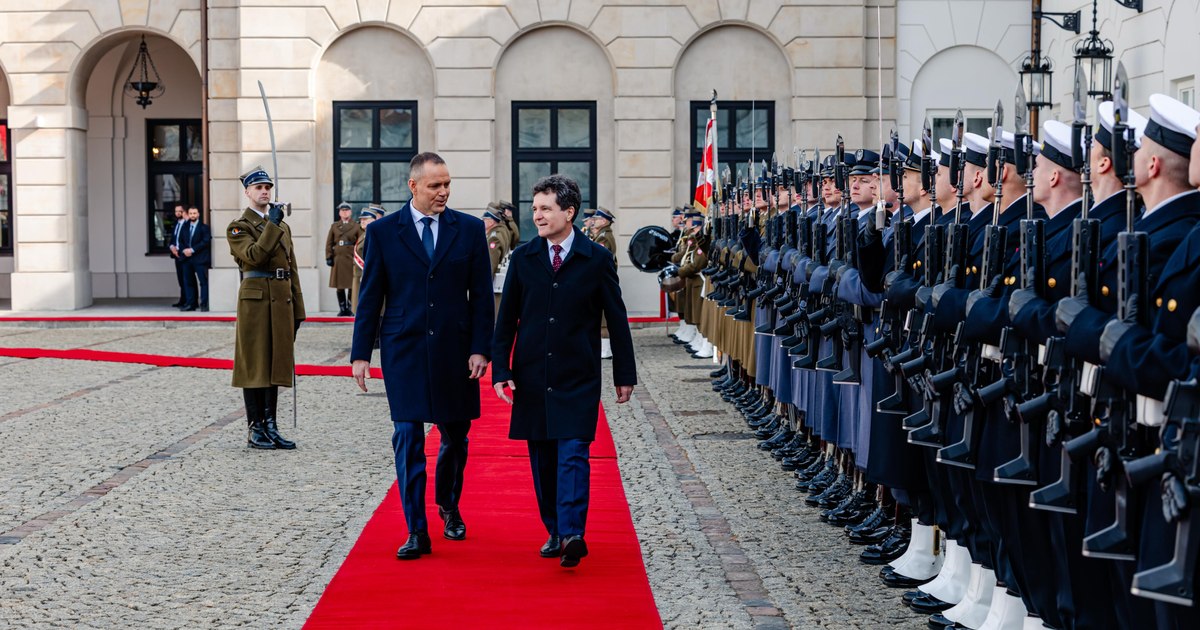
The visit of President Nicușor Dan to Warsaw reconfirms the Romanian-Polish partnership, but it also brings to the fore an asymmetry that is increasingly difficult to ignore, foreign policy analyst Ștefan Popescu remarks: while Poland is consolidating its role as a regional pivot, Romania seems to be reacting rather than shaping the agenda.
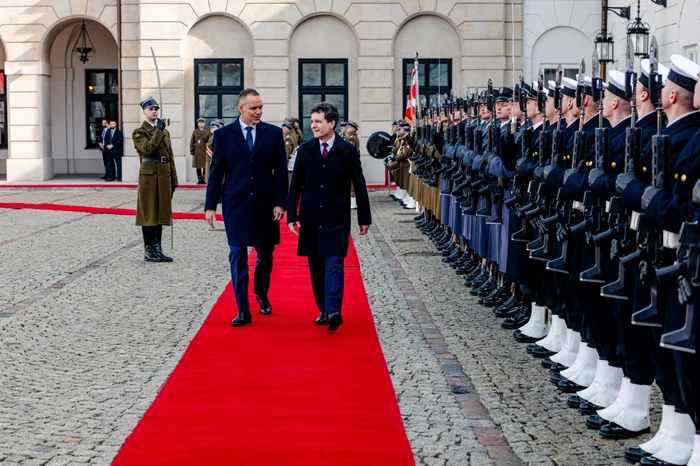
The head of state went to Warsaw, at the invitation of his counterpart PHOTO Presidential Administration
President Nicușor Dan had a first bilateral meeting with his Polish counterpart, Karol Nawrocki, two days after both countries marked the Polish-Romanian Solidarity Day. Discussions between the two leaders looked at joint military procurement, the SAFE program and a security hub on the Black Sea.
In a joint press conference, the two leaders announced the expansion of the Bucharest 9 Format to the Scandinavian countries. The Polish president emphasized that “Romania has been the strategic partner of the Republic of Poland since 2009″, and Nicușor Dana stated that “Romania and Poland currently have similar characteristics”.
“There are large countries on the eastern border, involved in NATO, countries that have benefited, that have developed as a result of joining the European Union, countries that encourage transatlantic partners, including within the Union, and countries that can benefit from the fact that they have a common vision in many areas, including within the Union, on what competitiveness means, in relation to the Union's green strategies”, declared the Romanian president.
Extension of the Bucharest 9 Format (B9)
The Polish leader's desire to expand the Bucharest 9 (B9) Format is a really important aspect of the recent visit, says foreign policy analyst Ștefan Popescu: “This shows an interest for regional organizations, for sure, increasingly having Poland as the main pillar, because the movement of the B9 Format towards the Baltic-Scandinavian area capitalizes on Poland as the pivot of this format.”
The expert notes that Romania missed an important opportunity: “I regret that the representatives of Romania did not have the presence of mind, because when the Polish side proposed the expansion to the Baltic-Scandinavian area, the expansion to Greece was not proposed, so that the B9 format would have a vision, a balanced approach between the Baltic Sea and the Black Sea. For Bucharest, maintaining relevance on the southern dimension is very important. Poland is pulling him to the Baltic and Nordic area, which is the epicenter of his security and foreign policy interests.”
“The similarities were relevant in the late 90s and early 2000s” – Ștefan Popescu, foreign policy analyst
Without a counteroffer, the southern dimension of the format, the area of natural strategic interest for Bucharest, risks being marginalized, he indicates.
“First of all, we observe a great imbalance, because it is true that the official discourse speaks of similarities. Unfortunately, Romania is losing speed compared to Poland. Similarities were relevant in the late 90s and early 2000s. But at the moment, Romania's population is less than half of Poland's. Romania's gross domestic product is less than half of Poland's gross domestic product, which exceeded one trillion dollars and who entered the select club called the G20”he explains.
The relationship with the US
Although the Romanian president's speech indicated “similarities” with Poland, the strategic reality shows that Romania remains an important partner, but increasingly less visible on the map of Western priorities, while Poland is becoming a pivot of the American military presence in the region:
“As far as the relationship with the USA is concerned, Poland represents the pivot of the American presence and the priority area of interest of the United States of America. Moreover, in the Defense Law that passed through Congress at the end of 2025, an explicit mention is made of Poland and the Baltic countries, the security initiative of the Baltic countries, without mentioning a word about Romania, which clearly shows us a hierarchy, clear from Washington's point of view, between Warsaw and Bucharest”.