Al-Qaeda predicts a global catastrophe. The UN advises: it must not be ignored


At the end of January 2026, several Arabic-language online media affiliated with Al-Qaeda, one of the largest terrorist organizations in the world, published a text titled “The Future of Islam in the Light of Contemporary Global Changes.” The report, whose authors are said to be analysts from the branch operating in the Arabian Peninsula (mainly in Yemen), states that the planet is heading towards World War III.
Firstly, the very existence of this document shows that al-Qaeda continues to operate, keeping think tanks and the media under its control. Most importantly, the organization's ambitions continue to grow – to launch a global jihad, replace Middle Eastern regimes with loyal or affiliated groups, and minimize Western cultural, political and military influence in countries with predominantly Muslim populations.
It would be a mistake to dismiss these plans as scare tactics by bearded hermits who are long past the peak of their terrorist careers. Just days after the release of their report, the United Nations released its 37th report on the activities of ISIS (Islamic State), Al-Qaeda and their affiliated groups, indicating that it is too early to declare Al-Qaeda a non-essential organization.
Of course, this group will not launch an offensive against Brussels or Washington — largely due to the deep divisions described in the UN report. The central leadership of the organization is struggling to gain the trust of rank-and-file members, and many of its fighters do not even know who is in charge, taking orders only from their direct commanders.
Gone are the days when Al-Qaeda was led by a globally recognized man like Osama bin Laden. The name of the group's current emir, Egyptian-born Saif al-Adel, probably means little to those uninterested in Middle Eastern affairs. Moreover, Al-Qaeda itself has not yet officially recognized him as its leader, and reports of his promotion to the position of emir several years ago are based solely on the assessments of scientists and journalists, not on direct evidence.
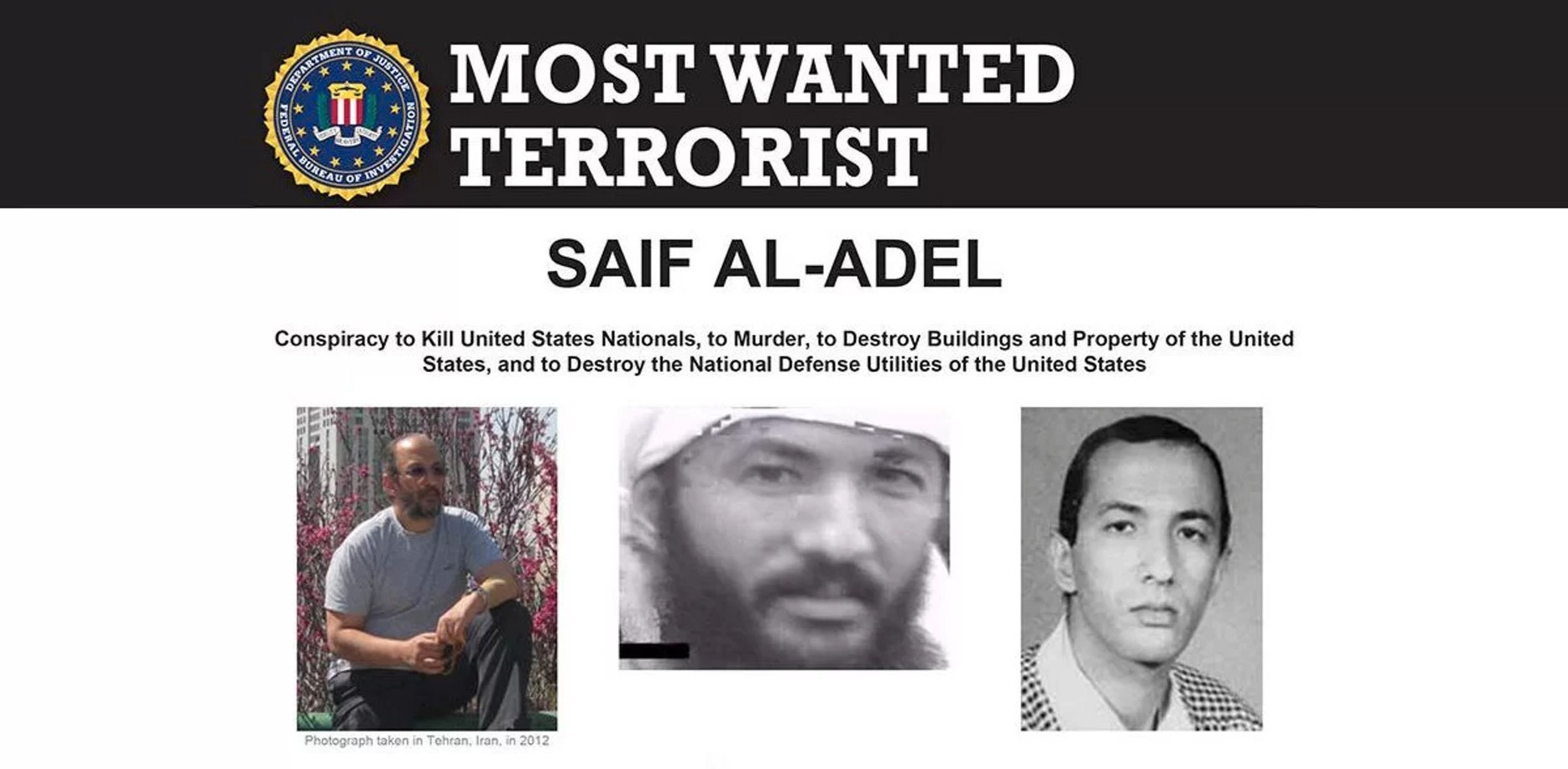
A poster with photos of the wanted alleged emir of al-Qaeda, Saif al-AdelUS Department of Justice / US Department of Justice
The source of modern al-Qaeda's strength
Uncertainty about top leadership reflects organizational weakness. Having a sinister but charismatic leader gave the group notoriety and attracted supporters sympathetic to the idea of jihad. On the other hand this ambiguity is also the source of modern al-Qaeda's strength. The lack of a rigid hierarchy (and therefore a dominant ideology imposed from above) provides regional branches with greater freedom of action.
In this way, the Al-Qaeda “branch” known as Al-Shabaab is actively recruiting new members in Somalia and Kenya, taking advantage of inter-clan rivalries, positioning itself as a defender of weaker and smaller clans or as a mediator in resolving conflicts. Meanwhile, Al-Qaeda in the Islamic Maghreb interferes in the politics of North African countries, presenting itself as an opponent of corrupt governments and the foreign countries allegedly supporting them. In other words, al-Qaeda is flexible and encourages regional affiliates to increase their attractiveness to local populations in different parts of the Muslim world.
Flexibility and decentralization have been among the key factors that have allowed al-Qaeda to survive despite competition from the more radical Islamic State, which was originally founded as the Iraqi branch of the group founded by bin Laden but split from its parent organization in 2014.
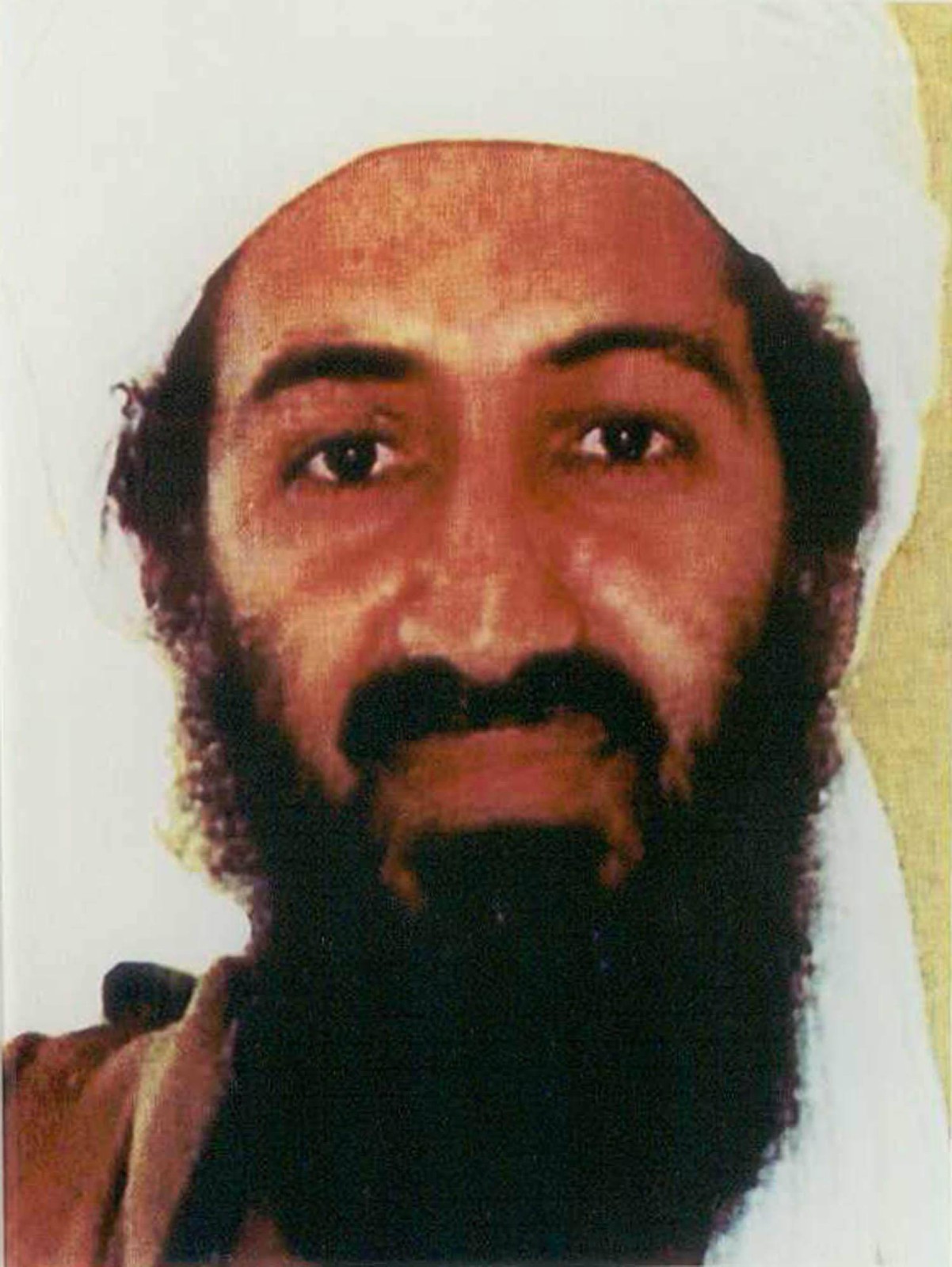
Al-Qaeda founder Osama bin Laden, 2001© Band Photo / uppa.co.uk / PAP
What is the difference between Al-Qaeda and the Islamic State?
The Islamic State is a much more uncompromising jihadist organization that demands absolute obedience to the caliph. In ISIS, even Muslims suspected of insufficient loyalty to the leadership were severely punished, while al-Qaeda generally avoids intra-group violence.
Another key difference is the Islamic State's immediate focus on building a so-called “just caliphate” in the Middle East — a quasi-state entity openly hostile to the rest of the world and isolated from the international system.
As a result of its successful regional and ideological diversification, al-Qaeda now claims to have up to 25,000 in its ranks. fighters. This may not seem particularly impressive compared to the size of regular armies (even in smaller, peaceful countries). However, for a terrorist organization this is a significant number. When al-Qaeda first made headlines around the world for attacks on the United States in September 2001, it had only about 500 members. Currently, it has 50 times as many and new ones are constantly arriving.
These numbers may be enough to achieve significant real-world results. According to US government data, at the peak of the expansion of the Islamic State in 2015–2016, when the group controlled over 100,000 square kilometers of the territory of Syria and Iraq, where several million people lived, was only 15,000. up to 20 thousand active members.
“Humanitarian” terrorists instead of a failed state
Al-Qaeda continues to recruit new fighters in its areas of active presence – Africa, the Middle East, Afghanistan and Pakistan – while also seeking to expand its reach. It exploits the weak, positioning itself as a force that can protect ordinary people from corruption, abuses by security forces, indifference of officials and the rigid dogmatism of official religious institutions.
The group's African branches reinforce this image by financing humanitarian programs. Al-Shabaab even runs a Humanitarian Aid Distribution Office, which is reported to be supplying significant amounts of food, water and medicine to Somalis. As a result, some of the local population inevitably see the fighters as heroes and protectors.
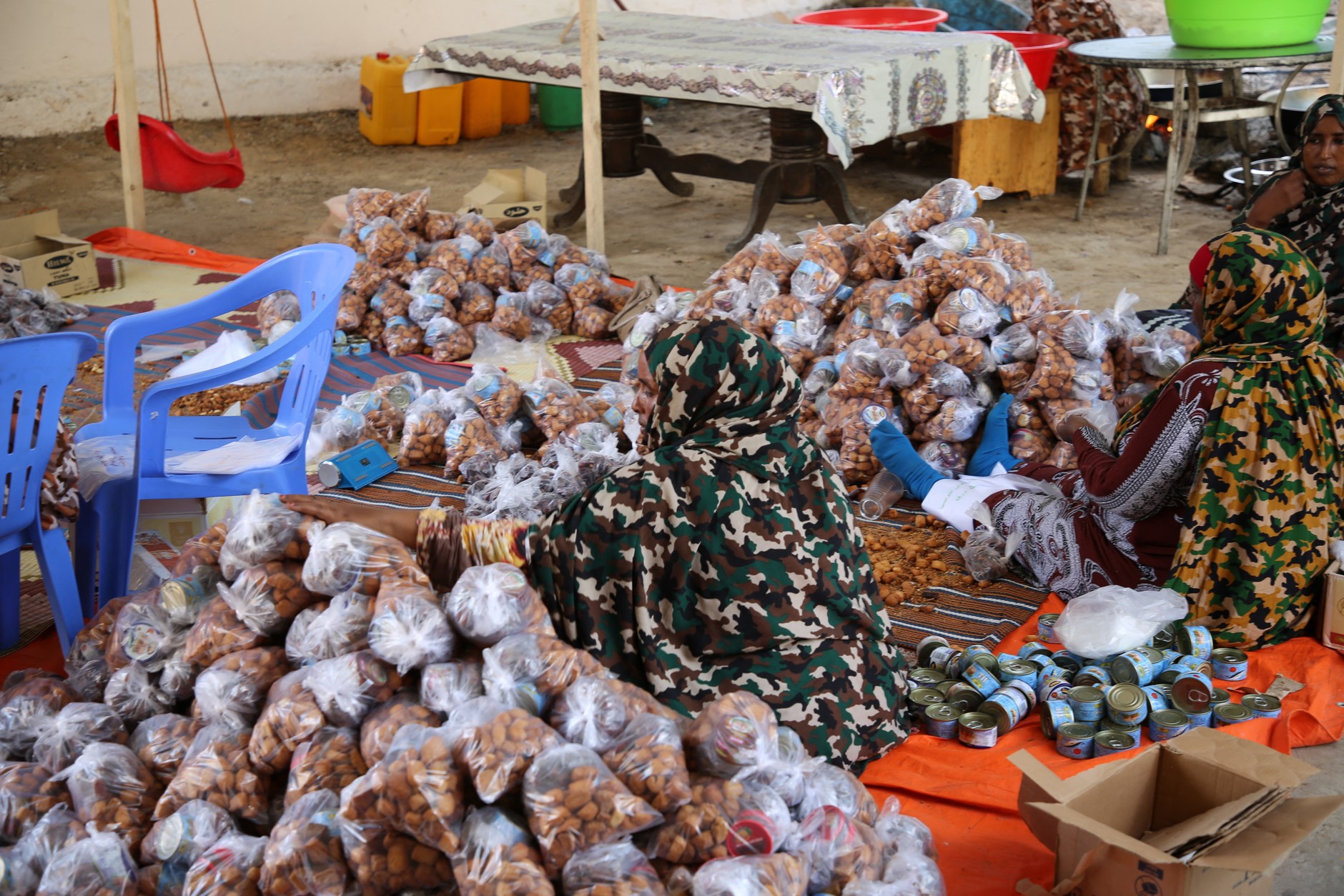
Women producing dried food products for sale to support government military operations against the Al-Shabaab terrorist group, Mogadishu, Somalia, September 11, 2023.ABUUKAR MOHAMED MUHIDIN / ANADOLU AGENCY / ANADOLU VIA AFP / AFP
In Pakistan, where the government is struggling with multiple economic, natural, political and even military crises, al-Qaeda recruits people disenchanted with the government's weakness, presenting itself as a “strong hand” working to restore order. The group uses a variety of propaganda techniques – from sermons in mosques delivered by imams who sympathize with it (this phenomenon also occurs in Western countries) to creating computer games glorifying “jihadi fighters”.
Al-Qaeda also operates in the so-called the dark web (a deliberately hidden part of the Internet) and social media, where it attracts supporters with promises to build a new world based on justice. In regions with unstable Internet access, video sermons calling for jihad are distributed among potential recruits on pen drives.
The group uses a wide range of recruitment methods: American convert Adam Gadahn ended up in al-Qaeda after volunteering at a recruitment center masquerading as a charity. Ibrahim Kalil, the leader of the group's European branch, reportedly tried to buy uranium on the black market, infiltrating the criminal underworld where, in addition to searching for radioactive materials, he also worked as a recruiter for the organization.
In Africa, al-Qaeda is integrating with insurgent movements opposed to central governments, gradually bringing them under its control, and building alliances with less radical groups that share the common goal of overthrowing existing regimes. The group's recruitment methods have become so diverse and dynamic that they are attracting the attention not only of terrorism experts, but also of sociologists and psychologists.
Al-Qaeda as the actual power
One of the best examples of this approach is Mali, where the local al-Qaeda affiliate is engaged in an ongoing conflict with the central government, controlling more of the country's territory than the official government. In these areas, al-Qaeda operates as a de facto state apparatus, not only distributing humanitarian aid but also fighting crime, collecting taxes, and supervising local courts. Similar zones under almost complete control of al-Qaeda appeared in Somalia and Yemen.
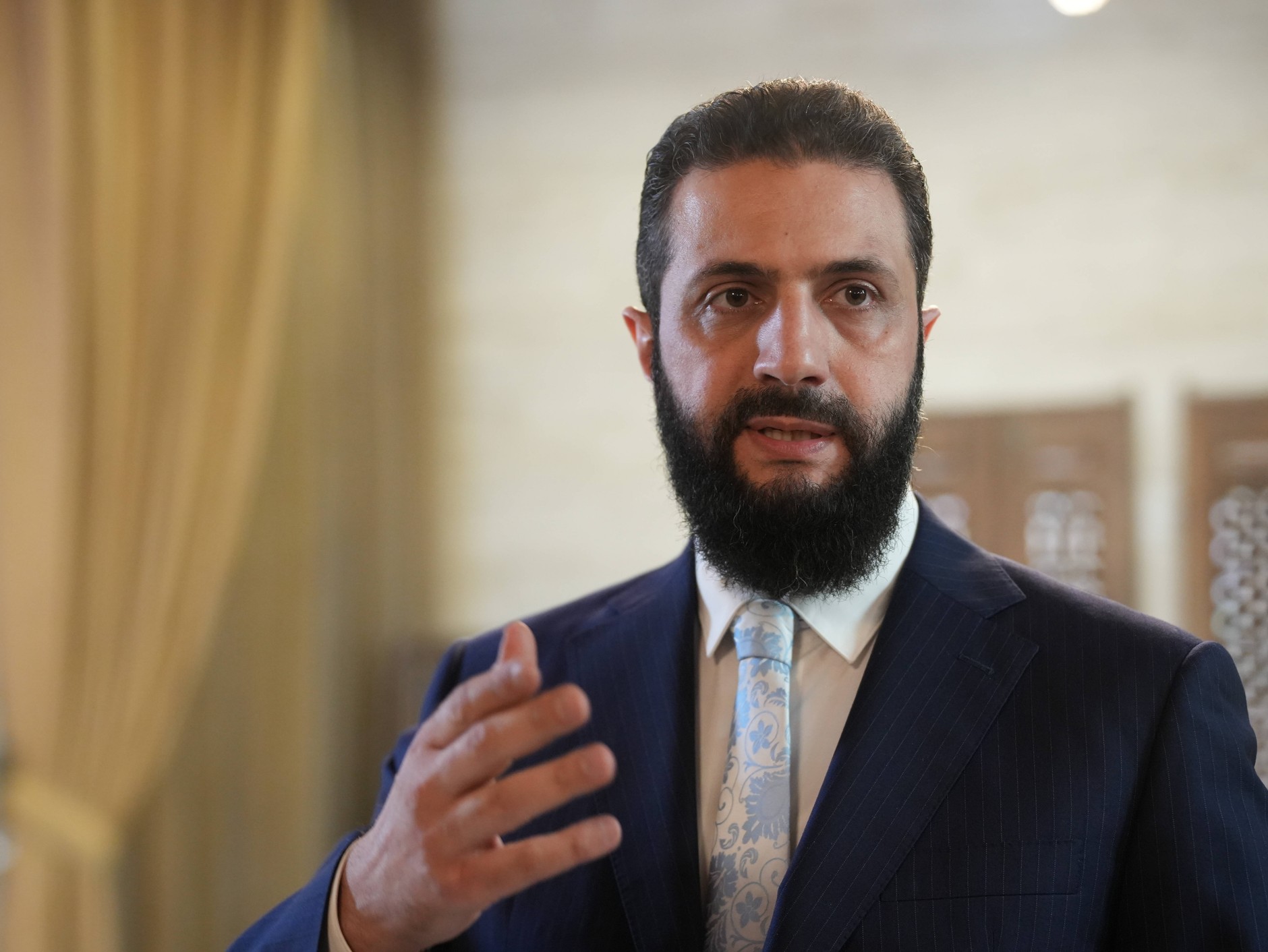
Syrian President Ahmed al-Shara after signing the agreement at the presidential palace in Damascus, Syria, January 18, 2026.PAP/EPA / PAP
Al-Qaeda's global tactics: gradual expansion of its sphere of influence
Al-Qaeda's global tactic is to gradually expand its sphere of influence in various regions, with the goal of subjugating entire countries, as was the case in Afghanistan and as may now be the case in Mali. Unlike ISIS fighters, who have deliberately used extreme brutality and promised to shed blood in most of the world, al-Qaeda avoids open, demonstrative executions.
The new global conflict described in Al-Qaeda's report could actually make it easier to achieve its goals. Jihadists skillfully take advantage of the chaos in developing countries and have long been working on building a network of contacts in Russia (mainly in the North Caucasus) and even in Europe. But even if a global war really broke out, al-Qaeda would not be the only—and most likely not the main—threat to global security.