The 'impossible' choice facing Gulf states after Iran attacked them: 'Seeing Doha and Dubai bombed, as unimaginable as it would be for Americans to see Seattle or Miami bombed'

Gulf states face an impossible choice after Iranian drones and missiles hit their cities in Tehran's response to a concerted attack by Israel and the United States, Al Jazeera writes in an analysis.
Real time information about the war in Iran and what is happening in the region
When Iranian missiles hit Gulf capitals and cities over the weekend, they shattered more than glass and concrete — they also dealt a blow to the carefully cultivated image of the region's states as oases of stability, isolated from the crises and conflicts of the rest of the Middle East.
Now countries in the region face what analysts describe as an impossible choice: fight back and risk being seen as fighting alongside Israel, or stand by while their cities burn.
“We're just stuck in this geopolitical location”
Yet even as the smoke billowed over the cities, a chorus of regional voices called for restraint — warning that the Gulf states should not be drawn into a war they never wanted and do not consider their own.
Sheikh Hamad bin Jassim bin Jaber Al Thani, the former prime minister and foreign minister of Qatar, warned in a message he published on the “X” platform that the states of the Gulf Cooperation Council (GCC) “must not be dragged into a direct confrontation with Iran”, even if Tehran “violated the sovereignty of the states of the Council and was the aggressor”.
“There are forces that want the Council states to become directly involved in the conflict with Iran,” Sheikh Hamad also wrote. “But a direct confrontation between the Council states and Iran, if it happens, will exhaust the resources of both sides and provide the opportunity for many forces to control us under the pretext of helping us out of the crisis,” he stressed.
According to Al Jazeera, his remarks reflect a more widely shared opinion in the Gulf that this is not the war of states here. Faisal Al-Mudahka, editor-in-chief of the Doha-based Gulf Times, put it bluntly: “This is the war of Israel and the US and it has nothing to do with us. We are just trapped in this geopolitical location.”
“The Gulf means prosperity, development, security and dialogue,” Al-Mudahka told Al Jazeera. “We are not looking for war. We do not want to be dragged into this conflict for Netanyahu's ideology and Iran's ideology,” he added.
Injuries and deaths from Iran's attacks on Gulf states
The attacks on the Gulf states came as Iran retaliated against a massive joint US-Israeli assault that began on Saturday. The operation killed Ayatollah Ali Khamenei, Iran's Supreme Leader, as well as other top military leaders and hit military and government targets across the country. A school was also hit, and at least 148 people died in that attack alone.
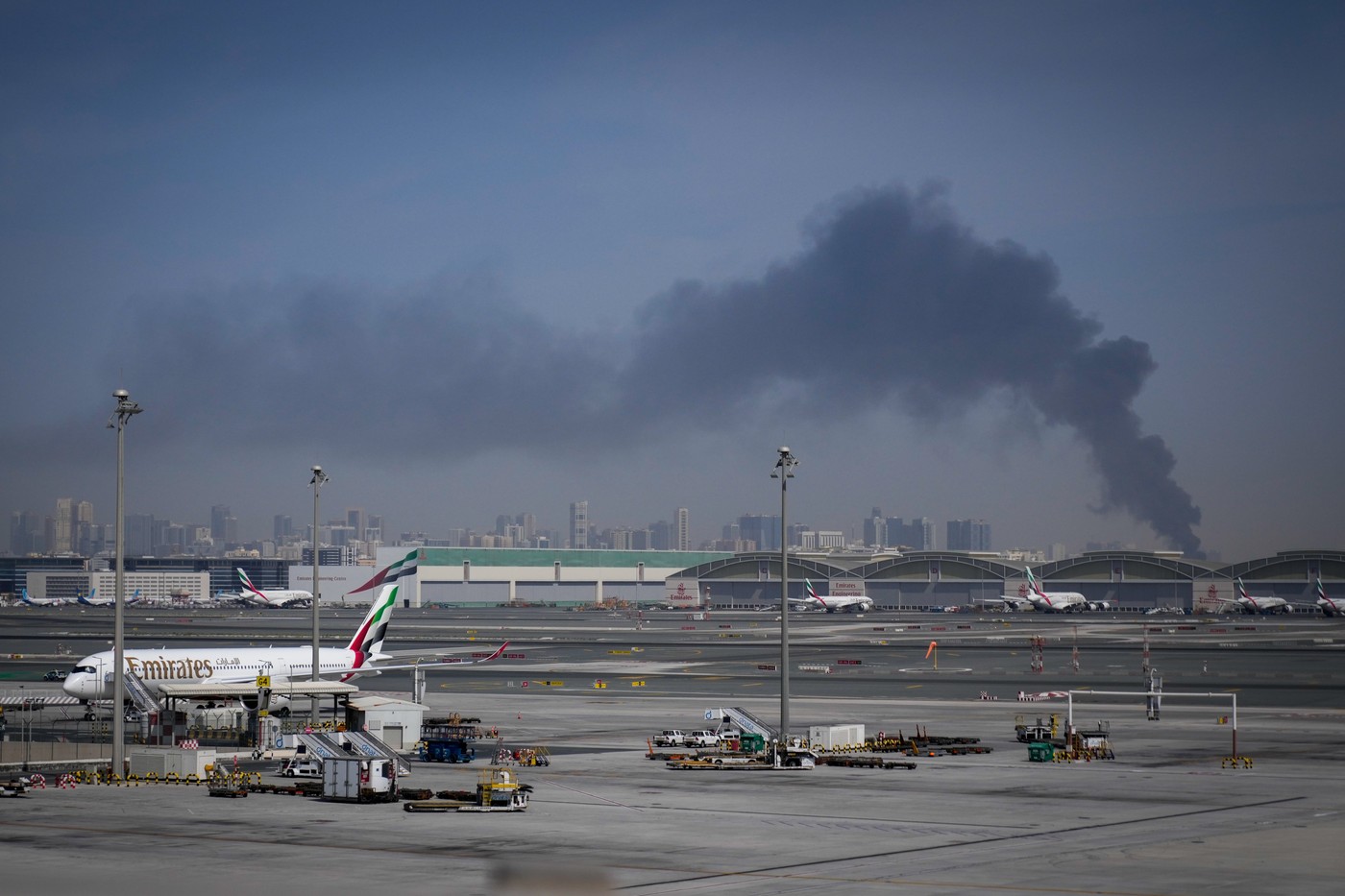
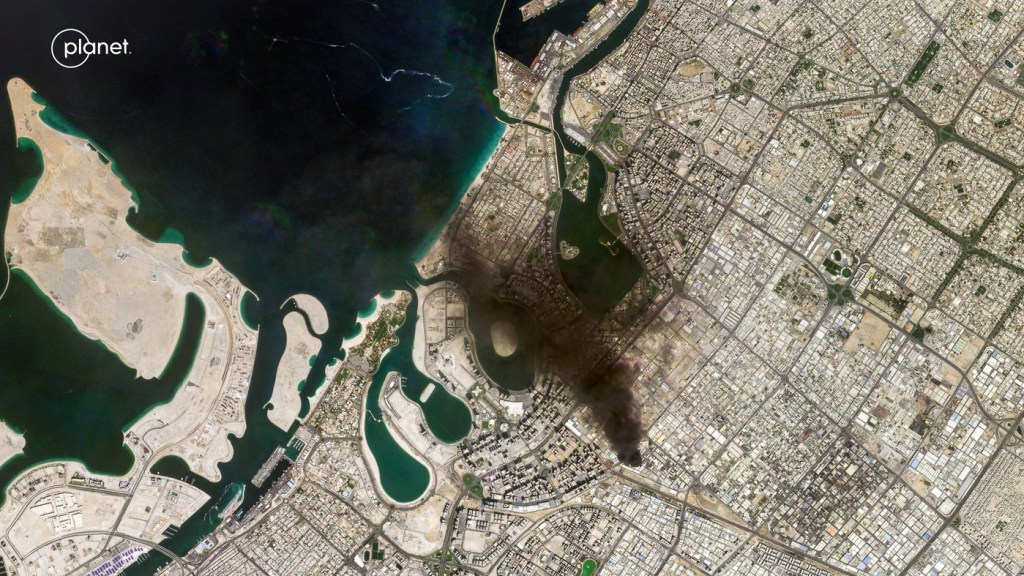
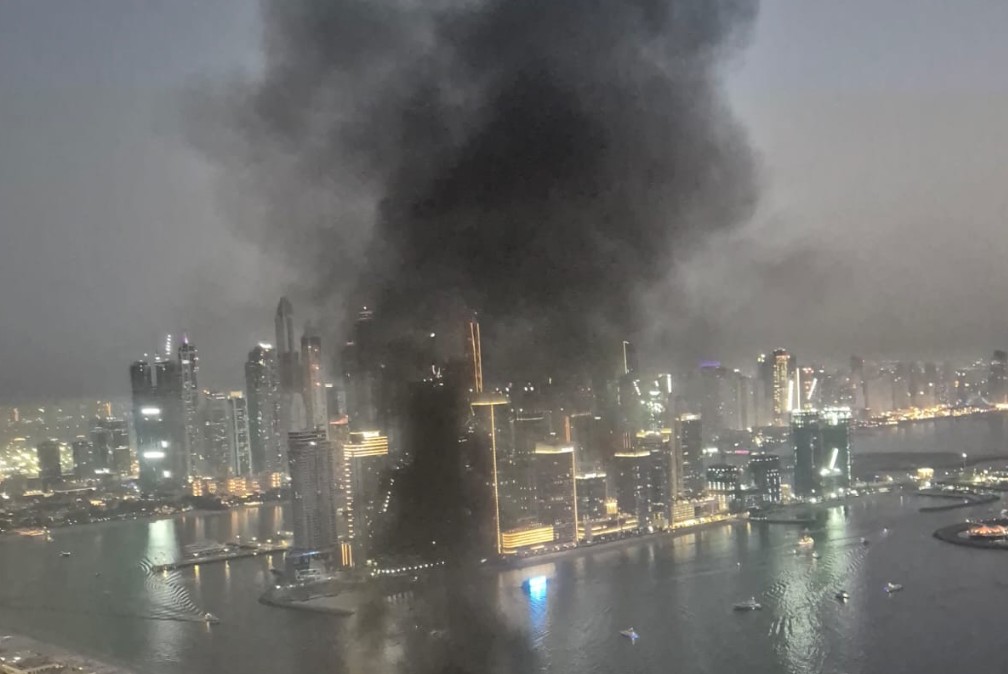
Tehran retaliated with missiles and drones that targeted Israel and US military assets in the Gulf, killing at least three people in the United Arab Emirates (UAE), where at least 58 people had been injured by Sunday evening. Either missiles – or fragments resulting from their interception – hit iconic buildings and Dubai airport, skyscrapers in Manama and Kuwait airport, and smoke was seen rising from some neighborhoods in Doha. Saudi Arabia said Iran also hit Riyadh and its eastern region.
Qatar announced that 16 people were injured on its territory, while five people were injured in Oman, 32 in Kuwait and four in Bahrain.
The UAE also recalled its ambassador from Israel – a clear signal of Gulf frustration with the turn of events.
A war that the Gulf countries did not want
In the weeks leading up to the attack, Oman mediated indirect talks between Washington and Tehran, with Foreign Minister Badr Albusaidi declaring that peace was “within reach” after Iran agreed to stop stockpiling enriched uranium and greatly dilute its existing stockpile.
However, a few hours later, the US and Israel fired missiles.
Al-Mudahka questioned the escalation of the war when Oman had secured a deal he described as “better than the Obama-era deal”. He said Sheikh Tamim bin Hamad Al Thani, the emir of Qatar, had lobbied Washington hard to prevent Gulf bases from being used in operations against Iran.
The expert was equally critical of Iran's reaction, describing Tehran as being in “panic mode” after the loss of its leadership. Iran's justification — that it is hitting US bases, not host countries — shows “a lack of understanding of international relations,” Al-Mudahka added.
He expressed confidence that the GCC would remain firm in its refusal to allow US or Israeli operations in its airspace.
An impossible choice
However, despite the Gulf's desire to stay out of the conflict, analysts say the region faces a nagging dilemma.
“For people and political leaders here, seeing Manama, Doha and Dubai bombed is as strange and unimaginable as it is for Americans to see Charlotte, Seattle or Miami bombed,” Monica Marks, professor of Middle East politics at New York University Abu Dhabi, told Al Jazeera.
The Gulf states, she said, “have seen this war coming in slow motion for weeks, if not months, and have made an enormous effort to stop it.”
They knew, Marks added, that a cornered Iranian regime would “choose fratricide over suicide,” taking its Gulf neighbors hostage rather than accept defeat.
Rob Geist Pinfold, a lecturer at King's College London, described the Gulf states' situation as a “conundrum”: doing nothing while Iran strikes repeatedly is as damaging to their status as going to war.
“After all, these governments are responsive to public opinion,” he said. “They want to be seen as protecting their population, their territory and their sovereignty.”
Both Western analysts suggested that the Gulf states might eventually choose to act — but on their own terms.
Pinfold argued that they were more likely to launch strikes themselves, possibly through a joint GCC effort such as the Peninsula Shield Force (PSF), rather than simply opening their airspace to US and Israeli operations.
The PSF was a unified army created in 1984 by the GCC.
“They don't want to be seen as working for Israel or with Israel,” he said. “They want to be seen as leaders, not just actors following others.”
Nightmare scenarios for countries targeted by Iranian strikes
The immediate fear of Gulf leaders is their most vulnerable infrastructure. Marks identified what he called the “real nightmare scenario”: Iranian strikes on power grids, water desalination plants and energy infrastructure.
“Without air conditioning and water desalination, the hot and extremely arid Gulf countries are virtually uninhabitable,” she said.
“Without energy infrastructure, they are not profitable. The Gulf states will take whatever measures they consider least endanger these interests,” he stressed.
Al-Mudahka presented the crisis as having consequences that go far beyond the Persian Gulf. He points out that 16% of the world's energy comes from Qatar and that 33% of global oil transits the wider region through the Strait of Hormuz.
“It's not just about Qatar and Bahrain. This is the most important geopolitical location for the world's energy supply,” he said.
But Pinfold argued that the bigger threat is not a physical one, but a reputational one.
Lasting damage, he warned, would hurt the Gulf states' “soft” power: their brand of stable and predictable havens for investment and tourism in a turbulent region.