In accordance with the EU RED III directive, by 2030, 42 percent hydrogen used in industry is to be hydrogen in the form of renewable fuels of non-biological origin (RFNBO), and by 2035 – 60%. An opportunity to meet these requirements is to invest in the production of green hydrogen and its derivatives, such as green ammonia. However, Polish industry is currently not ready for this. Experts emphasize that the development of this market may be an opportunity to accelerate the energy transformation in the country, but it requires systemic support – both on the supply and demand sides.
Green ammonia can be used as an energy and hydrogen carrier, the storage and transport of which is technically demanding and expensive. It can be used to decarbonize the fertilizer industry and be used as a fuel in transport (especially maritime) and heavy industry, including: as fuel for rotary kilns in cement production, which will reduce the use of fossil fuels.
The growing interest in green hydrogen and ammonia results from the EU RED III regulationwhich obliges Member States to increase the use of renewable fuels of non-biological origin in the industry, i.e. fuels other than, for example, biomass.
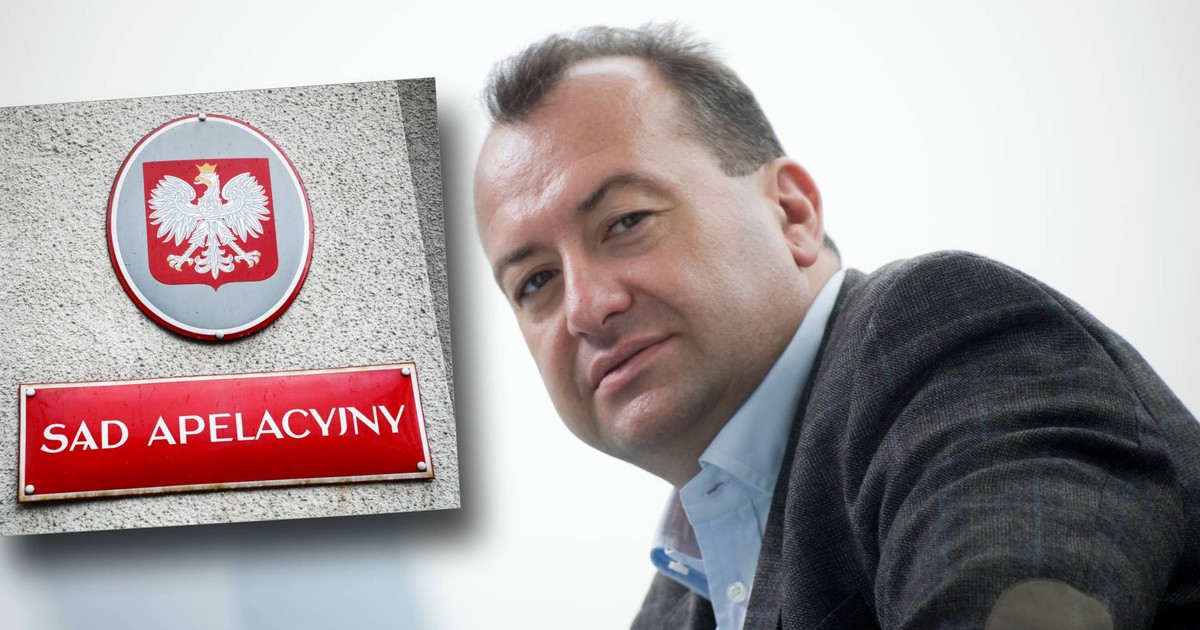
– I had the great honor and privilege that three years ago, while still in the European Parliament, I was responsible for all hydrogen legislation and implemented it. It was the first regulation of this type in Europe and one of the first in the world, specific and comprehensive. Today we are already using it and implementing its provisions in practice – said prof. during his speech at the Diplomatic Opening of the Year 2026. Jerzy Buzek, Prime Minister of the Republic of Poland in 1997-2001 and former President of the European Parliament.
– If we want to win the 2050 perspective and ensure a safe climate for our planet and ourselves, the transition to renewable energy is necessary. However, renewable electricity alone will not solve all challenges. We won't melt steel this way or provide power for aviation. A possible solution is the production of green hydrogen based on electricity from renewable sources.
– Ammonia, one of the derivatives of green hydrogen, is a necessary element of the energy transformation. It is not possible to electrify the entire economy solely using renewable energy sources built in our country, says Tomoho Umeda, president of Hynfra, a company developing green hydrogen and green ammonia production projects, and chairman of the Hydrogen Economy Committee of the National Chamber of Commerce.
– Ammonia is a fuel like gas or oil, but completely zero-emission, which can also be produced in many different places around the world, with virtually no geographical limitations. This has a significant impact on reducing geopolitical dependencies. In the case of ammonia, production can be democratized and developed practically all over the world.
Ammonia is crucial for the nitrogen fertilizer sectorbecause it is the basic raw material for their production. Poland is one of the leading producers of nitrogen fertilizers in the European Union, ranking third in terms of production volume. Experts argue that decarbonization of ammonia production in Poland would therefore have a significant impact not only on reducing CO2 emissions in the chemical industry, but also on food security and the competitiveness of the national agri-food sector. This technology, following the example of the implementation at the Japanese Hekinan power plant, also opens the way to co-firing ammonia with coal, which, according to experts, significantly reduces emissions and may protect Polish 200 MW units from being disconnected after 2028.
Over 180 million tonnes of the so-called gray ammonia per year, with Europe responsible for 10%. production. Its share in global demand is slightly higher. Europe 60 percent covers its demand from its own production, and 40 percent from import.
Poland is a significant producer and consumer of conventional ammonia on the Old Continent. It has over a century of experience in its production and transport. Its main recipient is the fertilizer industry (approx. 85 percent of global consumption) and the chemical industry. The strategies of key Polish companies assume an increase in the share of low-emission ammonia as a way to decarbonize their operations.
– Today, green ammonia, produced from renewable energy sources and green hydrogen, may be cheaper in Poland than the so-called gray ammonia produced from natural gas. This means reducing production costs, reducing emissions and reducing the burden of emissions pricing (ETS) in our industry and transport. This is a huge relief – emphasizes the former president of the European Parliament in an interview with the Newseria agency.
The report “Forecast of demand for renewable hydrogen RFNBO in Poland until 2030” estimates that in order to achieve the industrial goal of the directive by 2030 in the base variant, the production of approximately 189 thousand tons will be required. t green hydrogen from renewable sources other than biomass. However, the domestic chemical and fertilizer sectors will probably be forced to import this raw material from abroad in order to cover the demand resulting from the directive. Poland does not produce RFNBO hydrogen on such a scale. All because of economic calculations and the low efficiency of renewable energy sources in our geographical location.
– Low-emission ammonia can be produced in Poland, but its volume is a problem. Every zero-emission fuel is based on renewable energy sources. It's hard for me to imagine that, for example, we are able to allocate several tens of thousands of hectares to renewable energy just to produce ammonia in Poland. However, this is not a problem wherever there is a desert and unlimited areas – explains Tomoho Umeda.
A solution to this situation may be the production of hydrogen and then the synthesis of ammonia in locations with more competitive conditions for the production of energy from renewable energy sources, such as Oman, Jordan and Mauritania.
– In North Africa we have deserts where the sun shines practically from morning to evening, and there are also good winds from which electricity is produced. There, green hydrogen is produced on site from green electricity by electrolysis, and ammonia is produced from green hydrogen – says Prof. Jerzy Buzek.
– Producing ammonia in various places around the world is also a necessary element of the global expansion of Polish companies, because I see no reason why they should not produce it in Egypt, Oman, Jordan, Mauritania or India and import it to Poland. We do not have to rely solely on German, Arab or Chinese investors. We should focus on this area of expansion and create these projects so as to provide fuel not only for our country, but also for the entire region of Central and Eastern Europe – says Tomoho Umeda.
In such a model, Poland – as one of the leading European producers of gray ammonia – could use its many years of experience in its transport.
– Green ammonia is chemically the same product as gray ammonia, only the starting products, i.e. production substrates, are different – explains Prof. Jerzy Buzek.
– In Poland, hydrogen itself will play a greater role and will be produced in a distributed system, i.e. it will be based on clusters.cooperatives or energy communities and will meet various local needs. However, the huge volumes needed to decarbonize large industry or energy are impossible to produce in Poland. One must work together: both sustainable imports and sustainable own production are the recipe for energy security in the near future, says Tomoho Umeda.
Experts indicate that the demand for green ammonia will grow dynamically in the coming years. The report by the engineering company KBR “The future of ammonia supply in Europe” estimates that by 2030 the gap between demand and production in Europe may amount to approximately 7.2 million tons per year. Therefore, many countries are already preparing to develop production.
– It's high time for us to start using green ammonia and green hydrogen in the country – says Prof. Jerzy Buzek. – There is definitely a need for a support system both on the part of green ammonia recipients and its producers. There is a need for an act to be prepared by the government, similar to the regulations in force in Poland supporting renewable energy sources, such as wind energy and photovoltaics. Such regulations already exist in Germany and Romania.
– Over the last few years, there has been a belief that green ammonia will be much more expensive than gray ammonia, which is currently produced in Puławy, Kędzierzyn or Tarnów, but is cheaper. So I think that support systems will not concern subsidies or contracts for difference. Large ammonia plants are often located in quite unstable countries, for example in Africa, so the cost of risk is quite high. Here, the support mechanism of the state or the European Union should be more focused on guaranteeing investors that if they invest and something happens, their money will not evaporate – says the president of Hynfra.
Industry representatives point out that there is currently no liquid market for RFNBO in Poland. According to their assessment, there is a need not only to ensure the availability of green ammonia at affordable prices, i.e. support for producers, but also to provide incentives to increase consumption. As an example, they cite the support system operating in Germany in the form of a bilateral auction. It is managed by the public entity H2Global/Hintco, which through a special platform combines the interests of producers importing green ammonia into the country with its recipients. As part of this mechanism, the western neighbors managed to secure the first supplies of green ammonia, which are to come from Fertiglobe plants in Egypt. Renewable ammonia will be delivered to European ports in 2027, and its estimated amount is 19.5 thousand tonnes. t. This value is to increase to a total of 397 thousand. t in 2033.
– The hydrogen economy is taking new paths, it is inevitable. This is a completely new opening of the economy and in a field in which Poland has more experience than anyone else – summed up Prof. during his speech. Jerzy Buzek.