Venice is fighting for the survival of its mosaics. Orsoni crafts under the pressure of change


Mosaic production sometimes begins with one huge glass bulb, shaped by gravity. It will then be broken and covered with 24-carat gold leaf and molten glass.
The finished pieces are small, but cover huge monuments such as this 42-meter-tall Golden Buddha in Thailand. Orsoni has been producing mosaics since 1888 and is the last glass factory still operating in Venice.
“It looks like a magic potion,” says Constantino Drei, an apprentice at Orsoni.
There were once hundreds of glass furnaces in operation in Venice and the island of Murano. However, in recent years, as gas prices began to rise, many of them closed. We went to Venice to see how this 135-year-old company still operates.
Read also: I took a ride in the Stryker. Eight wheels, 20 tons and “the best job in the world” [WIDEO]
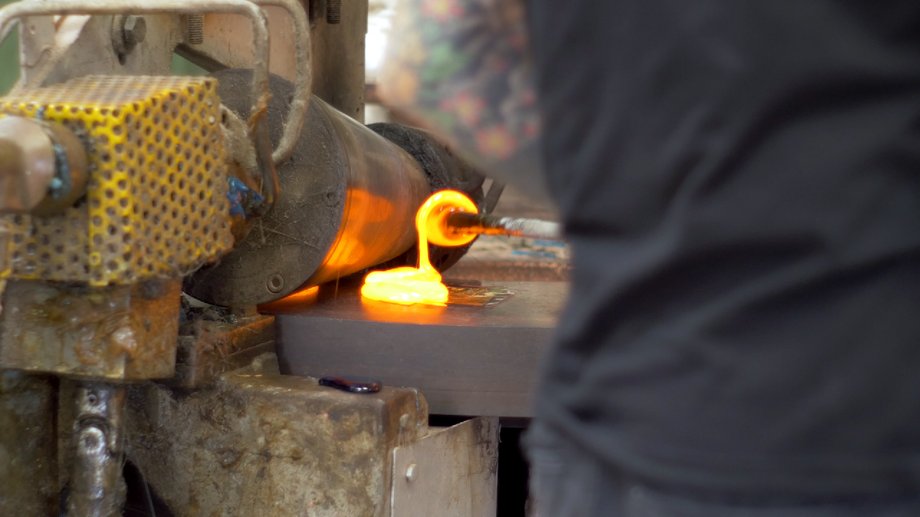
This is how the production of gold mosaics in Orsoni looks like
|
Business Insider
What is the production of glass mosaic like?
Every morning, Constantino Drei inspects the molten glass, which has been heated at 1,370 degrees Celsius overnight. He is working on a blue glass order with color master Michaele Giomana.
They add powdered dye to the molten glass and start mixing. They take out a small sample and wait for the color to reveal itself. Michaele breaks the plate into small pieces and immerses them in cold water.
If the color isn't exactly right, they throw the pieces back into the kiln and start over.
“I'm learning slowly, mainly through practice, of which there's a lot,” says Constantino.
This is a long process of trial and error that may require up to five tries before you get it right. When it finally succeeds, the 50-year-old machine flattens the glass into slabs less than 1.25 cm thick.
The glass is then left in the kiln for six hours to harden. Finally, it goes to the legendary Orsoni color library. There are almost no shades that have not been produced.
There are over 3,500 shades in the room. It was this diversity that attracted international attention in 1889.
Workers still cut each tile by hand. These machines are exact replicas of those used here over 100 years ago. Each employee produces approximately 4.5 kg of tiles per hour. This type of colored glass mosaic is called smalti and dates back to the 3rd century BC
Antonella Galenda has mastered this ancient method, fitting each tile to the design like a puzzle.
Techniques are always a challenge. However, we have tools that allow us to do professional and perfect work
– says Antonella Galenda, a master of mosaics in Orsonia.
Read also: Record gold prices have a dark side. Nothing lasts forever
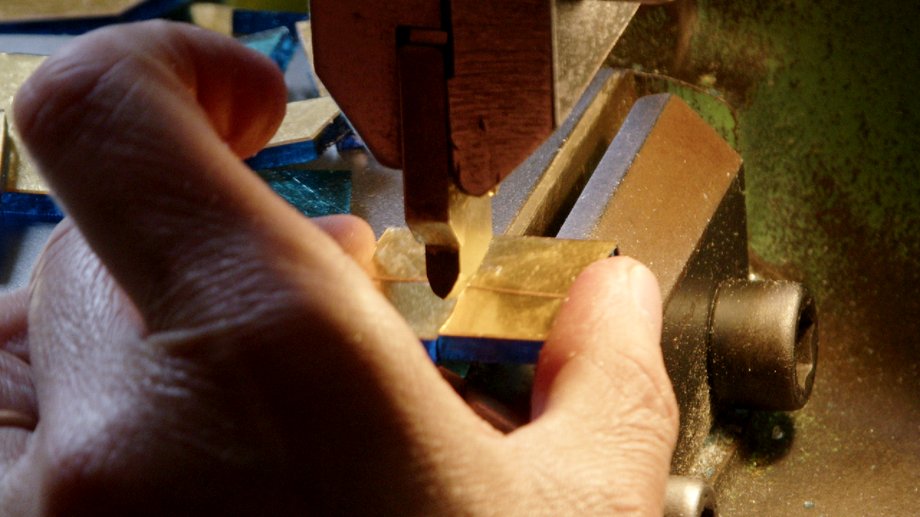
This job requires incredible precision
|
Business Insider
How gold is made in perfect squares
It takes her a week to complete a work of art this size. Larger works take months to create. Orsoni also specializes in the production of gold-coated tiles, a process that begins with clear glass.
On a metal table, Michaele rolls out molten glass to shape it. An air compressor shapes the glass into a giant one-meter bubble. Michaele has to be careful. If the glass is too thin, it may crack.
Michaele used to blow the bubble himself, but the machine saves him time. When he is satisfied with the size, he cuts off the tip.
It produces 70 glass bubbles in one day. The thin bulbs are then cut into smaller square pieces. Finally, they go to Rosella, which combines them with 24-carat gold leaf.
Orsoni buys gold from a family that produces it using ancient techniques. Each element passes through water vapor, which acts as glue.
In the furnace, the glass is fired at a lower temperature, 1040 degrees Celsius, to make it less liquid. Workers place the sheets on a potter's wheel and add molten glass on top. Then an ironing machine flattens them.
In one day, workers can produce 2,200 such elements. When the glass cools down, it goes to Manuela Bonicelli, who cuts the slabs into small pieces. He dips the edge of the diamond knife in Vaseline to make the blade glide smoothly.
He can spend eight hours breaking each gold leaf into 16 perfect squares. This may seem simple, but it can have a negative impact on the body.
I rely on my arms and legs for this job because it requires a position where I have to bend just above my elbows and knees
– says Manuela Bonicelli, a gold leaf cutter in Orsoni.
Manuela started working here when she was just 16 years old.
– There is no school where you can learn this. Experienced women taught me this here. When I see beautiful and perfect square tiles at the end of the working day, I feel moved, she adds.
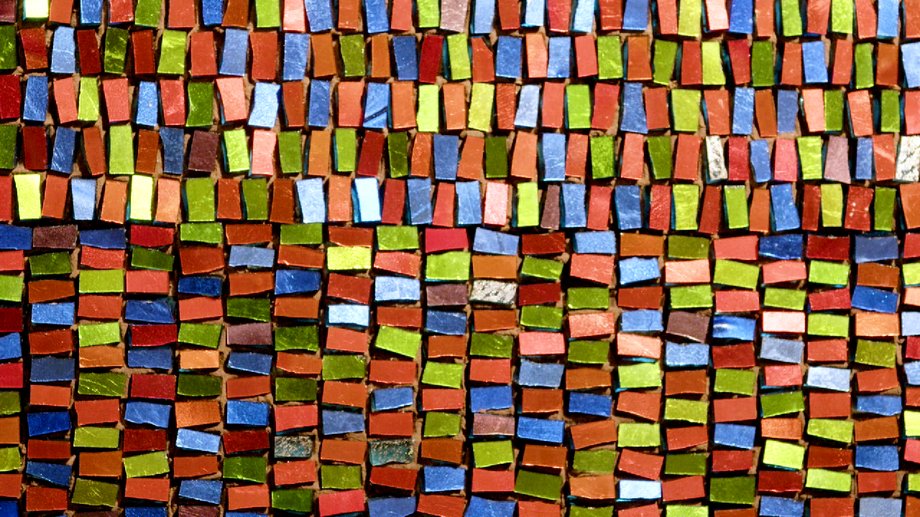
The future of the Venetian mosaic is in doubt
|
Business Insider
Where do the origins of this craft originate?
Artisans have been making glass in Venice since the 5th century. The mosaic industry flourished on the island until 1291, when all glass furnaces were moved to the island of Murano.
The government claimed this was to prevent the risk of fire, but many historians believe it was to insulate secret glass-making techniques.
Angelo Orsoni was born in Murano in the mid-19th century and started working in a glass factory when he was seven. The famous mosaic artist Giandomenico Facchina noticed his talent and in 1877 offered him a job in his workshop in Venice. Ten years later, Orsoni took over the company.
His work gained international recognition in 1889 at the Universal Exhibition in Paris, where he presented a panel of tiles in hundreds of colors from his library. It was the same exhibition that presented the Eiffel Tower.
However, the glass industry on the Venetian islands has been in decline for decades. Giancarlo Signoretto runs a glass workshop 3 km from Murano.
We met him in 2021 when he was mentoring his assistant Agnese. However, for years he had trouble finding young apprentices.
We miss young people. The hallmark of true champions is the ability to teach others and leave a legacy
says Giancarlo Signoretto, a glassblower.
The biggest challenge for him came in 2021, when gas prices in Italy increased significantly, making it unaffordable for many. This was due to the fact that at that time Europe imported approximately 40 percent. natural gas from Russia, which limited supplies.
Using less gas is not an option. Furnaces must operate 24 hours a day, 7 days a week.
If the temperature drops below 1000 degrees Celsius, the crucibles containing molten glass will crack and fall apart. Rebuilding and reheating the furnace can take weeks and cost up to PLN 22,000. hole.
Stoves are an expensive toy and if someone does not know how to use them, they will lose their savings
says Giancarlo.
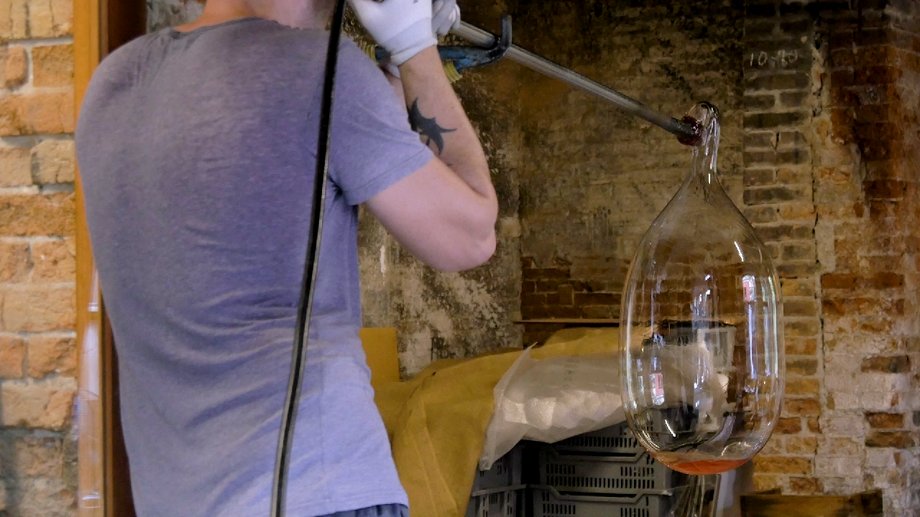
The future of this craft is uncertain
|
Business Insider
Rising bills are killing the industry
Giancarlo managed to keep the furnace running throughout the crisis. However, some of his gas bills were four times higher than usual. He began to travel and sell his works in other cities in Italy and abroad.
So far, the extra money has been enough to pay the bills. However, not all glass producers were so lucky. In 2021, we also visited one of the few studios in Murano owned by women.
Chiara Taiariol and Mariana Oliboni opened it a few weeks before the sharp increase in gas prices.
If this continues, we will not be able to continue operating
– says Chiara Taiariol, glassblower.
Chiara used her inheritance after her mother's death to maintain the business. Their gas bills were so high that they applied for reimbursement under a government assistance program but never received the funds.
Gas prices dropped in 2023. However, rents increased until then. The duo closed their workshop and began renting space in other kilns to create their works. Chiara has launched her own mobile studio and plans to travel around Italy to teach glassmaking.
– The truth is that I feel alive, that I am born again every day – admits Chiara.
A long list of high-profile clients helped Orsoni keep the furnace running. The company's glass mosaics decorate the Royal Clock Tower in Saudi Arabia. One third of the tower is made of gold.
This portrait of the Emir of Dubai consists of tiles weighing 45 kg. Artists spent months matching 80 different shades and colors to get the right skin tone.
In 2003, Orsoni was acquired by Trend Group, a global manufacturer of glass and gold mosaics.
Since then, the company has expanded its customer base by partnering with renowned fashion brands such as Dolce & Gabbana. Together, the companies created earrings from small mosaic fragments.
Orsoni also made a limited edition of 18 bottles for the Dominican Republic rum brand, Brugal. The company's largest project to date is the Cathedral of the Salvation of the Nation in Romania, which has so far been decorated with 4 million gold mosaics.
However, even Orsoni has problems with attracting younger craftsmen. Constantino is the only apprentice who learns to work with molten glass.
“It's important to maintain this craft because it is specific to Venice,” says Constantino.
Manuela plans to retire in four years. She wonders about the future of the Venetian institution to which she devoted her life.
I hope that Orsoni will find good people who will be good at this job. People who know how to work and, like me, love what they do
says Manuela.