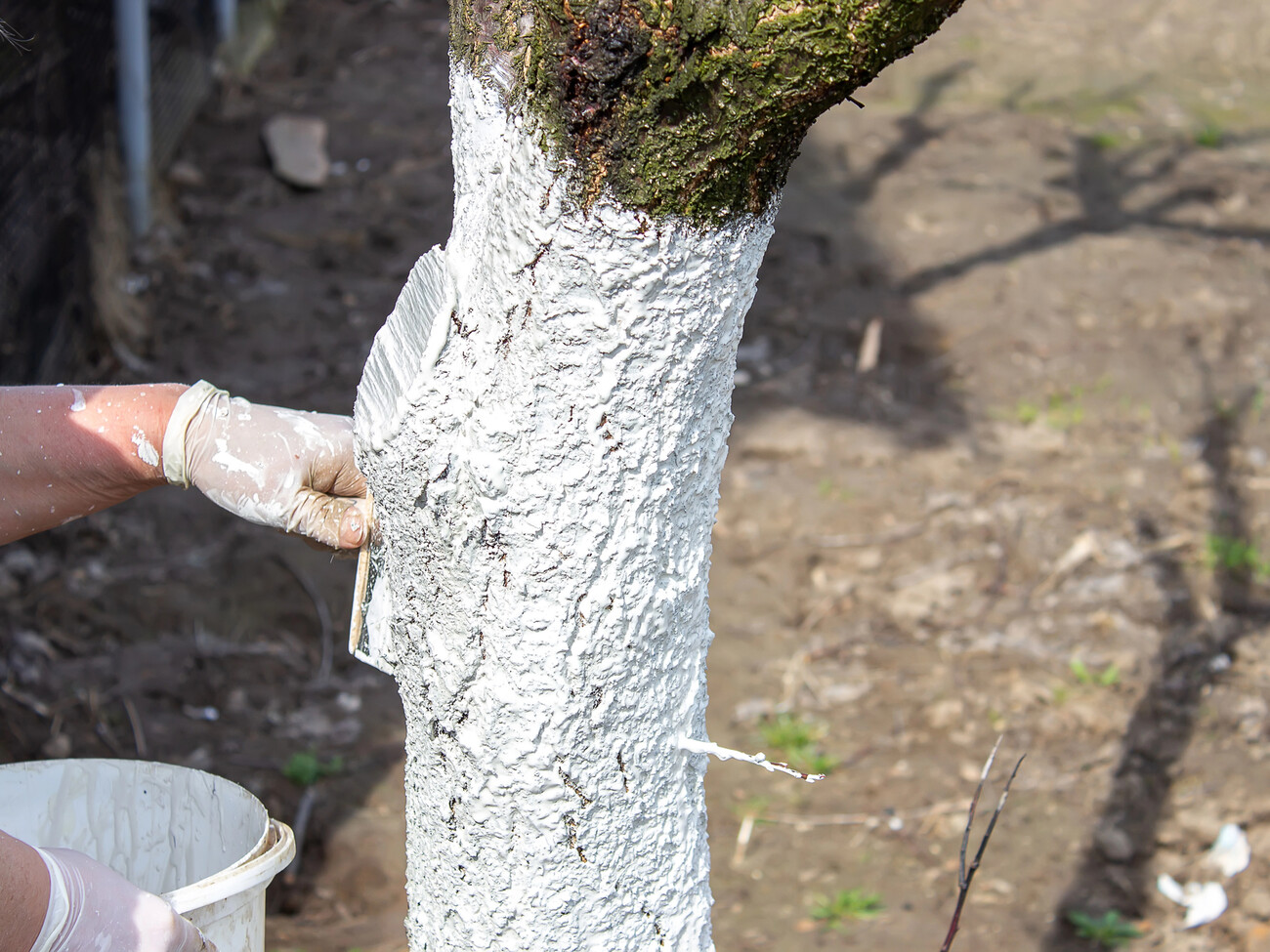
“Experts agree that the best time for whitewashing is autumn. At this time, it performs the main protective function in winter. And March whitewashing is, rather, a forced step if the trees are left without protection in the fall,” explained the material.
Whitewashing is carried out after the snow has melted. During this period, during the day the sun is already actively warming the trunks, and at night the temperature drops sharply. Due to such changes, the bark may crack. White color reflects the sun's rays well and helps reduce overheating.
You should whiten if:
- the trees were not whitened in the fall;
- the whitewash layer was washed away over the winter;
- there are sharp temperature fluctuations
Young trees should not be whitened until they are three years old. Their bark is still thin and delicate, so lime can cause a chemical burn. If necessary, it is better to use a weaker solution or wrap the trunk with white agrofibre or burlap.
Trees with thin, smooth bark should be whitewashed with caution. Cherry, sweet cherry, apricot, and peach are especially sensitive in spring. It is safer to use special garden paints for them.
If there are deep cracks or wounds on the trunk, they must first be healed. Whitewashing may slow down healing. This applies to old apple, pear and nut trees.
Whitewashing is carried out on a dry, windless day with a temperature not lower than +5°C.
Before whitewashing you need:
- trim dry and diseased branches;
- clean the trunk of moss, lichens and dirt;
- Carefully remove hibernating insects and larvae from cracks;
- treat micro-holes with garden varnish