

The signatories of the petition emphasize that after 2022, some of the countries with which the European Union has concluded trade agreements have significantly increased their purchases of energy raw materials and fertilizers from Russia. According to the authors of the document, such actions support Russian aggression against Ukraine.
The text continues below the video
The request of Polish farmers was supported by Law and Justice MEPs. Waldemar Buda from PiS pointed out that the European Commission promotes trade agreements with countries that are close allies of Russia. He pointed out that India and Brazil are currently among the largest recipients of Russian fuels and fertilizers. He also added that some member states, including Germany, are interested in developing trade cooperation with these countries, regardless of the possible consequences.
Read also: The EU-Mercosur agreement raises emotions. What is a South American organization?
Food production standards and farmers' concerns
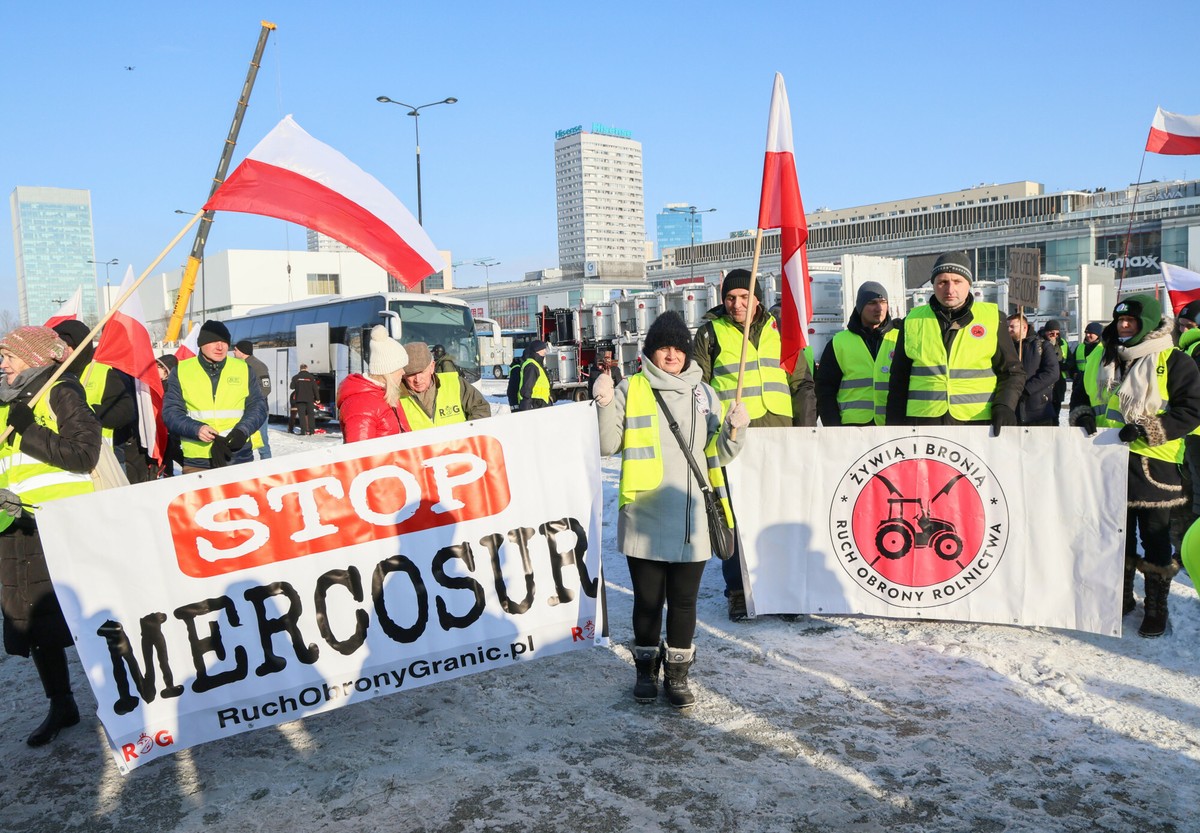
The petition was prepared by Solidarity of Individual Farmers and the Federation of Branch Associations of Agricultural Producers, and signed by several other organizations. The document emphasizes that the European Union applies some of the most stringent food production standards in the world. They include, among others: a ban on the use of growth hormones and very low limits on pesticide and antibiotic residues. According to the petition's authors, in many non-EU countries, especially Mercosur countries such as Brazil, these standards are much less strictly observed.
The petition also drew attention to the geopolitical aspect. It was pointed out that many third countries maintain trade relations with Russia, even though the European Union has imposed sanctions on this country.
Read also: Agreement with Mercosur. Who in Poland will benefit the most?
Consequences for European agriculture
Farmers expressed concern that the lack of equal competition rules could cause price pressure on European producers, especially in sectors such as beef, poultry, milk, sugar and honey. They fear that the influx of cheaper products, produced to lower environmental and sanitary standards, will lead to a decline in the profitability of family farms in Europe and destabilize food supply chains.
Read also: Nitrogens under the wall? A surprising side effect of the EU-Mercosur deal
The fight for food security and fair competition, farmers emphasize
Tomasz Obszański from Solidarity of Individual Farmers emphasized during the meeting in Brussels that both Polish and European agricultural organizations are taking action to oppose the unfavorable agreement with Mercosur countries. He emphasized that farmers defend not only their own farms, but also food security in Europe. Obszański added that the agricultural community does not want to support Russia and its military actions against Ukraine.
Adrian Wawrzyniak, also representing Solidarity of Individual Farmers, pointed out that European farmers produce safe food, which is associated with high costs. He emphasized that they cannot allow their products to be replaced by cheaper substitutes from outside the European Union.
Farmers' demands and further steps
Polish farmers' demands included the introduction of trade sanctions against countries importing Russian fuels and fertilizers, the establishment of trade conditionality rules making access to the EU market conditional on meeting all environmental and sanitary standards, and the implementation of the “zero tolerance” principle for the detection of banned substances in imported food. They also demand that countries co-financing Russian aggression cannot benefit from privileged access to the EU market.
The petition of Polish agricultural organizations will be further considered by the European Parliament.


