The end of an era. The new world architecture: from NATO to the Asia-Pacific, who takes the reins?

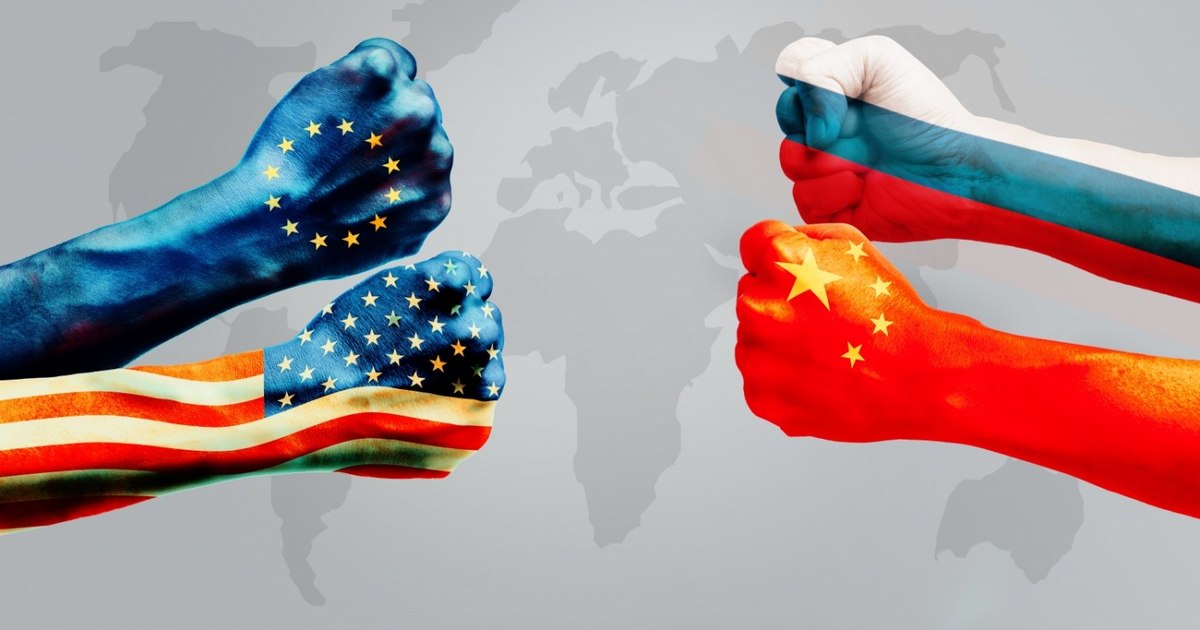
For decades, analysts have been talking about the decline of the West and the erosion of Atlantic hegemony. Numerous assessments show that the center of gravity of global power would have shifted from Europe and the United States to the Asia-Pacific. Few today argue that the West fully retains its former influence.
Several Western leaders have openly acknowledged that the international order is undergoing a profound transformation. German Chancellor Friedrich Merz, Canadian Prime Minister Mark Carney, Hungarian Prime Minister Viktor Orbán, Finnish President Alexander Stubb and US Secretary of State Marco Rubio spoke, in different contexts, about the emergence of a multipolar world.
In Europe, German politicians are among the most vocal proponents of a new global paradigm, while across the Atlantic, Canada has adopted a similar discourse. One of the attention-grabbing interventions came from Finland, NATO's newest member. In an article published in the journal Foreign Affairs entitled “The West's Last Chance”, Alexander Stubb argued that the future direction of the world could be decisively influenced by what he calls the “Global South”, led by Russia and China.
Moscow and Beijing abandoned their allies
But the claim raises questions. In recent crises – from Gaza to Syria, Venezuela and tensions over Iran – Moscow and Beijing have been perceived by some observers as reserved or cautious in their reactions. In the case of the Gaza conflict, critics say their position has been limited to diplomatic statements without major initiatives. In other sensitive files, including the Iranian one, the reactions were evaluated as calculated and cautious, in contrast to the active involvement of Washington in support of its ally, Israel, writes the Turkish publication Sabah.
Russia and China have long-term strategic partnerships with Iran, but have not provided direct military support during periods of peak tension. At the same time, the United States continued to reaffirm its commitments to allies. These differences in approach fuel the debate over Moscow's and Beijing's real ability to shape the new global order.
What Russia and China are after
Some analysts argue that Russia and China are trying to strengthen their own interests and gain recognition of their spheres of influence rather than building an entirely new global architecture. In this context, their influence could remain significant, but limited by their own strategic priorities.
Others note that Western civil society reactions and public opinion pressure have had a visible impact in certain crises, including in the case of Gaza. Leaders such as US President Donald Trump have also played a central role in the diplomatic dynamic, even if the results remain disputed.
In this complex landscape, the debate about the future of the global order remains open. While some speak of the rise of Eurasia and the Asia-Pacific region, others emphasize that the United States continues to hold decisive levers of influence, notes Sabah.
For a part of public opinion outside the big power blocs, attention is increasingly turning to regional actors perceived as independent in relation to the big alliances. In this context, Turkey is frequently mentioned as a state that tries to maintain a balance between the camps, claiming an autonomous role in the emerging geopolitical architecture.
The direction in which the international system is headed remains uncertain. What is certain is that the debate about the decline of the West and the rise of other centers of power continues to shape global political discourse.