Europe's largest economy is trying to redress the imbalance with the world's second superpower. High-stakes visit to Beijing

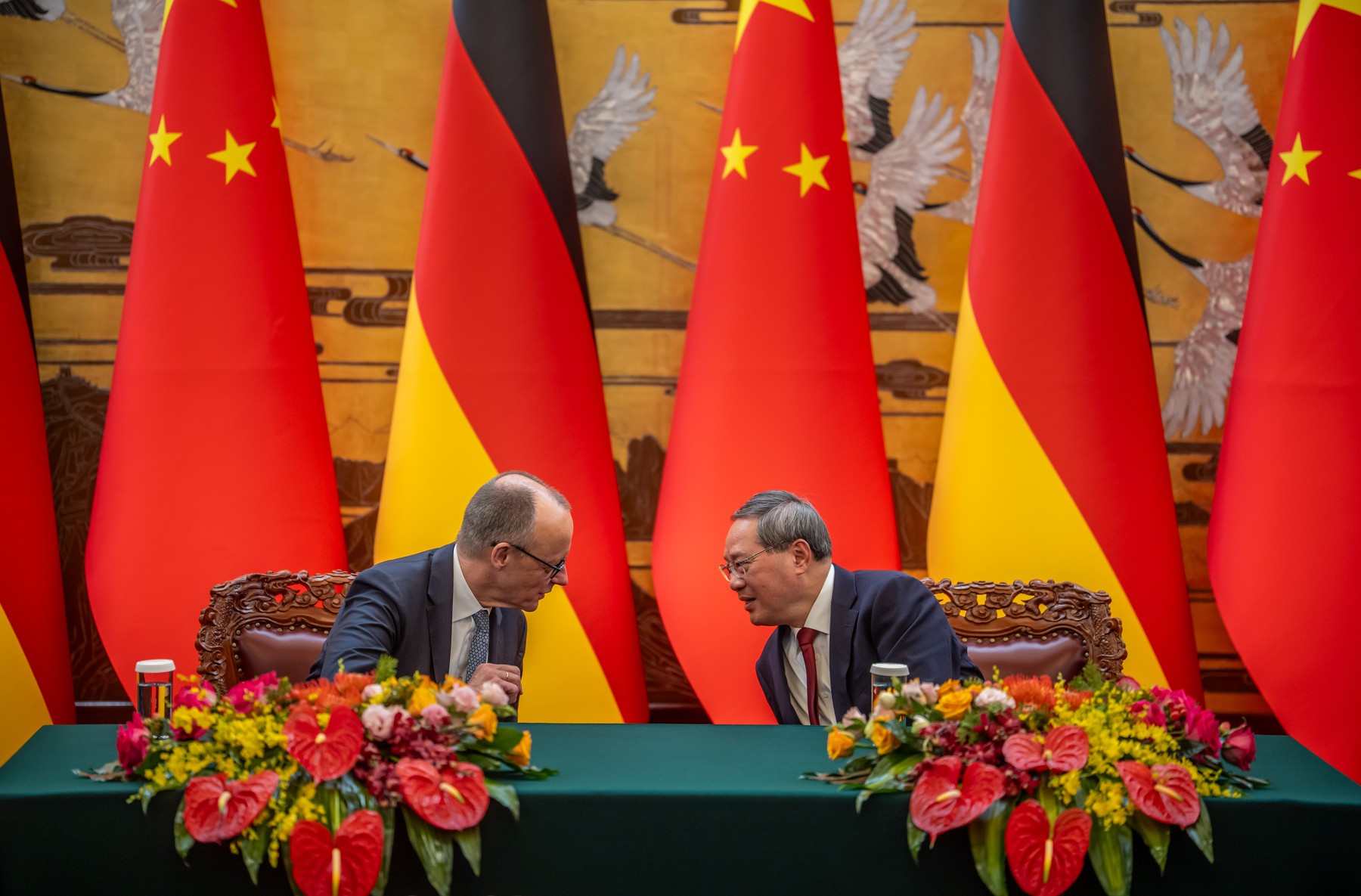
China and Germany want to deepen cooperation, German Chancellor Friedrich Merz and Chinese Premier Li Qiang said in Beijing on Wednesday, as the Berlin leader began a visit aimed at restoring relations amid a growing trade imbalance, reports Reuters.
Merz told Li that Germany attaches great importance to maintaining and deepening intensive economic exchanges with China, its largest trading partner since last year, while stressing the need to ensure fair cooperation and open communication.
“We have very specific concerns about our cooperation, which we want to improve and make fair,” said Merz, who faces the difficult task of redefining an economic relationship that is increasingly unfavorable to German interests.
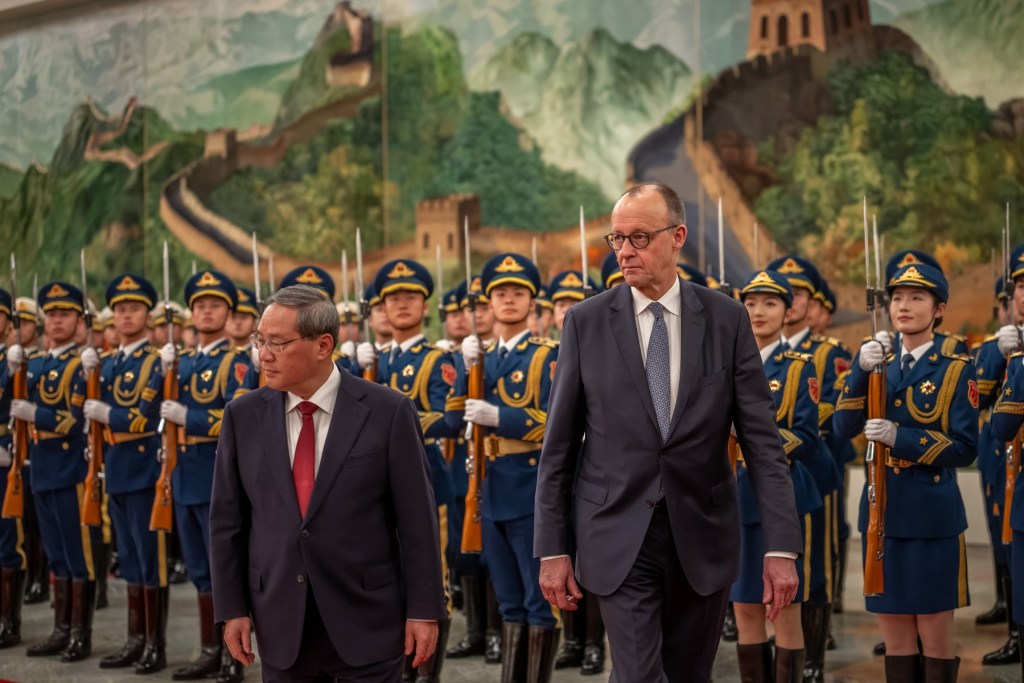
Li called on both sides to work together to protect free trade, referring to US President Donald Trump's trade war that has upended the global trading system.
“Let's protect free trade”
“China and Germany, as two of the world's largest economies and important countries with significant influence, should strengthen our trust in cooperation, jointly protect multilateralism and free trade, and strive to build a fairer and more equitable global governance system,” Li said.
China is trying to present itself as a reliable economic partner in contrast to the United States, while Europe struggles to address vulnerabilities in supply chains and worries about growing dependence on China.
Europe is witnessing an acceleration of worrying trends in China, European Trade Commissioner Maroš Šefčovič told the European Parliament on Tuesday, citing China's growing dominance in key manufacturing sectors, a growing imbalance in bilateral trade and the declining market share of EU companies in China.
Merz's first visit to China
Merz, on his first visit to China, becomes the latest European leader to try to mend relations with China, following British Prime Minister Keir Starmer and Canadian Prime Minister Mark Carney earlier this year, as Beijing touts the benefits of working with its massive consumer market and advanced manufacturing base.
The collaboration between Europe's largest economy and China, considered the world's second largest economy, could set the stage for EU-China relations this year.
Merz is accompanied by a delegation of 30 companies, including top carmakers such as Volkswagen and BMW, which are acutely feeling pressure from Chinese competition, contributing to a growing trade imbalance that has raised concerns in Berlin and led to calls for protectionist policies.
German economy affected by Chinese competition
Germany's heavily manufacturing-based economy has been hit particularly hard by competition from Chinese manufacturers, Rhodium Group China analyst Noah Barkin said in a recent research note.
The image of the Chinese market, once coveted by foreign companies for its broad consumer base and growing purchasing power, has changed in recent years, with a slowing economy limiting consumer demand and production overcapacity increasingly pushing domestic companies to seek opportunities abroad.
In editorials published ahead of the visit, Chinese state media highlighted the potential for EU-China cooperation to become a stabilizing force as US tariff policies disrupt world trade.
What the Chinese state press writes
Xinhua, in an editorial published on Wednesday morning, cited a survey by the German Chamber of Commerce showing that innovation progress in China is reflected in German headquarters.
The state-backed Global Times newspaper said concerns about competing with China would be offset by the lure of China's massive market.
“Rhetoric such as 'systemic rival' and 'de-risking' has sometimes complicated Germany's China policy,” the newspaper said in an editorial published Wednesday morning.
“However, the enthusiasm and actions of the German business community speak louder than political slogans.”