The strange image of the White Cross, which is “rusting” due to pollution. How the phenomenon occurs on the river in Apuseni


The Crișul Alb River takes on a strange appearance in the area of the former Brad and Crișcior mining centers. For several decades, the environmental problems in the area, complained about by the locals, could not be solved.
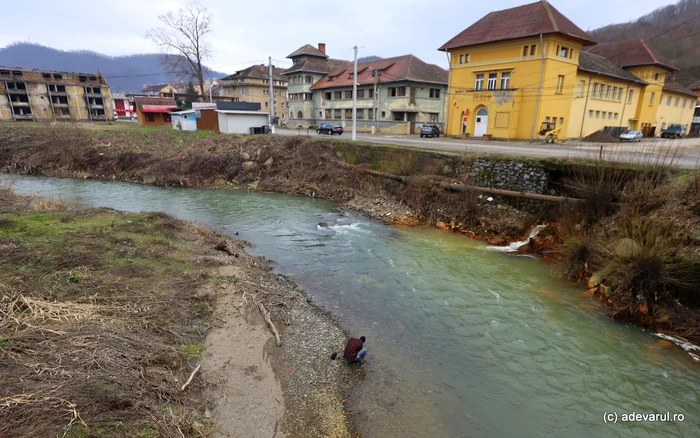
Crișul Alb River at Barza, Crișcior. Photo: Daniel Guță. TRUTH
More than 200 kilometers long, the Crișul Alb river remained affected by industrial pollution even after two decades after the closure of the metal mines in Apuseni, the land it crosses in Hunedoara.
The river that changes color
In recent years, some locals from the Brad area have complained to the Agency for Environmental Protection, the Environmental Guard and Romanian Waters that the springs that flow from the old gold mines in Barza continue to redden the waters of Crișului Alb, in the town of Crișcior.
“It's an alarm signal (the umpteenth one?!), a state of concern that has been brewing for years and should interest us all. That colored water that flows into Crișul Alb comes as a result of the closure of mining in the area and the failure to find a healthy solution to greening the mining perimeter. The waters that come out of the underground gear all kinds of chemical compounds and acids on their way and flow into a living area, rich in flora and fauna”claims Raul Matei, a local from Brad.
He remembered that, in the past, mine waters were captured in settling basins, equipped with filters, before being discharged into Crișul Alb.
“Real springs come out of the abandoned mines, carrying iron and copper oxides and flowing into the watercourses encountered along the way. The phenomenon is very harmful to the environment, and the solution is at hand: the construction of a treatment plant”, add this one.
The locals call the reddish and brown waters “Galica”. They come to the surface from mining galleries and contain copper, iron and other non-ferrous metals, which, in contact with water, form oxides with a high pH level. On the four kilometers of the stream that flows into the Crișul Alb river, passing through the former Barza mining colony, the chances of survival of the aquatic fauna are reduced to zero. When it flows into Crișul Alb, the river presents a strange landscape.
The Crișul Alb River springs from a marl area of the Apuseni, and the streams that wash the sedimentary rock give it a whitish color. In the past, after entering the perimeter of the gold mines, the flotation of the ores added a whitish foam to it. Now, its waters are pigmented by the metallic residues brought by the springs of the closed mines.
Historical pollution of the Alb Creek
Along with the frequent floods in the Crișului Alb valley, water pollution also represented one of the big problems of the local communities in the past.
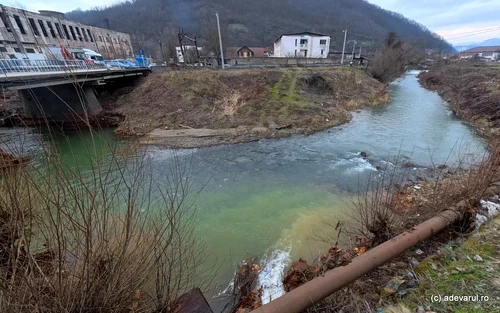
Image 1/11:
Crișul Alb River at Crișcior Photo Daniel Guță THE TRUTH (2) jpg
In the 70s, more than 2,000 hectares were continuously degraded by the Crișul Alb, which carried residues discharged by the Gura Barza brewing plant. In the 1980s, the situation remained almost unchanged, the most affected sector being the one of approximately 15 kilometers, starting from the area of the former Barza mining center, where several flotation facilities were built on Crișul Alb, until the exit from Brad municipality, towards Ribița.
“Starting from the north of the county, the first important river is Crișul Alb. Up to Crișcior, about 30 km, it is clean, of the first quality. From there, however, until it flows, it becomes of the third quality, especially due to the pollution with metal ions coming from the Barza Mining Company (zinc – about 70 kg per day; copper, lead, manganese and iron, for which there is still no economically profitable retention technology)”. informed Constantin Teodorașcu, in 1982, head of the Water Management Office in Hunedoara.
His “brother”, the Black Knight, met the same fate
More than four decades later, the environmental problems on the Crișul Alb River remain, even as the mining plants in the area have gradually turned into ruins.
Other rivers in Apuseni were also affected by pollution. The Crișul Negru River, with a length of almost 170 kilometers, joins the Crișul Alb, in Hungary, after crossing the western part of Romania. It was also used in the past to wash the polymetallic ores extracted from Valea Băiței.
“The pollution in the area came from the flotation in Băița. For decades there were not even frogs in Criș. The water flowed in all kinds of colors: black, green, yellow, depending on what ore was floating”, recalled Vasile Drăghici, a local from the former mining town of Nucet.
In the past, the locals used to joke about the color of Crișului Negru, given by the factories in Băița, the site of molybdenum and bismuth mines.
“Further down, towards the village, at the flotation, the tirelessly rotating shovels bring out a wealth of bismuth. The crushed and washed rock — milky, as unskimmed milk is, whitens the water of the Crișului. At Băița, the Crișul is not black. It is white, like milk; the miners bleached it, the flotation workers colored it.” informed the Crișana newspaper in 1951.
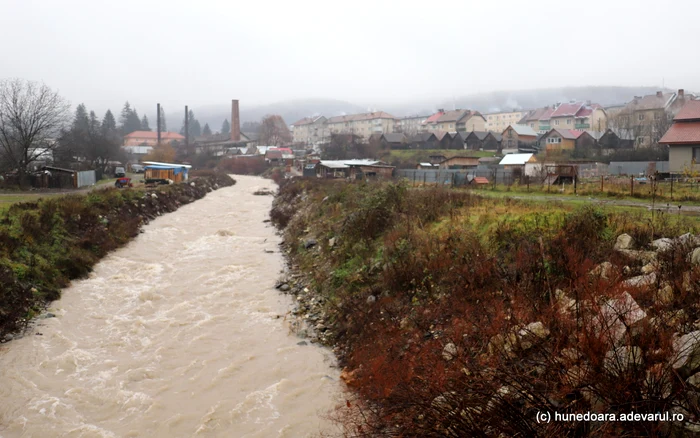
Crișul Baîței, in Nucet. Photo: Daniel Guță. TRUTH
The Geoagiu River also brought mining residues of copper and zinc, originating from the springs of the old mines of Apuseni.
Industry from communism, the great polluter of rivers
The big industrial centers of communism left their harmful mark on the many rivers in Romania. For long distances, in the vicinity of factories, mines and combines, waters changed color due to discharges from former enterprises, and aquatic fauna disappeared, sometimes for years. The problems caused by the pollution were frequently reported by the locals, but they rarely found a solution.
In the 1980s, the Strei river came to be called the “graveyard of fish”, due to the discharges of ammonia-phenolic waters from the “Victoria” Călan Plant, which killed thousands of fish. The legendary river, formerly called Sargetea, had been used as the source of Hunedoara's water supply, but due to environmental problems, the network was moved to the cleaner rivers of Retezat.
Also in the 1980s, the Jiu river had acquired the color of coal, due to the more than 160,000 tons of suspensions that polluted it annually, or two to three percent of the amount of coal extracted from the mines in the Jiu Valley. On the banks of the West Jiu, in Lupeni, the Vâscoza textile factory had been built, with thousands of employees, but also with some of the biggest environmental problems of the era.
“Jiu's water had a very high degree of pollution, being the collecting channel for all residues, and there were not a few (Viscose, coal preparation, all kinds of other economic agents). Soot was the master of everything, the first snow being white only when it fell, later covering itself with a black blanket”, recalled local resident Iosif Bodo.
Numerous rivers in Apuseni and Maramureș had acquired, in the past, the reddish color of the metallurgical residues poured into them, from the exploitations they crossed.
Water that could no longer be drunk
In all industrial areas in Romania, the waters were affected by pollution, and the minimal investments to protect the environment were made with great difficulty and, sometimes, proved ineffective. Often, due to water pollution, the drinking water supply of many cities was shut off, sometimes for several days.
“The very day we arrived in Deva, the water was turned off in several districts of the city (in the evening, at the House of Culture, a cup of tea was really a problem for Margareta Pâslaru, who had a concert and had a cold). The next day, at the Water Management Office (OGA), we would find out that the situation was not new – it also happens, from time to time, in Brad, Hunedoara, in the Lupeni-Petrila-Livezeni area – and “has n causes”. The main cause: more than a sixth of the watercourses have an advanced degree of pollution. informed the publication România Pitoreasca, in 1982.
After 1990, the decline of heavy industry gradually cleared the waters around the former large factories and mining operations. Years followed when the rivers were once again made ugly, this time intentionally, by humans. Plastic waste has covered increasing areas of lake gloss, while the banks and beds of many running waters have become garbage dumps for communities.
In recent years, the situation of many historically polluted river segments has improved. In some localities, the shores have been greened and revitalized, and local administrations have accessed funds for the development of places to relax, promenades or bike paths. Video surveillance systems have discouraged local residents from littering the waters, and the possibility to recycle PETs has reduced the amount of plastic waste.