How Russia tested NATO defenses using Belarus' civilian infrastructure. Discovery of Ukrainian hackers who broke into Russian military chats


Russia turned the civilian infrastructure of Belarus into a weapon of war, and Ukraine watched everything from the inside. For six months, Ukrainian IT specialists watched in real time how Russian drone operators planned their attacks — from launch orders to exact flight paths. Everything was transmitted, discreetly, to the Ukrainian defense forces, euromaidanpress writes.
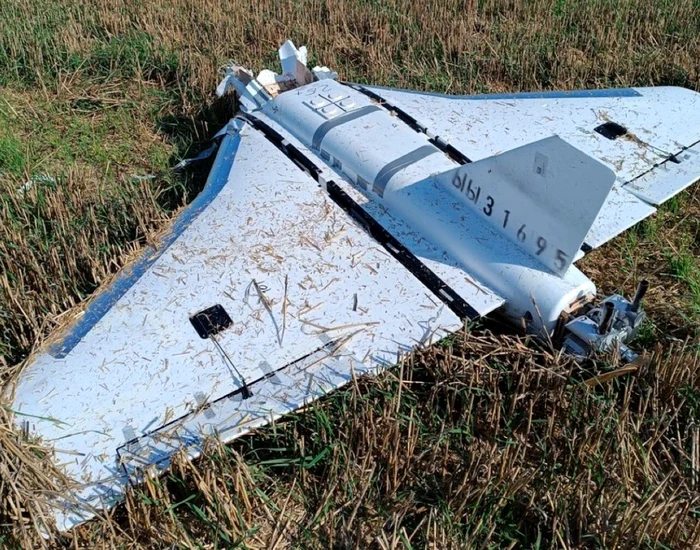
Russian drone shot down in Poland/FOTO: X
According to the investigative community InformNapalm, Ukrainian hackers infiltrated the systems of Russian operators and discovered how Moscow used cell phone towers in Belarus to guide drones over Ukrainian energy infrastructure — and even to test attack routes into NATO states.
Infiltration of Russian military accounts
The cyber operation was carried out by hackers of the Fenix analytical center, with the support of InformNapalm volunteers. They managed to break into dozens of accounts of the Russian military and the monitoring systems used by the drone units.
They couldn't control the planes, but they could track their every move: missions, coordinates, internal conversations. Surveillance was non-stop and data was provided in real-time to the Ukrainian military, contributing to more effective interception of attacks.
The operation ran from the summer of 2025 to February 2026, when, according to the source, it exhausted its informational potential — including due to Ukraine's successful strikes on targets identified by these intercepts.
Telephone towers in Belarus, “highways” for drones
Intercepted conversations show that Russia was using civilian cell phone towers in Belarus to provide a stable signal to attack drones, extending their range to northern and western Ukraine. In the second half of 2025, Moscow would also have installed signal repeaters on Belarusian territory, facilitating strikes from the Kiev region to Volyn.
President Volodymyr Zelenskiy invoked this information on February 18 when he announced personal sanctions against Minsk leader Aleksander Lukashenko, accusing him of putting the country's infrastructure at the service of Russian aggression.
Zelenski spoke of “selling Belarus' sovereignty” and mentioned more than 3,000 Belarusian companies that would support the Russian military industry.
Strikes on the elite unit “Rubikon”
The information obtained allowed Ukraine to strike command points and drone launch sites in the occupied territories and even inside Russia. Among the targets would have been positions of the elite Russian “Rubikon” unit, created in August 2024 and considered one of the most effective drone formations on the front.
Poland Incursion Was Not 'Accidental'
A key episode concerns the incident on September 9-10, 2025, when at least 19 Russian drones entered Polish airspace, prompting NATO's first real-fire response since the start of the full-scale invasion. Moscow claimed at the time that the devices had gone astray.
According to InformNapalm, the intercepted messages would indicate something else: the incursion would have been a deliberate test of the capabilities of the cellular infrastructure in Belarus, with the aim of preparing possible attacks on the logistical routes through which Western weapons reach Ukraine.
Material evidence would support this version. Gerbera trap drones with serial numbers in the “YY” range were later discovered in Poland, and fragments of another device ended up on a beach in Latvia.
A cyber success, but without a clear legal framework
The operation brings up an old problem in Kiev: IT specialists involved in offensive operations do not have a clear legal status. A bill to establish dedicated Cyber Forces passed first reading in October 2025 but has been stalled ever since.
Another recent successful operation — targeting Russian attempts to circumvent restrictions on the Starlink system — demonstrated the potential for civilian-military cooperation. But, InformNapalm representatives claim, without firm institutional support, these successes remain exceptions.
In modern warfare, phone towers, encrypted chats, and lines of code can become as decisive as missiles. And the battle for control of infrastructure — physical and digital — is increasingly being fought beyond the front lines.