The economic conflict between the US and the EU: Greenland, the tipping point that brings losses to the Americans

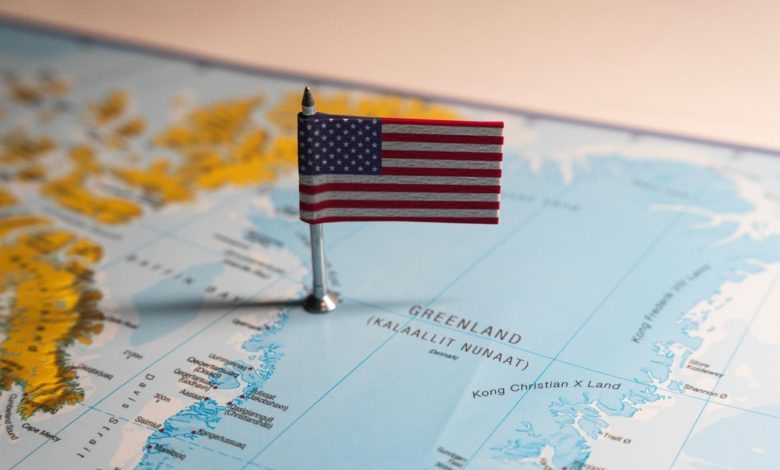
The dispute over Greenland, which initially seemed like a fad of President Trump, has turned into a global economic conflict. For markets, this comes with an added dose of geopolitical risk and reopens a scenario that was thought to be contained after the 2025 accords, analysts say. Danish Prime Minister Mette Frederiksen told the Munich Security Conference on Sunday that Donald Trump is still determined to take control of the Arctic island of Greenland.
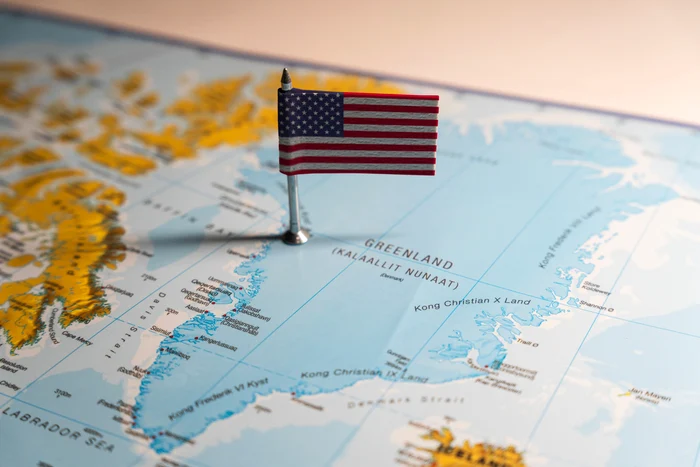
The dispute over Greenland has turned into a global economic conflict. Photo by Shutterstock
“The desire of the US president is exactly the same. We, as a kingdom, do not agree, and Europe, for that matter, does not agree”, said Mette Frederiksen.
Donald Trump first threatened to take Greenland by force last month, sparking fears of a conflict between the NATO allies that would effectively spell the end of the 77-year-old military alliance.
An agreement on “framework for the future” Greenland was agreed between Donald Trump and NATO Secretary General Mark Rutte on the sidelines of the Davos Economic Forum. Since then, trilateral talks have taken place between Denmark, Greenland and the US. But Prime Minister Frederiksen acknowledged that the allies must do more collectively to increase security in the far north.
We remind you that in January, the US president announced his intention to impose, from February 1, tariffs of 10% on eight European countries positioned against taking over the island (Denmark, Norway, Sweden, France, Germany, Great Britain, the Netherlands and Finland), with a clause to increase them to 25% in June. Analysts have repeatedly said that these actions mark a break in transatlantic relations, and that the focus is not only on the impact on trade, but also on the political precedent: the explicit use of economic sanctions to force territorial concessions.
Europe is stepping up its response
Europe responded with a much tougher stance than in previous episodes. The European Union has sent that it is considering two firm measures: the activation of the Anti-Coercion Instrument (ACI) and the resumption of a retaliatory package of up to 93 billion euros. Thus, the conflict goes beyond the commercial sphere and could end up including financial regulations, say XTB analysts.
In other words, tensions could spread to strategic sectors and capital flows, increasing the potential for systemic disruption and volatility in global markets.
“The conflict is revealing asymmetric dependencies. The United States has imported more than $365 billion worth of goods from affected countries in the past year, with Germany and the United Kingdom accounting for much of that flow.
Most of these imports consist of intermediate goods with high added value, difficult to replace in the short term. This limits the ability of tariffs to function as a long-term pressure tool”, XTB analysts explain.
On the other hand, a significant portion of US exports to Europe are agricultural commodities, energy, and digital services—segments where there are regional or global substitutes. This imbalance helps explain why Europe perceives greater leeway and Washington applies pressure, trying to force a resolution before supply chains adjust.
Who will benefit?
Among the potential beneficiaries are countries that control strategic blockades. Denmark, in addition to its political role, is home to Novo Nordisk, a key supplier of innovative treatments for the North American market, and Maersk, a central player in global shipping.
The Netherlands, with ASML, holds a virtually monopolistic position in advanced lithography equipment, without which the US semiconductor industry would face significant obstacles.
Added to these is Norway, which appears as an indirect beneficiary due to its weight in the natural gas and oil sector. For its part, Germany maintains its leading position in industrial machinery, automation, chemicals and sensors – areas where replacement is not immediate. France combines political influence with power in the nuclear, defense and aerospace sectors, as well as luxury goods with high pricing power.
In a scenario of prolonged tensions, Europe could accelerate the energy self-sufficiency strategy. This can increase imports from Norway, reduce dependence on other suppliers and strengthen its bargaining position. If this direction is confirmed, the energy flows change, and the influence of the USA on the European hydrocarbon market decreases, XTB analysts say.
From a financial perspective, haven assets stand out as winners. Gold reached levels near $4,700 an ounce, supported by record purchases by central banks, while the euro and other European currencies showed relative resilience. The narrative that the confrontation is weakening confidence in US institutions supports the gradual reallocation of capital to assets perceived to be more stable.
Who are the real losers
The United States faces risks that go beyond bilateral trade. The US economy maintains an external deficit and a high dependence on foreign capital. Europe, including the UK and Norway, holds more than $10 trillion in US financial assets.
Although a massive sell-off is unlikely, even a marginal shift in preference for dollar assets could lead to higher interest rates and pressure on the US currency, XTB analysts said.
In manufacturing, the most vulnerable sectors in the United States are not necessarily exporters, but rather those that depend on essential European components such as defense, aerospace, pharmaceuticals and advanced technology. Even a partial disruption of these supplies would have huge effects on investment, employment and competitiveness, increasing the domestic cost of confrontation.
Moreover, American consumers are among the silent losers as higher tariffs mean higher import prices. This leads to pressure on inflation and reduces purchasing power. Also, the room for maneuver for fiscal incentives remains limited. This internal channel could quickly erode political support for the strategy if the conflict were prolonged.
In the short term, a combination of a weaker dollar and protectionism could provide temporary support to some sectors in the United States. However, the balance in the medium and long term is unfavorable: lower investment, higher imported inflation and a complex dilemma between debt monetization or the implementation of drastic fiscal adjustments.