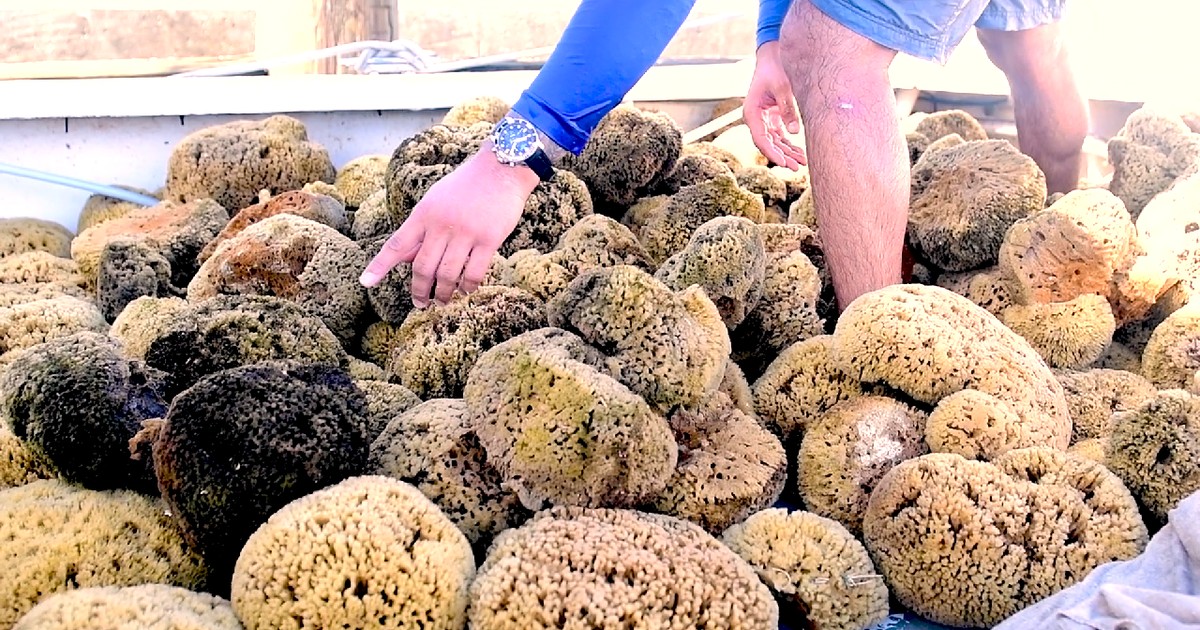
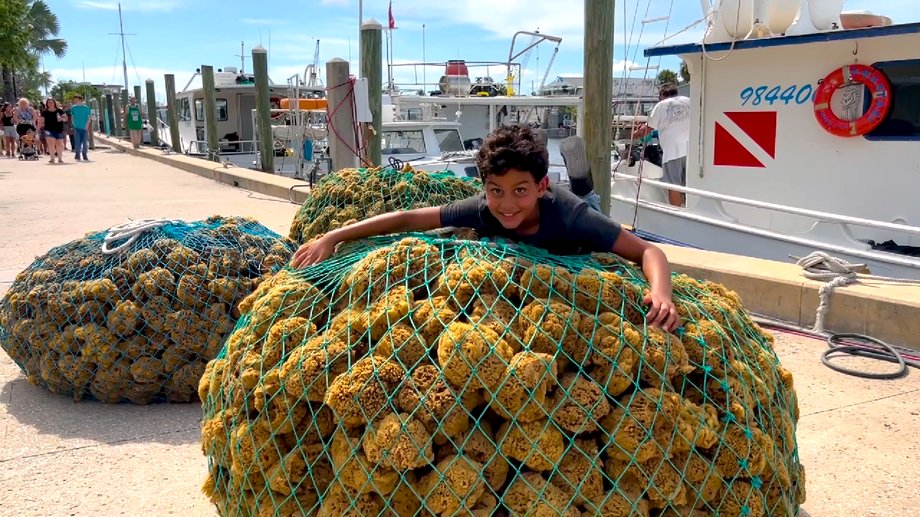
Here is a natural sea sponge during pruning. It was collected in Tarpon Springs, Florida, the sponge capital of the world.
“There's no Tarpon Springs without sponges,” says diver Muhip Goktepe.
According to some estimates, about 70 percent natural sea sponges collected around the world come from this stretch of the Florida coast. Generations of locals, most of them of Greek origin, have built their lives around these foam sea creatures.
“I don't know anything else,” admits diver Anastasios “Captain Taso” Karistinos.
Read also: This fish costs more than wagyu. Fishermen risk their lives to catch one fish
One sponge passes through about 20 hands before it is sold
|
Business Insider
How to make a good business out of a sea sponge?
Sponge collectors have been harvesting these animals — yes, they are animals — since the early 1900s. The industry has been struggling lately. More and more frequent hurricanes prevent fishermen from going out to sea. Some of them even led to the death of sponges.
Due to high fuel costs, some people have completely given up working in this industry. Diving for sponges has encountered difficulties in the past, but has always been overcome.
Sponge sales still bring in several million dollars a year. However, Tarpon Springs has found another way to capitalize on its rich history.
— The city supports tourism worth nearly $20 million. says Jean Hungiville, president and CEO, Tarpon Springs Chamber of Commerce.
We traveled to Florida's Gulf Coast to learn how sea sponges became such a profitable business and why divers struggle to keep their businesses afloat.
Anastasios Karistinos came here from Greece in the early 1970s. The 70-year-old is now known as Captain Taso.
— The ocean is like home to me. I live in Tarpon Springs. It's like a Greek city with Greek music and Greek restaurants. I fit in here, says Taso.
Diving for sponges dates back to ancient Greece. Homer and Aristotle wrote about these creatures. Back then, people used them for bathing, cleaning, painting and decorating, just like they do today.
When settlers discovered natural sponge deposits in Florida in the 19th century, Greeks began to come to America, taking their craft with them. In the old days they wore suits like this. Currently, divers wear wetsuits in the summer and insulating drysuits in the winter. They also put on diving masks and shoes.
Read also: The young people have left, the swimming pools are deteriorating. “I would die if someone took this job away from me”
Divers must go 18 meters underwater to collect sea sponges
|
Business Insider
How are natural sea sponges collected and how much can you get for them?
I wore a variety of footwear, from soccer cleats to provide better grip on the bottom and enable faster movement, to work boots, deck shoes, and diving shoes
explains diver Corry Gayheart.
Divers go down to depths of up to 18 meters to find sponges They walk along the bottom until they fill one bag. In the past, divers used hooks to pluck sponges from the bottom. However, it is now legal for divers to cut sponges with a knife to help regenerate them.
One study shows that cut sponges have a much greater chance of survival – about 30 percent. larger than those pulled out with a hook. It's a bit like shearing sheep or cutting branches from a tree.
Sponges have the greatest regenerative capacity of all animals. Still, Captain Taso doesn't collect smaller sponges. He leaves them to continue to grow.
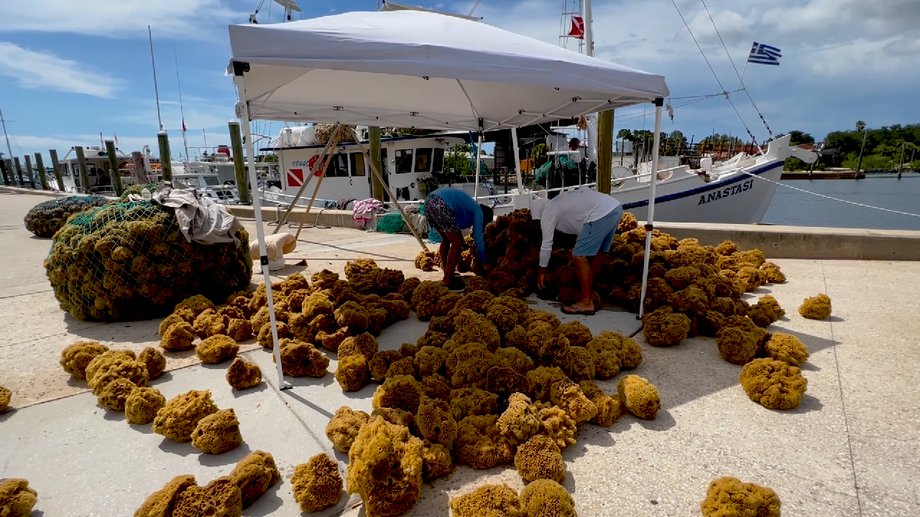
The divers haul the full net aboard the boat and return to shore. At the docks, Taso and his crew get to work sorting and cleaning sponges. The most valuable are “wool” sponges, which cost about $15. per piece.
They are the most delicate and retain a lot of water. Yellow sponges (Aplysina fistularis) are rougher. They are also the cheapest. When sorting sponges, fishermen give them a first cleaning. They then trim them to remove discoloration and give them the right shape.
— I wear gloves because sponges are like sandpaper. They spoil our fingerprints, see? They resemble glass. I almost dropped my coffee cup this morning, says Taso.
At night, Captain Taso leaves the clean sponges to dry. Some people stop to ask questions or buy sponges directly from the fishermen in the harbor. However, Taso says the best solution is to find a wholesale buyer.
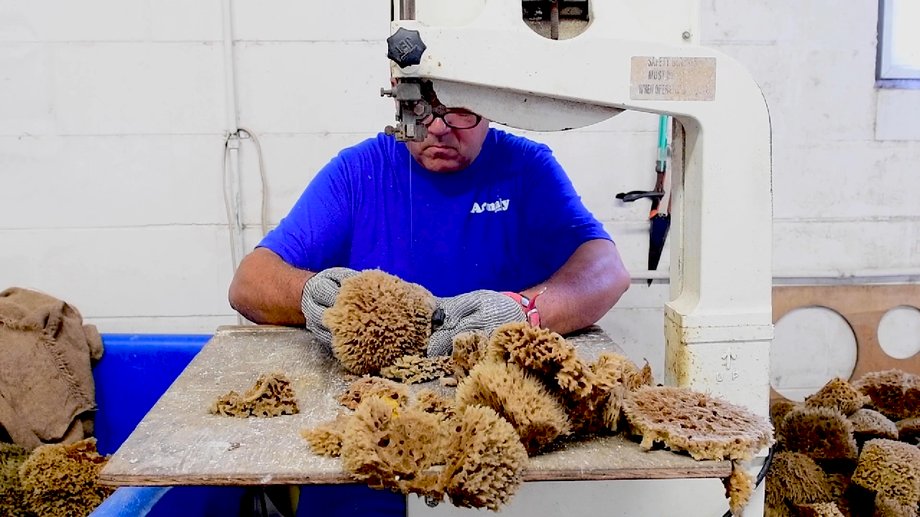
The sponges go to a processing plant like this one, located about a mile from the docks. They are soaked in the wetting zone and pushed into the tub with a wooden paddle.
They are then drained in this network and transferred to a special machine that spins to remove excess water. The sponges remain moist and ready for the next step: cutting.
The worker protects his fingers from the sharp wire with gloves.
– These sponges are ready for processing. Tonight we will place them in the tub where they will stay overnight and then be processed, explains Harry Barber, Plant Manager, Armaly Sponge Company.
Harry Barber manages the Armaly Sponge Company. The Armaly family founded the company in the Bahamas in 1908 and expanded to Florida about 50 years ago. In 2018, it opened a processing plant in Tarpon Springs.
Young people do not want to take over this business
|
Business Insider
What happens to sea sponges after being caught?
The sponges go into a special washing machine. They are then dried and sorted by size. They are packed into boxes and prepared for shipment.
Bath sponges have gained huge popularity because people want to use baby products that are eco-friendly, clean and natural
says Harry.
Despite sponges' almost magical ability to regenerate, in the late 1930s they were almost completely wiped out by a mysterious disease.
Then, in the 1940s and 1950s, an uncontrolled algae bloom caused a phenomenon called “red tide,” killing many local sponges.
The population survived against all odds and flourished during the industrial boom of the 1980s, when approximately 30 sponge fishing boats and 50 divers docked here daily.
Sponge blight has occurred in Mediterranean countries. We sourced them locally and shipped them to these countries at higher prices
– Harry recalls.
But as fishing in the Mediterranean Sea recovered, demand and prices at Tarpon Springs dropped again. Many fishermen went bankrupt. Some, however, like Captain Taso, survived.
“I don't know anything else,” he says.
The industry is also struggling with another problem. Due to the climate crisis, hurricanes are becoming more frequent. So bad years become the norm.
Divers can't go out during a storm, but there's something else. Even though sponges are animals, they survive by attaching themselves to the ocean floor.
During a hurricane, many of them are crushed by sand or hit by falling rocks and die. Lately, only a few sponge boats and about a dozen divers go out each day.
— You have to look hard because sponges aren't everywhere like they used to be. The red tide killed them, but some survived here and there, Taso says.
Captain Taso works long hours.
I've worked all my life. I grew up in a family with 12 children. My father would take me with him at 4 a.m. and we would work all day. I am able to work non-stop for 24 hours
– he adds.
Throughout his work, Taso deals with the sponges.
The first time I touch the sponge is when I take it out. I will touch it at least 20 times before it sells
– says.
Armaly mainly buys from independent contractors such as Taso.
“We buy from them based on what they bring. It's condition and size that matter, says Harry.
Therefore, income is not guaranteed. Muhip Goktepe goes on long fishing trips throughout the year. He earns approximately PLN 46,000. hole. annually.
— If I come back with sponges, it will be a good year. He will be angry without them. I don't work during hurricanes and storms, Muhip says.
— In one year I work more, so I earn more. In another one, I work less, so I earn less. So it all depends on the time spent, admits Taso.
In addition to financial uncertainty, diving can be dangerous if the hose is cut or you dive too deep. That's why Muhip and Taso are not trying to pass on the family business to their children.
— A few times my hose got cut and I ran out of air and had to swim out. There are many dangers waiting for us, he adds.
I don't want my children and grandchildren to do this job. They can do better
says Muhip.
— There's not much money in this business. No one wants to toil like this for 20 days. People prefer to stay on land. I'm not going to force my grandchildren to do this work. I don't want them to do it. They are doing well in school, Taso boasts.
— It's sad that so few people are involved in fishing, but I understand it perfectly. Current market prices do not cover the high costs of fuel. Boat maintenance is expensive. Our country and the world are trying to draw attention to natural products, adds Harry.
Until the industry recovers, Tarpon Springs will have to rely on tourism. Every year, tourists bring tens of millions of dollars to the community by eating authentic Greek food and taking boat tours.
They also buy sponges as souvenirs. However, many residents wonder whether tourism will be a long-term solution. And if not, what awaits the next generation of sponge collectors?