Romania, the state with “open doors” for dangerous prisoners. Danileț: “I would not grant permission for acts of violence”


The escape of millionaire Abdullah Ataș, who never returned from parole after being convicted of murdering a policeman, exposes critical flaws in the prison reward system. Former judge Cristian Danileț talks about banning violent prisoners from being released from prison, arguing that their dangerousness persists regardless of their conduct, while magistrates warn that Romania risks becoming a “paradise for criminals”. “Romania has come closer to being a paradise for criminals than a state of law“, recently warned the prosecutor Claudiu Sandu, former vice-president of the CSM.
The Turkish millionaire was drunk when he intentionally hit the traffic policeman
The conditions for granting permission to leave the penitentiary
The permit is an administrative reward, analyzed by a commission and approved or rejected exclusively by the director of the penitentiary, based on Law 254/2013 and HG 157/2016.
This reward is only given to semi-open and open prisoners, regardless of the crime for which they were convicted.
We emphasize that a prisoner will be placed in a maximum security regime, closed, semi-open or open depending on the type of crime, the length of the sentence, antecedents, previous behavior. As a rule, after 6 months – 1 year, a reclassification will be made based on conduct, work, involvement in programs.
Under the conditions of the semi-open regime in which the millionaire Abdullah Ataș was, he could obtain permission to leave the penitentiary under the following conditions: constant good behavior, favorable psychosocial assessment, low risk of escape.
The one who takes the decision to grant or reject the permit is the director of the penitentiary upon the reasoned proposal of a commission. The committee usually includes: a deputy director of the penitentiary (usually the one responsible for safety or social reintegration), the head of the education / social reintegration sector (coordinating educator) – who evaluates behavior, involvement in activities, discipline; the prison psychologist who evaluates risk, emotional stability, reintegration capacity; the operational officer who analyzes the risk of escape, background and safety; the representative of the legal sector/record that verifies the legal situation and the enforcement regime.
Cristian Danileț: “These permits must be for exceptional situations, not because he wants to walk”
Former judge Cristian Danileț claims that “these permits must be for exceptional situations, not because he wants to walk.“
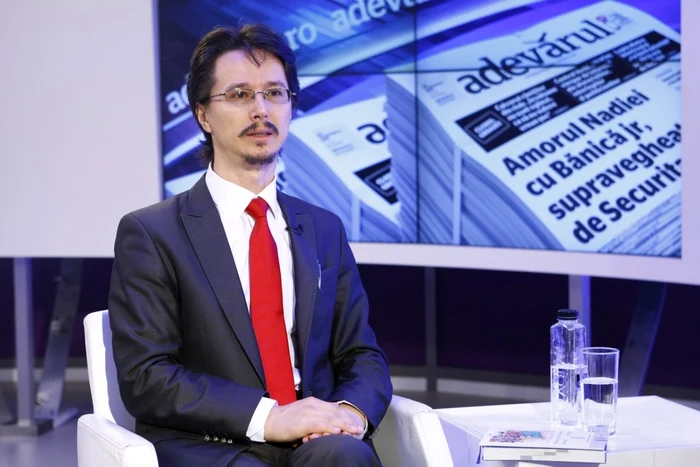
Cristi Danilet
He exemplified the situations: a death in the family, a sick relative, an unforeseen event related to his properties, such as a house fire, a theft, etc. “So the permission to leave the penitentiary must be justified”emphasizes the former criminal law judge.
It shows that the inmate must behave appropriately: “Article 98 of the law shows that people who have good conduct and made the effort to go to work, went to educational, moral, religious, cultural, therapeutic, counseling, training activities can benefit from a reward such as increasing the number of visits, phone calls, but also permission to leave the penitentiary for one day, but not more than 15 days a year“. A permit lasts a maximum of 5 days.
Danilet emphasizes that the permission “it's not necessarily a right, it's a vocation. That is, if you meet the conditions and get the commission's approval, the head of the penitentiary decides, if he wants to he gives you permission, if not, he doesn't. The final decision belongs to him.”
The former judge points out that the law does not distinguish between the granting of permission to leave the penitentiary and the crime committed.
However, as we showed above, there are few chances that the perpetrator of a crime will benefit from the permission to leave the penitentiary during the first years in which he is incarcerated, because then he will be under the maximum security regime.
Danileț on the change in the law: “For the acts of violence, I would not allow the release”
“Theoretically, you only release someone you really trust to come back. And I can assure you that everyone is on edge, is he coming back or not? Look, in this case he didn't come back. There's a lot of people who are going to kill the undersigned because of this case.”explains the former magistrate.
Asked if the law should be changed, Danileț says: “Some clear criteria should be established, perhaps including taking into account the type of punishment you are serving. Personally, for murder, for serial killers, for rapists, for acts of terrorism, I would not let go. That is, in general, the acts committed with violence. Because I, the judge, when I sentence you, I sentence you to stay in prison for a number of years; theoretically you go after those years have passed. Let say, I'll give you 15 years or 20 years. I can't say that after a year or two you'll be released on the street. That's why I sent you to the penitentiary, because you're a danger to others. So, I wouldn't release you for repeated acts of violence.”
Sandu: “We embrace criminals and consider them victims”
For his part, the lawyer and professor of Criminal Law at UBB, Sergiu Bogdan, claims that this case must be investigated and see under what conditions the permission to leave prison was granted.
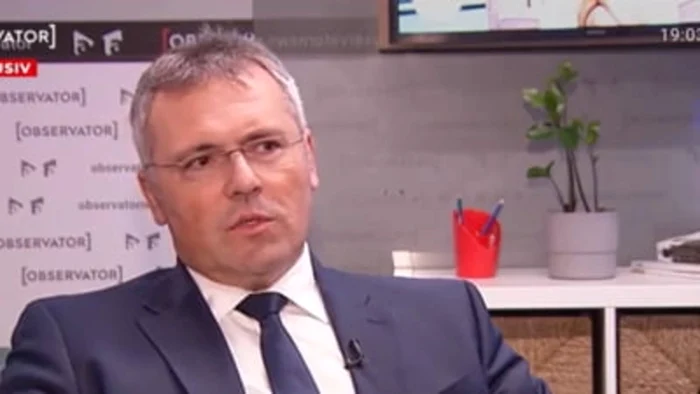
Claudiu Sandu, former vice-president of the CSM, has a gloomy x-ray of the system. PHOTO: Video capture
Sandu is of the opinion that the legislative amendments have destroyed any coherence in the current legislation, being of the opinion that the necessity of the amendments comes against the background of other existing problems in the justice system:
“We want to criminalize femicide. But what does the current law have? Isn't 30 years in prison enough? We don't really see such punishments, but if we did, wouldn't it be enough? Would it not be better, instead of making a public spectacle, to find some responsible magistrates who would actually pronounce such punishments? We have amended many laws in recent years claiming to modernize them. In fact, we have destroyed any coherence in the criminal law”.
He went on to show that the pre-trial chamber “it was a revolutionary idea. It's proving a procedural disaster”. He criticized the tax evasion law, calling it “a catastrophe”. “We horrified the Union with the level of VAT fraud. Solve the ANAF. Sure. By increasing taxes”, the prosecutor also pointed out.
Sandu also criticizes the attitude of magistrates towards criminals.
“We abolished juvenile penalties. Now children are killing other children. How is it that, although we have adopted modern laws, misfortunes come one after another? Is it only the lack of education that is to blame? Is access to social networks to blame? Are we so easily fooled and manipulated? In reality, we have forgotten to be responsible. We forgot that laws must be consistent and specialists must be consulted for the effects of these laws. We have forgotten that magistrates must be responsible and stern and enforce the law by force if necessary. We embrace criminals and consider them victims”he says.
Romania, paradise of criminals
“Romania has come closer to being a paradise for criminals than a state of law”Claudiu Sandu, former vice-president of the CSM, also warned the other day. It raises the alarm about the way in which the current legislation is applied and demands an attitude from the magistrates “responsible and severe” to stop the degradation of the judicial system.
The former vice-president of the CSM, Claudiu Sandu, emphasized in a post on Facebook, entitled “criminals' paradise”, the importance of the legislation, as well as its implementation. His clarifications come in the context of the case of the Turkish prisoner Atas Abdullah, who did not return from prison leave, as well as the case of the recent crime in which several minors are involved.
“A criminal gets a permit and flees the country. How can a criminal get the right to get out of prison? It is written in the law. You can sit on the terrace and at the next table there is a criminal quietly drinking his coffee. Now we find justifications. We need to make changes in the law, some say. Let's get bracelets, others say. Until a decision is made, people forget. It's always others to blame. No one says that the laws are under any criticism. That they favor criminals. How no one says that many magistrates are filled with pity when they have to send a criminal to prison”writes the former CSM vice-president.
The case of Abdullah Ataș
Abdullah Atas, a businessman of Turkish origin, was sentenced to 22 years in prison for killing a traffic policeman, a deed committed in 2015. The charges against him are particularly serious: in a state of intoxication, the Turkish millionaire took the policeman on the hood of his car, which was later thrown onto the road.

Abdullah Atas was sentenced to 22 years in prison
Abdullah Atas put Romanian authorities on fire after a few days ago he refused to return to the penitentiary on leave.
Having been in Rahova Penitentiary for more than ten years, where he is serving his sentence in a semi-open regime, Ataș Abdullah worked, cleaned, participated in all reintegration activities, being considered a model prisoner. He was regarded as one of the most talented actors in the prison theater troupe. On this basis, Ataș obtained several permits. On the last, the 24th, the Turkish millionaire decided not to return.
According to a statement sent on January 26 by the Capital Police, he is currently at large, and the authorities are making efforts to locate him.
The last images of the man were captured by surveillance cameras on January 24, when he left a restaurant, the day after he received the permit. The police are trying to reconstruct his route, analyzing the available images to determine where he might be currently.
The investigators are also considering the possibility that he left the territory of Romania. The Bucharest Court issued, at the request of the Criminal Investigation Service, a European Arrest Warrant in the name of Ataș.