January 20, 1937
The newspaper “Birobidzhan Star” (12+) for January 20, 1937 published a telegram from D. Bergelson to the anti-fascist writer Lion Feuchtwanger and a response to this telegram:
“To the famous German anti-fascist writer L. Feuchtwanger, who is now in Moscow, the author of talented novels… Comrade Dovid Bergelson sent a telegram in which he welcomed him and invited him to visit the Jewish Autonomous Region. Answer: “Birobidzhan, Bergelson. Thank you very much for your greeting. I will be glad to see Birobidzhan. Friendly greetings Lion Feuchtwanger.”

Clippings from the newspaper “Birobidzhan Star”. Photo: Photo: Regional Library
January 20, 1940
On January 20, 1940, an announcement was placed in the newspaper “Birobidzhan Star” that a Jewish state chapel was being organized in Birobidzhan. With the arrival of Honored Artist of the Republic E. Sheinin in Birobidzhan, work began on organizing a Jewish state choir.

Clippings from the newspaper “Birobidzhan Star”. Photo: Photo: Regional Library
The creation of the chapel will be an important contribution to the cultural life of the region, the beginning of great work on the development of musical culture.
Under the direction of the artist of the republic, composer E. Sheinin, people who can sing are recruited: both participants in amateur music performances, as well as professional singers and female singers.
January 20, 1949
At the party meeting of the convoy plant, the results of the team’s work in 1948 were reviewed. The state plan was fulfilled ahead of schedule, on December 13, 319 thousand rubles of excess profit were received, production costs increased by 15%, labor productivity increased by 30%. The meeting called on all communists to work selflessly and save materials and raw materials.
January 20, 1965
A regional meeting of agricultural workers was held. It discussed the results of 1964 and outlined goals for 1965. The meeting participants focused on the state of affairs in livestock farming. The good work of the Oktyabrsky, Smidovichsky, Dezhnevsky state farms, the Amur Border Guard and the Testaments of Ilyich collective farms was noted.
Challenge Red Banners were presented to the teams of the Partisan State Farm, the collective farm named after. Lenin, third department of the Oktyabrsky state farm.
January 20, 1973
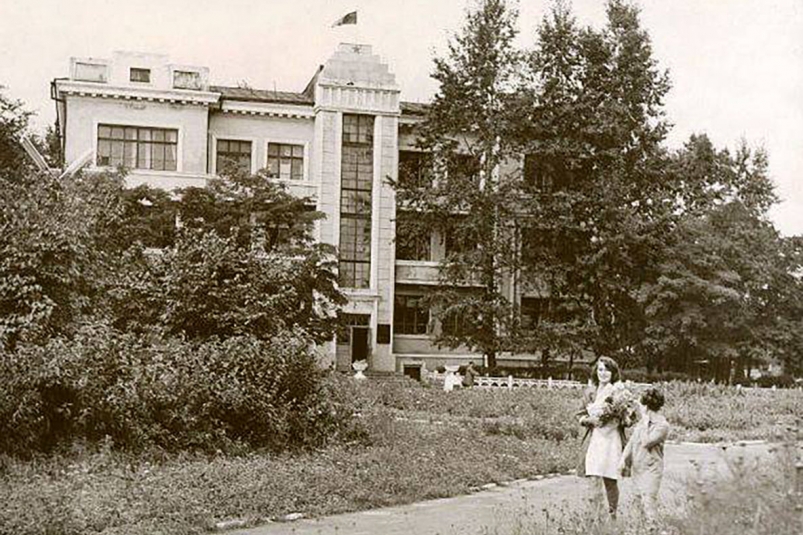
A secondary city vocational school No. 39 was established in Birobidzhan.
Based on the order of the head of the administration of the EAO N.M. Volkov No. 247-RG dated August 23, 1993, in view of the creation of an independent department of vocational education of the administration of the EAO and in accordance with the Law of the Russian Federation “On Education” Art. 9,12,21 section 2, SPTU-39 of Birobidzhan was renamed into State educational institution vocational school No. 3 of the vocational education department of the government of the Jewish Autonomous Region.
Based on the order dated December 24, 2002 No. 159-p of the Vocational Education Department of the Government of the JAO “On the renaming of some regional state educational budgetary institutions, the functions and powers of the founder of which are exercised by the Education Committee of the Jewish Autonomous Region,” the regional state educational budgetary institution of primary vocational education “Vocational School No. 3 of Birobidzhan” was renamed as a regional state vocational educational budgetary institution “Polytechnic College”.
The subject of the institution's activities is the implementation of basic general education programs and educational programs of secondary vocational education. The goals of the Polytechnic College are to meet the needs of society and qualified workers, office workers and mid-level specialists.
Every year at the technical school, as part of the project for early vocational guidance for students in grades 6-11 “Ticket to the Future” (6+), a professional test is held in the technical school workshop with students from various schools in Birobidzhan. College students always take part in All-Russian competitions and events.
January 20, 1978
The newspaper “Birobidzhan Star” on January 20, 1978, in the section “In our region” wrote that after the winter holidays, the children of the village of Volochaevka-1 came to classes at the new high school “The two-story white-stone building is designed for 320 students. All classes are taught in one shift. The classrooms are equipped with new furniture. The new school has a comfortable spacious dining room and a large gym.”
The same newspaper contains information that a children's cinema began operating in the village of Smidovich at secondary school No. 3. “The idea of creating their own cinema arose in a circle of young projectionists at the school, led by the master of the regional directorate of cinema L.I. Khomich. On the opening day of the cinema, the guys showed their friends the movie “Ogonki” (6+) and the newsreel “Science, Technology, Production” (6+). While the young projectionists are working with narrow-film equipment.”

Clippings from the newspaper “Birobidzhan Star”. Photo: Photo: Regional Library
The head of the public education department of the regional executive committee, P. Khanukova, in the article “Attention and Care for Preschool Children,” talks about how the network of preschool institutions in the region is growing from year to year.
“In our region, the first kindergartens appeared in 1930-31. Old-timers remember how on one summer June morning over the bank of the Amur after a hot breakfast, a sonorous children’s song was heard for the first time. This is how the Amurzet kindergarten began its work. Now 13 thousand children are being educated in 155 preschool institutions… Only during the tenth five-year plan, the network of preschool institutions in the region will increase by more than 1.5 thousand places… significant changes also occurred in the composition of the teaching staff. In 1945, out of 153 preschool workers, not a single one had a higher education, only 12 people had a secondary pedagogical education. Now, out of 870 preschool workers, 36 have a higher education, about 700 have a specialized secondary education…”