The Prime Minister of Japan is calling early elections in early February to consolidate his mandate. What Sanae Takaichi is based on


Japanese Prime Minister Sanae Takaichi announced on Monday, January 19, that he will dissolve the lower house of Parliament and call early legislative elections on February 8, putting his position at stake in order to obtain a consolidated mandate to carry out his ambitious political program, informs EFE.
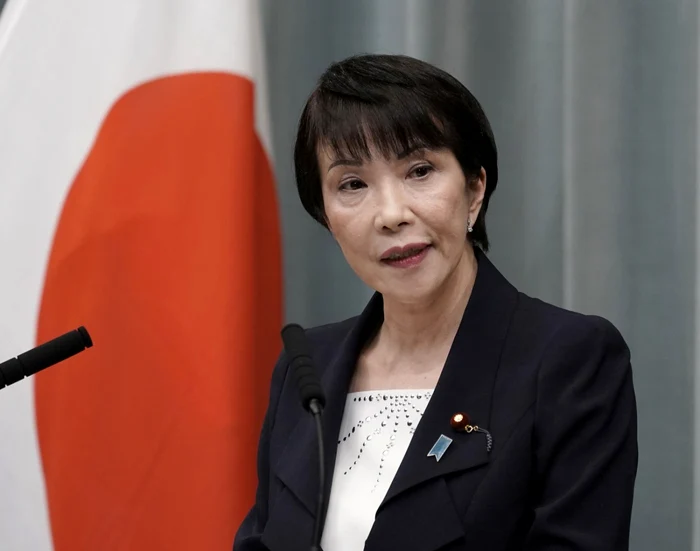
Takaichi took office in October. PHOTO EPA EFE
Conservative politician Sanae Takaichi, the first female head of government in the Japanese archipelago, relies on favorable polls to increase the score of the Liberal-Democratic Party (PLD, right-wing nationalist) of which she is a member, an unpopular formation whose coalition has a marginal majority, according to Agerpres, citing EFE:
“Today I decided to dissolve the lower house“, before the called early elections “on February 8” following a lightning campaign, the Japanese leader declared in a press conference.
“Is Takaichi fit to become Prime Minister? I wanted to let the sovereign people decide”she continued.
The LDP has ruled Japan almost continuously for decades, but has seen its popularity eroded by funding scandals and an inability to control rapidly rising inflation.
Takaichi took office in October, having been propelled to the top of the party after the LDP lost its majority in both houses of Parliament under his predecessor, Shigeru Ishiba.
Despite the LDP's tarnished image, the Takaichi government is dominating the polls, posting a 60%-70% approval rating.
The PLD and its new coalition partner, the Innovation Party, narrowly managed to regain a majority in the lower house in November, taking advantage of the support of a small group of elected officials, but this majority is limited. This could prevent the passage of Takaichi's program, which includes “proactive” spending to revive business and increase the defense budget.
On Monday, Sanae Takaichi declared that she wants to subject the government coalition's program to voter validation.
“And if the PLD can get a majority in the lower house on its own, this will help it promote its policies” without concessions to the other parties, explains Sadafumi Kawato, a professor at the University of Tokyo.
After a monumental recovery plan adopted at the end of 2025, the government approved a record new budget (equivalent to 665 billion euros) for the financial year 2026, which starts in April, promising to get Parliament's approval as quickly as possible to fight inflation more effectively and support consumption.
Dissolution would “sacrifice” the needs of Japanese households
According to the opposition parties, a dissolution would delay the adoption of the budget.
Jun Azumi, a member of the main opposition party, the Constitutional Democratic Party (PDC), believes that this would “sacrifice” the needs of Japanese households.
According to the press, the PDL, aware of the sensitivity of the subject, is considering campaigning to reduce the taxation of food products in order to reduce the impact of price increases (+2.9% annually in November, including fresh products).
The early elections also come amid tensions in Japan's relationship with China.
Sanae Takaichi, who received US President Donald Trump with great pomp in Tokyo and participated in summits immediately after taking office, is active on the international scene. But relations with Beijing deteriorated after Takaichi suggested in November that his country could intervene militarily if China launched an attack on Taiwan.
Beijing could step up its pressure further if Takaichi wins the election, concerned to convey to voters “the message that supporting a strong leader could generate increased suffering” especially through trade sanctions, estimates Mikitaka Masuyama, dean of the National Institute of Political Studies
The restrictions announced by China
China has already announced a tightening of restrictions on the export of products to Japan “dual use”civil and military, which could affect the supply of rare earths, critical components.
According to a survey carried out by the Asahi newspaper, 60% of the people interviewed are concerned about the economic impact of the deterioration of Sino-Japanese relations.
The elections for the upper house of Parliament in July, which confirmed the loss of the majority by the PLD, saw the rise of the Sanseito party, a populist formation that describes immigration as “a silent invasion”despite the low proportion (3%) of foreign-born residents in the archipelago.
On this topic of high interest for public opinion, Sanae Takaichi could quickly announce a tightening of the rules.
In opposition, the small Buddhist Komeito (center-right) party, a former partner of the LDP, and Japan's Constitutional Democratic Party have agreed to join forces in hopes of wooing undecided voters.