What I learned from the Iranian girls I hosted at my home. Plus the testimony of an Iranian: “You are not allowed to exist there if you are not what the state decides you must be. Otherwise, you are arrested or even killed”


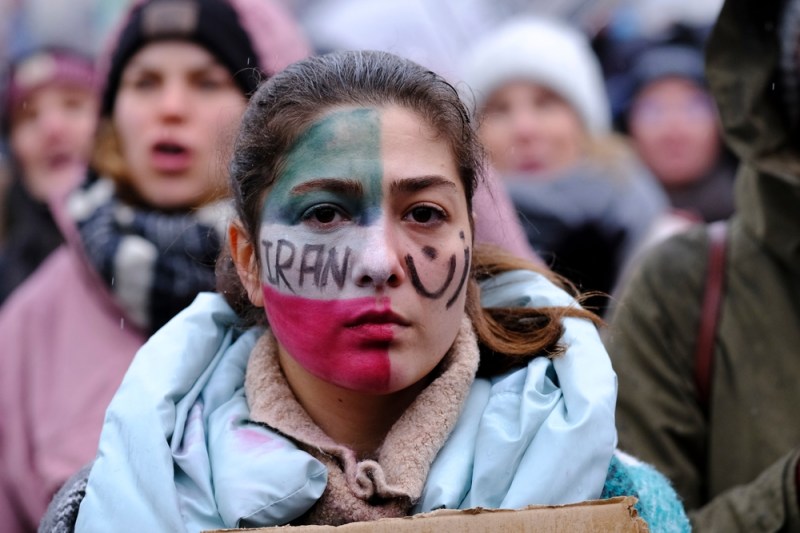
During the week spent in Romania, the girls saw what women's freedom really means. / Shutterstock
For several years now, news about Iran has had a special meaning for me. After every report about suppressed riots and people beaten or killed, I wonder if “my girls” – Sara, Neda, Leila, whom I hosted for a week at my house – are okay. These days, when thousands of people who protested against the Islamic regime were killed, and the telephone and the Internet were cut (so that the images of the atrocities were not distributed outside the country and so that the protesters could not organize), I went further with my thoughts and asked myself a question that made me shudder: “are the three girls alive?”. I tried to contact them, but none of them have internet or phone access. Fortunately, I managed to find Kourosh (23), one of their friends, who is now studying in Europe.
A few years ago, my family was part of an experience exchange project with children from several countries, including Iran. The teenagers who came here participated in all kinds of activities, learned traditional dances, cooked Romanian recipes, and at the end participated in a multicultural festival. At the time, Sara and Neda were two teenagers aged 15 and 16, who came to Bucharest together with their teacher Leila and other Iranian children. I hosted the two girls for a week at my home. A strong bond was created between us and I became very fond of them.
I liked them from the first moment I saw them at Otopeni airport. They were all smiles, beautiful and sparkling, ready to discover a new world. Both my children and I were curious to know more about a culture we only learned about in history lessons. The girls then told us not only how beautiful their native country is and how wonderful the people are, but also about the hardships they go through.
Adolescence shadowed by a harsh regime
Although they were just lively children, the two girls carried with them the burden of a hard life, even though they both came from once wealthy families. International economic sanctions introduced after the establishment of the Islamic Republic and subsequently tightened had collapsed the national currency and the lives of many families had changed radically. Small businesses were the first to fail and the middle class was virtually wiped out. The father of one of the girls had been forced to close the family restaurant and look for alternative solutions for survival.
But it was not the economic situation that made them think sadly of their country, but the way their leaders treated individual freedom. Girls felt this the most because they were dictated how to dress, where they were allowed to go (for example, they were not allowed in the stadium), how to behave in public. Their worries were shared by everyone in the group from Iran. Their teacher tried her best to open up the children's world by involving them in various cultural projects.
When they arrived at Otopeni airport, the girls wore veils and long clothes that completely covered their hands and feet, even though it was very hot outside. As soon as we took the official group photo, the veil disappeared.
Read the rest of the article HERE.