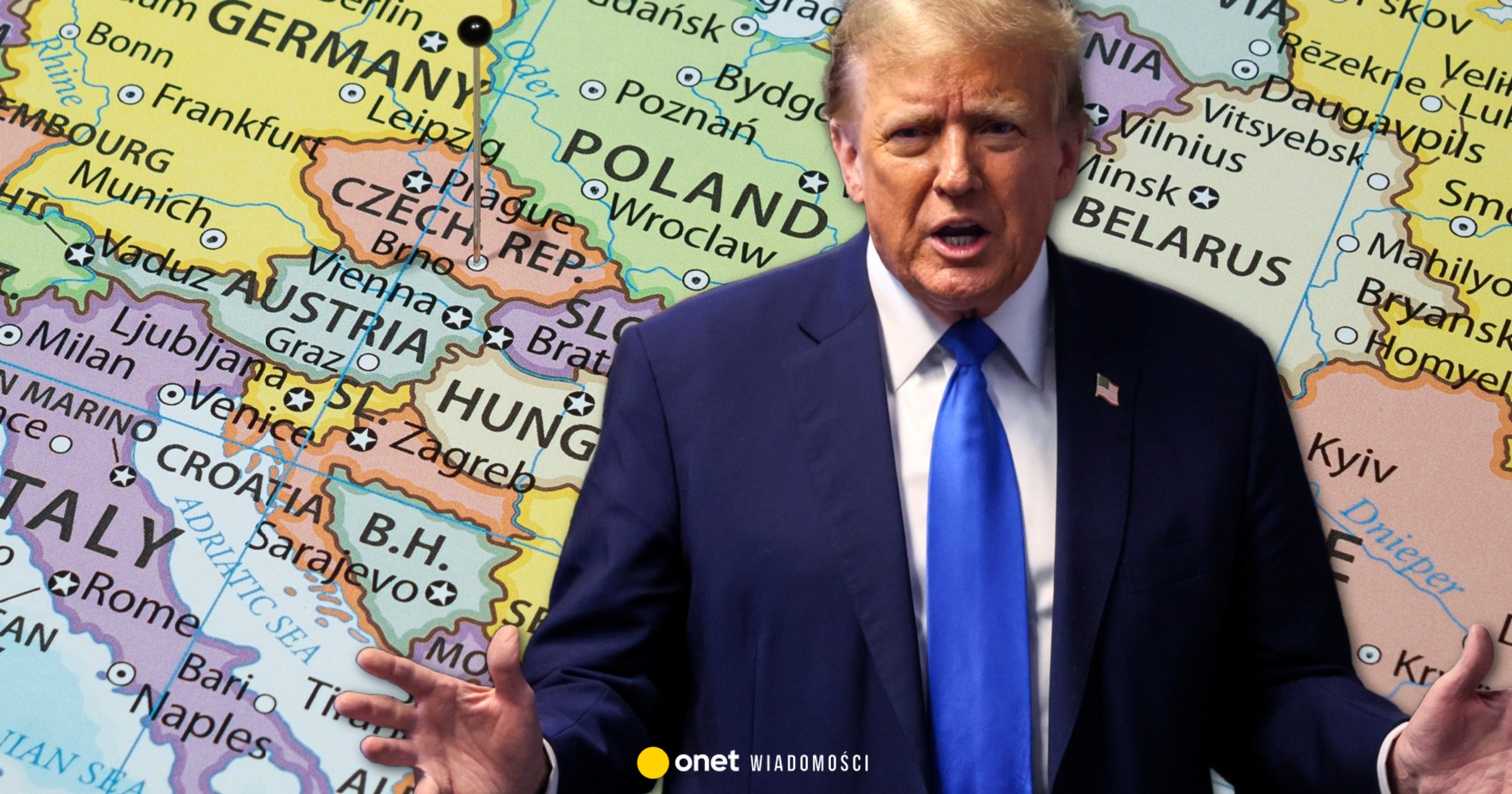
On Saturday, January 17, in the evening, US President Donald Trump announced new tariffs against eight European countries. An additional rate of 10% will apply from February 1. — and from June 1, 25 percent. According to Trump, tariffs will be raised until the US receives consent to purchase Greenland.
Key European leaders, including French President Emmanuel Macron, are therefore calling for the EU to use a “trade bazooka” (anti-coercive instrument, ACI) aimed at punishing countries that use their markets as a tool of geopolitical blackmail.
Every time someone in Europe posts an ad on Facebook or orders an Uber, the American economy benefits. This is why the “bazooka” is so powerful.
It could, for example, prevent US companies from awarding public contracts or withdraw authorizations for products from that country. It would even be possible to impose a digital services tax, which would be an attack on Big Tech – the heart of the US economy.
Europe has its finger on the trigger. This instrument could, as its name suggests, cause enormous political and economic devastation. And on both sides of the Atlantic.
According to media reports, the French president in particular is demanding that the European Union (EU) finally take decisive action and use its strongest economic weapon against America. Emmanuel Macron apparently supported the use of an “instrument to combat coercive measures”, commonly known as the “bazooka”. This would enable the EU to take a range of countermeasures.
The article continues below the video
But will it happen? Probably not so fast. Not all European governments support this solution, because they fear retaliation from Washington. However, the mere raising of the bazooka again indicates that the truce in the trade dispute between Europe and America, which has been in force since last summer, is over.
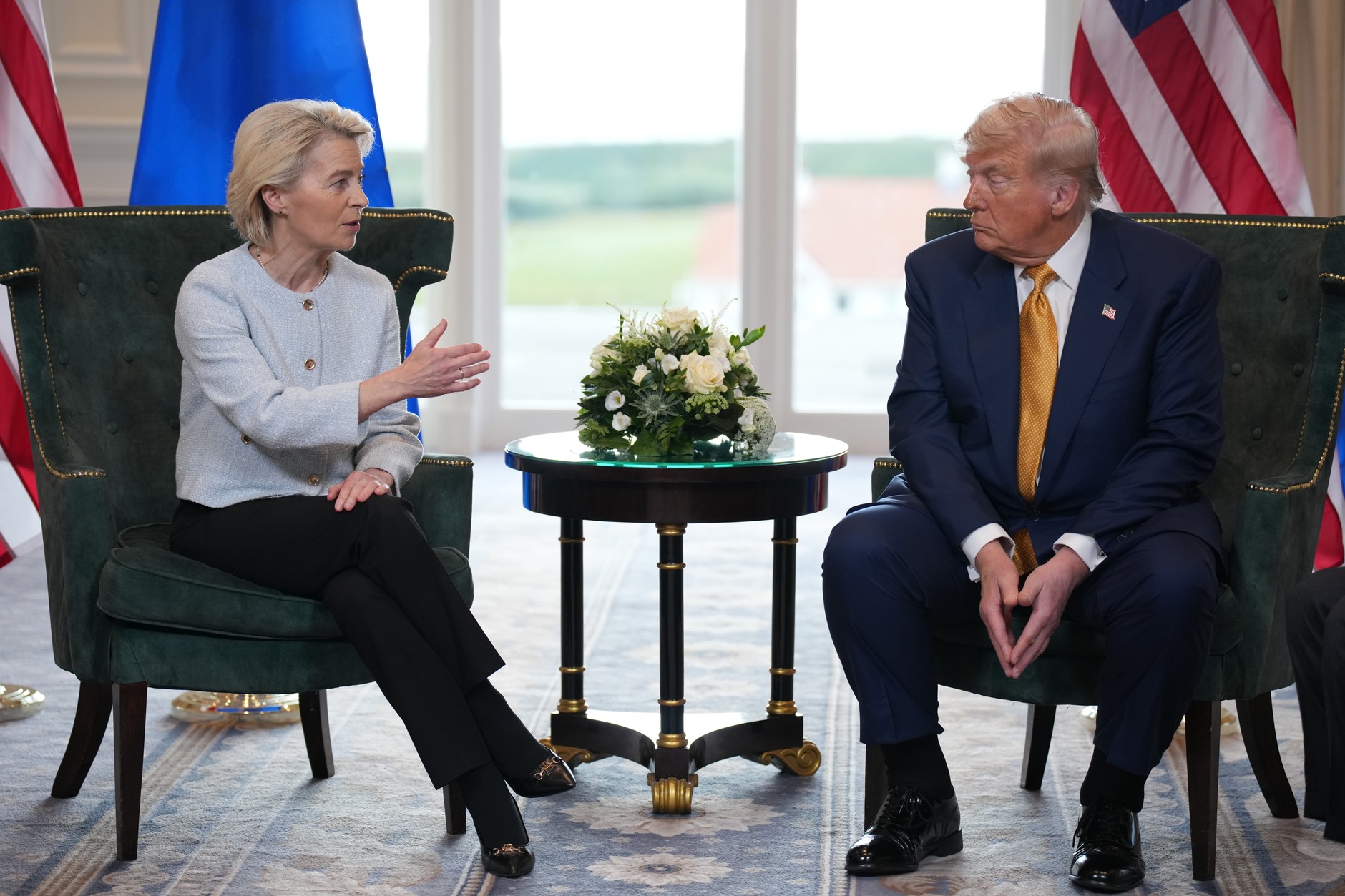
At Trump's golf course on the outskirts of the small Scottish town of Turnberry, Ursula von der Leyen, president of the European Commission, negotiated the agreement. It was agreed to reduce almost all European tariffs to zero and increase American tariffs to 15%.
European Commission President Ursula von der Leyen and US President Donald Trump conclude the EU-US trade agreement, July 27, 2025.Andrew Harnik / Staff / Getty Images
Von der Leyen also promised that European companies would buy raw materials worth USD 750 billion from the US. (approx. PLN 2 trillion 726 billion, counting at the current exchange rate) and will invest an additional USD 600 billion in the United States. (approx. PLN 2 trillion 180 billion).
Von der Leyen celebrated the deal, but experts' assessments of her “accomplishment” were devastating. Politicians and economists talked about the act of compliance. Today, half a year later, it is clear that European attempts to please Trump and appease the White House have ended in failure.
Trump's new tariffs – what options does the EU have?
So what can the EU do? Calls to use the “bazooka” appear to have emerged under the influence of emotion at the meeting of EU ambassadors that took place on Sunday morning, January 18. They were the first emotional reaction to Trump's new threat.
In the afternoon, calming voices could already be heard in Brussels. Ireland, for example, spoke out against the use of this instrument. The country where many American technology companies have their European headquarters is primarily concerned about the taxation of digital services.
It is more likely that Brussels will withdraw from the Turnberry agreement. It is not yet legally binding because it must be ratified by Members of the European Parliament. The head of the conservative European People's Party (EPP), Manfred Weber, has already stated that in the face of Trump's threats, consent to the agreement is not currently possible. “Zero tariffs on American products should be suspended,” Weber said. Many social democrats, greens and liberals share this opinion.
Brussels is therefore seriously considering two options. “Bazooka” would go far beyond tariffs and would constitute a break with the logic of existing trade disputes. Its application does not require unanimity in the EU, a majority of votes is enough. It would be tantamount to a declaration of economic war.
Just look at the numbers. in 2024, EU countries exported goods worth EUR 532 billion (approx. PLN 2 trillion, 247 billion) to the USA and imported goods worth EUR 333 billion (approx. PLN 1,406 billion).
This means that the trade surplus amounted to EUR 199 billion (over PLN 840 billion). However, in the case of services, the ratio was the opposite. In this case, the United States ran a clear surplus. The “bazooka” would hit American services, which would seriously harm the US.
Option number two – pausing the tariff deal negotiated by Ursula von der Leyen and Donald Trump in Scotland – should cause less damage to transatlantic relations.
The problem is that, despite the unilateral nature of the agreement concluded last year, it limits American tariffs for most EU countries to 15%. Who can guarantee that Trump won't increase them again?
The EU thus finds itself in a situation it has been in many times before: Donald Trump is blackmailing it, and Brussels has no good answer to it. Europe is so dependent on America militarily and technologically that it will probably have to put up with constant blackmail from Washington.
The article was prepared as part of the cooperation of “Die Welt” with the Business Insider website.
I’m Ashley Davis as an editor, I’m committed to upholding the highest standards of integrity and accuracy in every piece we publish. My work is driven by curiosity, a passion for truth, and a belief that journalism plays a crucial role in shaping public discourse. I strive to tell stories that not only inform but also inspire action and conversation.