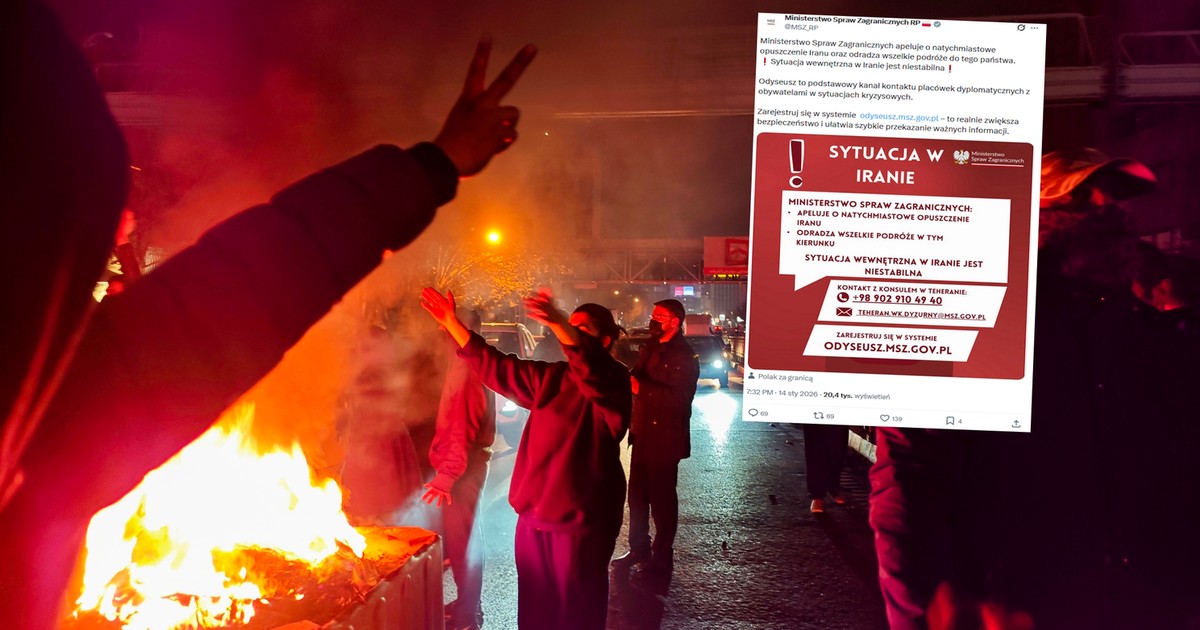
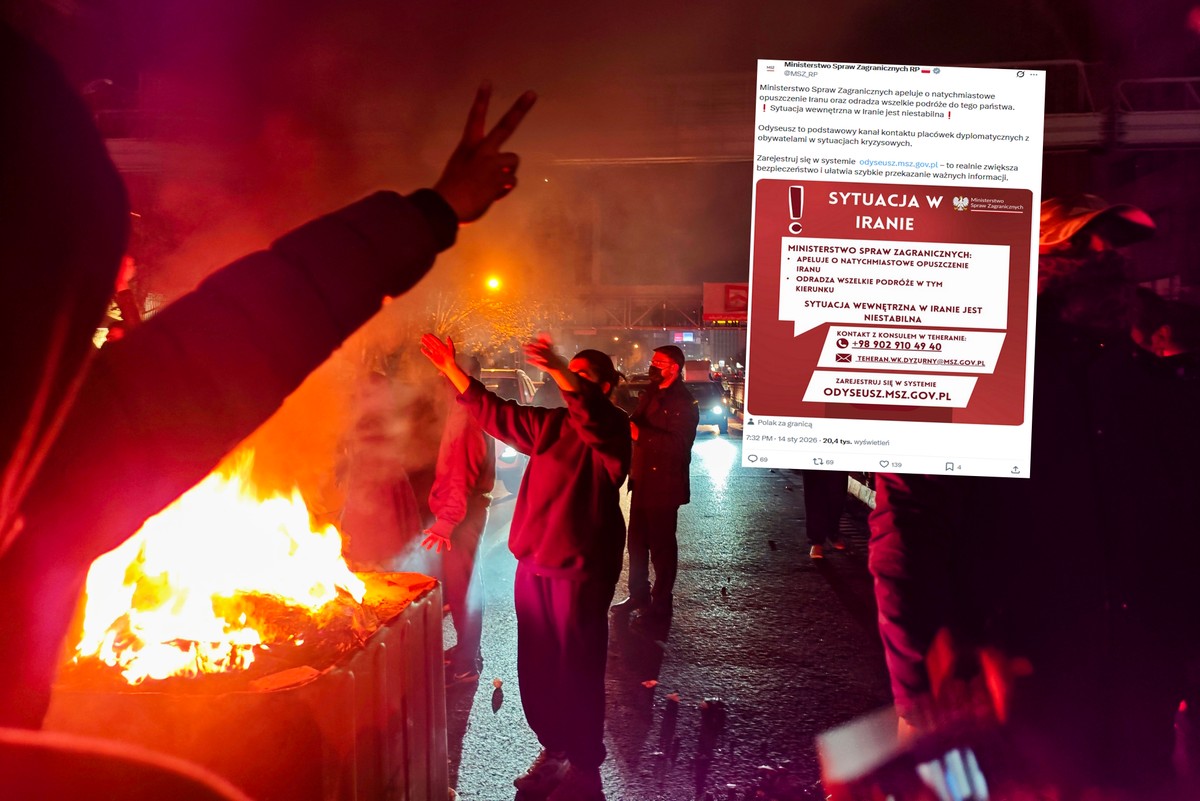
“The Ministry of Foreign Affairs appeals to… leaving Iran immediately and advises against all travel to this country,” we read in the ministry's entry on the X platform.
“Due to the social protests taking place in many cities in Iran, the Ministry of Foreign Affairs advises against all travel to Iran,” it is reported on the ministry's website. Next, we have instructions for those currently residing in this country.
“If you are in Iran right now, you should absolutely:
- avoid gatherings and places where protests take place,
- absolutely refrain from recording events/interventions and follow the instructions of the security services,
- register in the system Odysseus
- keep up to date with information on the websites of the Ministry of Foreign Affairs and Polish missions abroad (also in the countries through which you intend to leave Iran) and on the profile Pole abroad on Twitter/X”
– advises the Ministry of Foreign Affairs.
You need a visa to enter Iran
To go to Iran, Polish citizens must have a visa, both for stay and transit through this country. It can be obtained at the Iranian Embassy in Warsaw and is valid for a maximum stay of 30 days with the possibility of collecting the visa at international airports, including Tehran – Imam Khomeini.
You also need a passport valid for at least six months from the date of arrival in Iran, a return plane ticket, one passport photo, and medical insurance. You can travel to Iran using a temporary passport as long as it has an Iranian visa and the temporary passport is valid for at least six months from the date of arrival in Iran.
Both when entering and when moving around public places in Iran, you are obliged to comply with local dress codes. For women in particular, this requires covering the hair.
Thousands of victims of the ayatollah regime
The unrest in Iran began two weeks ago. Demonstrations against the terrible economic conditions have swept through Tehran and have escalated rapidly in recent days. It was considered the most violent since the Islamic revolution of 1979, which established a system of rule by Shiite clergy in Iran instead of a monarchy.
An Iranian official reported more than 2,000 deaths. A human rights organization estimated the number of victims at over 2,600.
Trump has repeatedly threatened to intervene to defend protesters in Iran. In a Tuesday interview with CBS News, he announced “very decisive action” if Iran executes protesters. He also called on Iranians to continue protests and take over institutions, declaring that “help is on the way.”
The Iranian authorities have accused the US and Israel of inciting unrest caused by people described as armed terrorists.
Two European officials told Reuters that US military intervention against Iran seemed likely. One of them stated that it may happen within the next 24 hours. Israel's representative also said Trump appeared to have decided to intervene, although the scope and timing of the intervention remained unclear.