The construction sector has been strongly affected in recent years by the effects of the pandemic and the war in Ukraine, which have generated labor shortages and inflation. With the help of several experts in the field, “The Truth” made an analysis of the significant effects of 2025 and predictions for 2026.
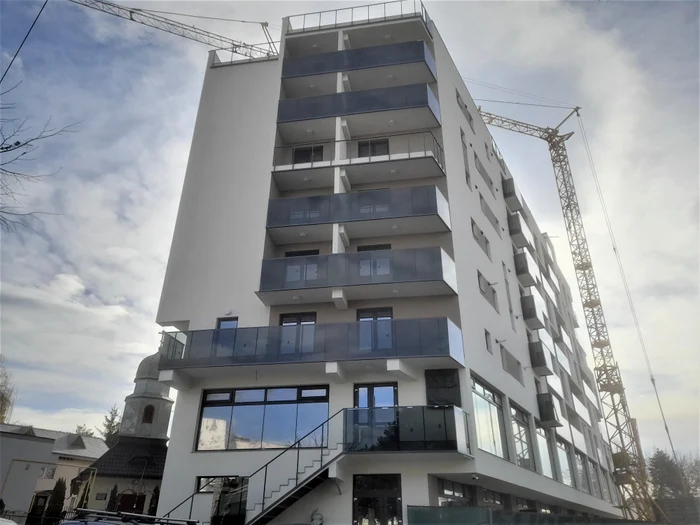
The construction sector was strongly affected by the effects of the pandemic and the war in Ukraine
The consulted experts come from both real estate developers and those who distribute construction materials. “Although 2025 follows some very difficult years, domestically and internationally, from the onset of the pandemic in 2020, to the outbreak of the war in Ukraine in 2022, we managed to survive. (…) The most difficult period of the year was the one associated with
the introduction of new fiscal measures: VAT increase, public sector pay cuts and operating cost changes from mid-2025″told “truth” Marian Ciupitu, general director of Terano Construct.
For his part, Dragoș Vlagali, general director of Bauindustry DC, told “truth” that the year 2025 was like a “roller coaster” where the construction sector went from agony to ecstasy and back again.
“In 2025, the building materials market continued to be marked by significant fluctuations in procurement costs. (…)
The biggest challenge of the year was the game on the political stage with which the year started which somehow curbed the big investments, but did not stop the online trade area which was constant throughout the year with positive fluctuations in May, June, September and October when we recorded sales increases of at least 30-40% compared to the same period last year. Although the VAT increase created a moment of panic, a pseudo-crisis at the level of sales, it seems that we quickly recovered, because society forgot and returned to the consumerism that we personally enjoyed. Although we started the year extremely skeptical, it turned out to be a good one, not explosive, but not one to lose. Manufacturers have kept the rate of price increases they have been practicing in recent years, in 2 installments, between 3-8% for materials such as (washable paints, waterproofing, decorative plasters, ceramic cladding adhesives, etc.). On the part of private label products (ceramic tile leveling system, extendable window and door protection film) we were able to keep the prices”explained Vlagali.
2026 will be a “good” year for solid projects
Asked what his forecasts are for 2026, Marian Ciupitu said that he is afraid of the global context, which together with the fiscal measures taken by the Romanian Government can put new brakes on. “Honestly, I don't want to be pessimistic, but I have to admit that I'm afraid that the whole global context, associated with the measures taken by the Government, will cause the brakes again. Let's hope not thoughhe said.
“I prefer to be reserved and take the year and the challenges as they come, one step at a time“, declared Dragoș Vlagali for his part.
Other large real estate developers also spoke about recalibrating the business and adapting to market demands.
Cătălin Apetri, CEO and Founder of CGA Home Consulting and development director for Romania of the investor Ghai Sant Ram, explained for “truth” that, for the residential market in Bucharest, the year 2026 is announced as a year of recalibration rather than a new year of crisis. “After a period marked by interest rate volatility, fiscal adjustments and a tense geopolitical climate, the market is entering a maturing phase. The demand does not disappear, but becomes more attentive and selective. Buyers are looking for projects that are clear, well-located and developed with a long-term vision. In this sense, 2026 will be a “good” year for solid and predictable projects and difficult for those built on speculative premises. The market will reward discipline and planning, not unrealistic promises“, Apetri explained.
According to him, the official data indicate a moderation of the growth rate rather than a market decline. “In 2026, the market will grow selectively, and large, well-connected and coherently thought out projects will continue to outperform the market average“he said.
The price of apartments will continue to rise
Asked whether apartments will become more expensive or cheaper in 2026, Apetri opined that construction materials will continue to become moderately more expensive, against the background of tax increases, wage increases and increasingly strict requirements related to energy efficiency and sustainability. “Even if the pressure from previous years has moderated, costs are not returning to pre-pandemic levels. In 2026, the difference will not be the price of materials, but the ability of developers to intelligently integrate them into a coherent project. House prices will continue to rise, but at a more balanced and differentiated pace. The middle-up segment remains the most stable, as it addresses a buyer with more secure income and a long-term perspective. Rising construction costs, wages and energy efficiency requirements will inevitably be reflected in prices. However, we are not in a scenario of accelerated price increases, but one of gradual adjustment, supported by demand“, said Apetri for “truth“.
“Prices across the entire residential market will continue to rise, but at a more moderate pace. The difference will be made by the completed projects, which provide safety and already functional infrastructure”declared in turn, for “truth” Cristian Stanciu, CEO of the Ivory Residence project.
Answering the same question, Ozan Tuncer, CEO of Cosmopolis, told “truth” that the construction materials market has functioned in recent years as a sensitive indicator of global developments. the most realistic scenario for 2026 being that of a tempering, not a decline. “There will probably be categories of materials where the increase will be lower, but there are no premises for a cheapening in the real sense. The global economy still operates in a context of high costs for industrial production, and Romania is not isolated from these influences.
Housing prices are the result of a calculation in which we have to factor in the price of materials, labor costs and staff shortages, but also the low number of new projects and growing demand. All of these are important elements that put pressure on the final price. All these factors are pushing the market towards the same result, moderate price increases“, Ozan Tun said, I ask for “truth“.
Cosmin Savu Cristescu, the founder of Redport, explained to “truth” that the market will go through a reset process. “Well-connected areas and properly priced projects will continue to perform, while overbid or poorly positioned developments will struggle. Basically, we are witnessing a process of professionalization of the market.
We see no real premises for a significant cheapening of construction materials. Energy costs, inflation, wage pressures and fiscal impact remain pressure factors. Most likely, material prices will stabilize or experience moderate increases in line with the rate of inflation.
In this context, what makes the difference is the ability of developers to effectively manage supply chains and plan investments in the medium term”said Cristescu.
Asked whether residential housing prices will increase or not, Cristescu stated that housing prices will not register accelerated increases, but will naturally reflect the evolution of construction costs and inflation. “At the same time, Bucharest remains one of the most affordable European capitals, and the ratio between income and residential prices still allows for an organic evolution of the market.
The offer of new, quality housing is insufficient in relation to the demographic dynamics and the need to renew an old housing stock, with an average age of over 60 years. In this context, for 2026 we anticipate a moderate advance in prices”Cristescu declared for “truth“.
How developers will bear the new tax increases
The specialists consulted by “Adevărul” estimated how the sector will evolve in the context of the new fiscal measures adopted by the Government for 2026.
“The shortage of skilled labor in construction will continue into 2026. It is a phenomenon we have been facing for many years, accentuated by labor migration and the growing demand for technical specializations.
Construction wages will continue to grow at the same moderate pace as in recent years, closely related to the shortage of personnel and the increasing complexity of modern residential projects. This evolution is reflected in costs.
Tax increases will represent a major challenge for all firms, but especially those that do not already have a stable position in the market. Only well-funded developers and builders will be able to absorb these costs without compromising either timelines or quality“, said Apetri for “truth“.
For his part, Ozan Tuncer, CEO of Cosmopolis, told “Adevărul” that the construction industry in Romania has never known the comfort of a labor surplus. “Construction wages have been on an upward trend for some time, and this trend will not stop in 2026. Staff shortages, the rising cost of living and the pressure of large projects on a small specialist market will lead to a natural increase in wages.
Not all companies will be able to withstand the tax increases in 2026. Only those that have built their strategies so that they do not depend on a single scenario, have planned their financial flows in a mature way and have a stable operational structure will be able to absorb the tax pressure without compromising their pace of development“, declared Ozan Tuncer.
“In construction, the labor shortage remains structural, even if the pace of investment is influenced by seasonality. Qualified specialists are still difficult to attract and imbalances in the labor market cannot be corrected in the short term. The real solutions lie in public policies and consistent investments in dual education, the effects of which can be seen in the medium term.
Well-capitalized companies with solid projects, portfolios adapted to real demand and sound financial structures can absorb these increases. Conversely, firms with fragile business models will feel significant pressure. The effect will be a consolidation of the market, in which the professional players will remain“, declared Savu Cristescu for “truth“.