The “attack” on Putin's palace: Moscow responded on Tuesday after being accused of a “new series of lies” / Where the Russians contradicted themselves

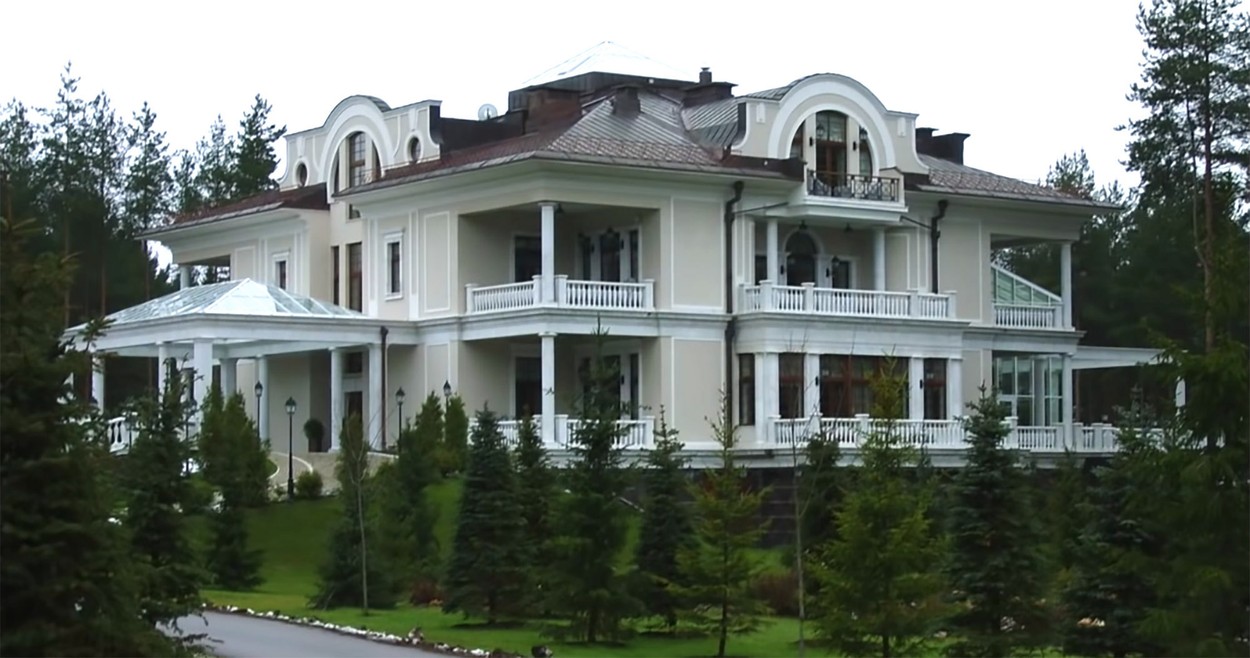
Ukraine's foreign minister on Tuesday called on other countries to refrain from responding to what he said were false claims by Russia about an attack on President Vladimir Putin's residence, the Valdai Palace in the Novgorod region. On the other hand, Moscow has not presented any evidence of the alleged attack from Sunday night into Monday, but insisted that it took place and that the effect is that Russia will toughen its position in the peace negotiations.
“Almost a day has passed, and Russia still has not provided any plausible evidence for its allegations of the alleged 'attack on Putin's residence' by Ukraine,” Ukrainian Defense Minister Andrii Sîbiha wrote on X.
“And they won't either. Because there is no evidence. No such attack took place,” he said.
A new series of Russian lies accuses Kiev
“Russia has a long history of making false claims — this is their signature tactic. For example, Russia has claimed that it will not attack Ukraine in early 2022. It also often accuses others of what it itself plans to do. Their words should never be taken at face value. Such reactions to Russia's baseless manipulative claims only contribute to Russian propaganda and encourage Moscow to commit more atrocities and lies”, the head of Ukrainian diplomacy also sent.
Also on Tuesday, the Kremlin said the attack had taken place and that it would toughen Russia's position on a possible peace deal to end the fighting, according to Reuters.
The message came after Ukrainian President Volodymyr Zelensky dismissed Russia's accusations as “a new series of lies” aimed at justifying further attacks against Ukraine and prolonging the war.
Kremlin spokesman Dmitry Peskov said he noted Ukraine's denial of the drone strike, adding that Western publications supported Kiev's denial.
Peskov: Denial of Ukrainians is “completely crazy”
“This terrorist action is aimed at blocking the negotiation process,” Peskov claimed, adding that “the diplomatic consequence will be the hardening of the negotiating position of the Russian Federation
The Russian military, he said, knows how and when to respond.
“We see that Zelensky himself is trying to deny this, and many Western media, playing into the hands of the Kiev regime, are starting to spread the idea that this did not happen. This is a completely crazy claim,” Peskov said.
Peskov declined to say where Putin was at the time of the attack, saying that given recent events such details should not be in the public domain.
When asked if Russia had physical evidence of the drone attack, he replied that the air defense had shot down the drones, but that the matter of the wreckage was a matter for the Defense Ministry.
ISW: The Russians contradicted themselves, Lavrov said something other than the defense ministry
The circumstances of this alleged attack do not match the pattern seen when Ukrainian forces carry out attacks in Russia, the US think tank Institute for the Study of War (ISW) notes in its latest assessment, which comes after Russian Foreign Minister Sergei Lavrov claimed on Monday that Ukraine tried to attack President Vladimir Putin's residence in the Novgorod region.
Confirmed Ukrainian attacks in Russia usually generate observable evidence in open sources. Such evidence includes images, often geolocated, of air defense operations, explosions, fires or plumes of smoke near the targeted targets; statements by Russian local and regional authorities, which typically downplay successful Ukrainian attacks as “debris” from downed drones; and reports from local sources and the media of fires or damage to these facilities.
ISW has not observed any such video footage or local or regional news reports of Ukrainian attacks near Putin's residence to corroborate Lavrov's claim.
Moreover, Lavrov's claim of downing 89 Ukrainian drones over the Novgorod region contradicts the Russian Defense Ministry's claim that Russian forces shot down 47 Ukrainian drones over the region on the night of December 28-29, further undermining this claim.
Ukrainian forces have previously struck numerous military targets in the Novgorod region, which produced evidence. The Kremlin has not provided any evidence to support its claim that Ukrainian forces targeted Putin's residence on December 29, the Institute for the Study of War points out.
Independent Russian publication: Such a strike would have been “a miracle”
The Russian opposition publication Sota published an investigation into the alleged attack on December 29, noting that residents of Valdai did not hear air defenses operating during that night, even though they should have done so to shoot down up to 91 Ukrainian drones.
According to Sota, the drones launched from Ukraine's northern border would have had to cross heavily protected Russian airspace, including multiple installations of the Strategic Missile Forces, air defense units, military aviation and other assets that would have either been under heavy air protection or would have acted as a Russian air defense umbrella themselves.
The cited publication concluded that Ukraine could have hit Putin's residence in Valdai only through a “miracle” or deliberate military negligence on the part of Russia.
Especially since Russia increased the number of air defense systems defending Valdai from two to 12 between 2022 and August 2025, according to Radio Free Europe/Radio Liberty (RFE/RL) for Russia.