Bulgaria switches to the euro. An economic leap marked by promises of “substantial” gains and political instability

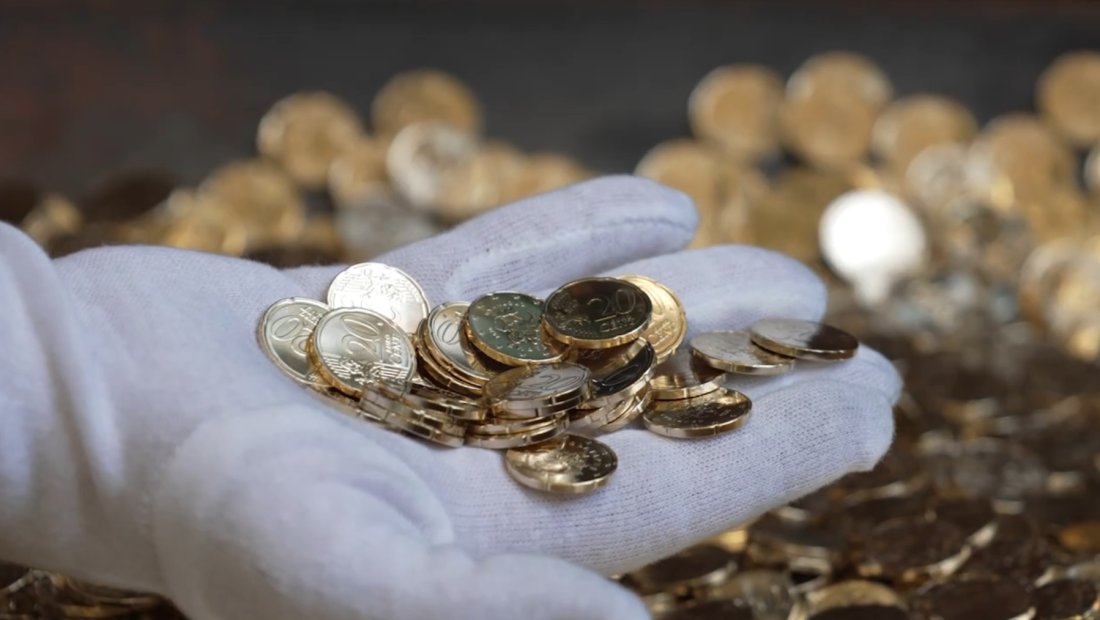
Bulgaria will join the euro zone on Thursday, becoming the 21st country to adopt the single European currency, an integration that some fear will fuel inflation and increase political instability, writes AFP.
During the summer, a protest movement called for “the preservation of the Bulgarian leu” emerged, led mainly by far-right and pro-Russian parties, who speculated on Bulgarians' fears about rising prices.
But for the successive governments that have promoted its adoption, the euro will enable the economy of the poorest country in the European Union to strengthen, strengthen its ties with Western Europe and protect it from Russian influence.
Before Bulgaria, Croatia adopted the single currency in 2023, initially introduced on January 1, 2002 in 12 EU countries.
The Balkan country of 6.4 million inhabitants, a member of the EU since 2007, faces significant challenges, however, after anti-corruption protests that recently toppled the conservative coalition government in power for less than a year and with the prospect of new parliamentary elections, the eighth in five years.
Many Bulgarians oppose the single currency
In this context of instability, any problem related to the introduction of the euro will be exploited by anti-EU politicians, predicted Boryana Dimitrova of the Alpha Research polling institute, which has been studying public opinion on the euro for a year.
According to the latest opinion poll by the EU polling agency Eurobarometer, 49% of Bulgarians oppose the single currency.
The concern is particularly palpable in poor rural areas.
“Substantial” earnings
“Prices will go up. That's what my friends who live in Western Europe told me,” Bilyana Nikolova, 53, who owns a grocery store in the small village of Chuprene in northwestern Bulgaria, told AFP.
After the hyperinflation of the 1990s, following the fall of communism, Bulgaria anchored its currency to the German mark, then to the euro, thus becoming dependent on the monetary policy of the European Central Bank (ECB), but without having a say.
“From now on, he will finally be able to participate in decisions within the Monetary Union,” Georgi Angelov, an economist at the Open Society Institute in Sofia, told AFP.
The gains linked to the adoption of the euro will be “substantial”, assured ECB president Christine Lagarde, citing “smoother exchanges, lower financing costs and more stable prices”.
Small and medium-sized enterprises could save the equivalent of around 500 million euros in foreign exchange fees, she added last month in Sofia.
Tourism, on the list of beneficiaries
One sector in particular should benefit from the euro in this country bordering the Black Sea: tourism, which generated around 8% of GDP this year.
Lagarde, moreover, relativized the price changes, qualifying them as “modest and short-lived” and stating that, in the case of previous changes to the euro, the impact was between 0.2 and 0.4 percentage points.
But even before the actual changeover to the euro, food prices rose by 5% year-on-year in November, according to the National Institute of Statistics, more than double the eurozone average.
Property prices rose by 15.5% in the second quarter, three times more than the euro area average.
The biggest challenge
To try to reassure the population, parliament strengthened watchdogs over the summer tasked with investigating price spikes and curbing any “unwarranted” rises linked to the switch to the euro.
According to Georgi Angelov, joining the Eurozone will, however, increase transparency and help consumers and traders compare prices with those in the rest of the EU.
“The challenge will be to have a stable government for at least one or two years, to be able to take full advantage of the advantages of joining the euro zone,” estimated Angelov.